
Summary
The United States and China are set to hold a high-profile trade meeting in Switzerland, marking the first in-person dialogue between the two economic powers since the escalation of tariff disputes earlier in the year. The meeting, requested by the U.S. administration, aims to address ongoing trade tensions characterized by reciprocal tariffs that have disrupted bilateral trade and contributed to global economic uncertainty. Senior U.S. officials, including Treasury Secretary Scott Bessent and U.S. Trade Representative Jamieson Greer, will meet with China’s Vice Premier He Lifeng to explore the conditions for a potential trade deal and clarify contentious issues.
The trade conflict, which began under President Donald Trump’s administration, has seen tariffs on a wide range of goods, some exceeding 100 percent, leading to significant declines in trade volumes and economic pressures on both sides. While the U.S. describes the current tariff regime as “unsustainable” and akin to an embargo, it emphasizes a goal of achieving fair trade without decoupling from China’s economy. China, meanwhile, has maintained a firm stance opposing tariff hikes and insists that any dialogue must be based on equality, mutual respect, and benefit, rejecting attempts at coercion.
The Swiss-hosted talks are viewed as cautious “pre-negotiations,” intended to set the framework for future negotiations rather than produce an immediate agreement. Switzerland’s neutrality and global trade connections have made it a strategic venue for these discussions, which also carry broader diplomatic significance amid concerns about the long-term impacts of the trade war on global markets and supply chains. Both sides approach the meeting wary of conceding ground, reflecting the complex geopolitical and economic dimensions underpinning the trade dispute.
Despite the guarded tone from both governments, the talks have generated cautious optimism among experts, who see them as a critical step toward de-escalating tensions that have already affected economic growth and raised fears of broader decoupling between the two largest economies in the world. However, analysts warn that substantial progress will require overcoming deep-seated differences, particularly on tariffs and trade practices, making the outcome of the Swiss meeting uncertain.
Background
The escalating trade tensions between the United States and China have prompted efforts to initiate negotiations aimed at resolving their ongoing tariff disputes. The trade war, which began during President Donald Trump’s first administration, has seen both countries impose significant, reciprocal tariffs, severely disrupting trade between the world’s largest economies. These measures have resulted in a dramatic decline in bilateral trade and increased uncertainty for the global economy and financial markets.
In response to these challenges, senior U.S. officials have actively reached out to Chinese counterparts through various channels to explore the possibility of starting trade talks. China’s Commerce Ministry acknowledged that the United States had contacted “relevant parties multiple times” to initiate negotiations on tariffs. The upcoming meeting scheduled to take place in Switzerland represents the first in-person dialogue since the escalation of tariffs in March and is viewed as a cautious step toward de-escalation.
Treasury Secretary Scott Bessent and U.S. Trade Representative Jamieson Greer are set to meet with China’s lead economic representative, He Lifeng, during this meeting. Bessent has emphasized that the current tariff regime is unsustainable and likened it to an embargo, stressing that the U.S. does not seek to decouple from China but rather desires fair trade. The talks come amid broader U.S. negotiations with multiple trading partners, with the administration considering several potential trade agreements in the near term. The Swiss meeting is also expected to include discussions between Bessent and Swiss President Karin Keller-Sutter, underscoring the international significance of the trade dialogue.
Request for Trade Meeting
The Trump administration formally requested a trade meeting with China, which was scheduled to take place in Switzerland. Chinese officials confirmed that Treasury Secretary Scott Bessent and his Chinese counterpart would meet to discuss trade matters, emphasizing that China would enter the talks “firmly” opposed to U.S. tariff hikes and insisted on a dialogue grounded in “equality, respect and mutual benefit”. China’s Foreign Ministry spokesman Lin Jian underscored that attempts to pressure or coerce China would be ineffective, reaffirming China’s determination to protect its legitimate interests and uphold international fairness and justice.
While the meeting was portrayed by the U.S. as a step towards resolving the ongoing tariff war initiated by President Donald Trump, Chinese authorities denied proactively reaching out to the U.S. Instead, they described their stance as cautiously evaluating the Trump administration’s overtures before agreeing to negotiations. The meeting was viewed as a high-stakes engagement aimed at establishing conditions for a potential deal, including defining feasible areas of agreement and disagreement.
The talks represented the first in-person discussions between Chinese and American officials since significant tariff escalations began in March, although Treasury Secretary Bessent tempered expectations by indicating that an immediate trade deal was unlikely. The Chinese government maintained a firm position that, regardless of whether the two countries were “fighting or talking,” it would continue to safeguard its development interests while presenting itself as a responsible global power.
Details of the Scheduled Meeting
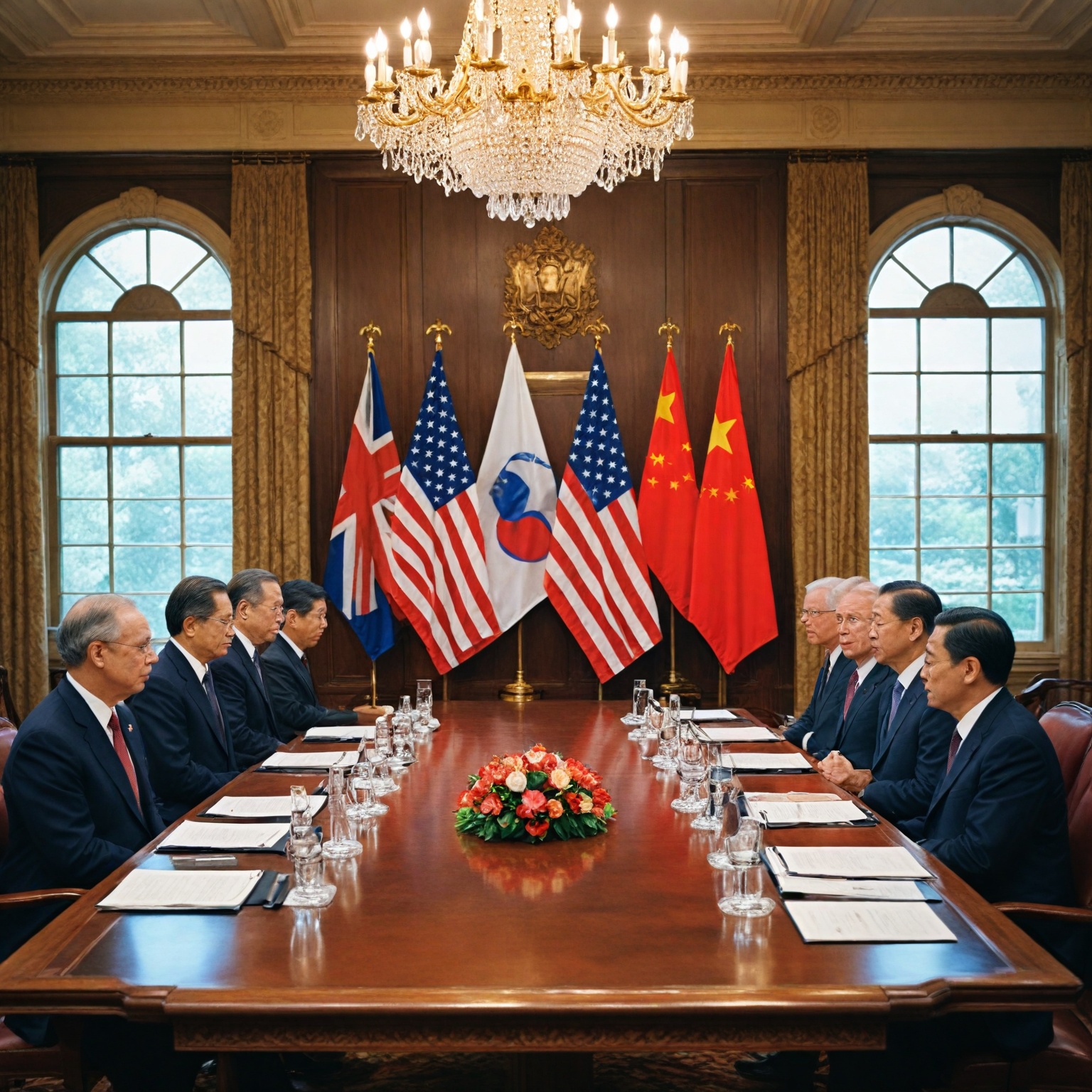
The upcoming trade meeting between the United States and China is set to take place in Switzerland, marking the first in-person discussions between the two countries since the escalation of tariff impositions earlier in the year. U.S. Treasury Secretary Scott Bessent and U.S. Trade Representative Jamieson Greer will represent the American side, meeting with China’s Vice Premier He Lifeng, who is the lead official for China-U.S. economic and trade affairs.
The primary objective of the meeting is to establish the framework and conditions necessary to reach a potential trade deal, including clarifying what terms are feasible and which issues remain points of contention. Despite the high expectations, Treasury Secretary Bessent has tempered hopes, stating that the talks are unlikely to produce a definitive trade agreement at this stage and should be viewed more as pre-negotiations. Both sides aim to negotiate from a position of strength without showing weakness, reflecting the ongoing strategic nature of the discussions.
The meeting occurs amidst severe trade tensions characterized by reciprocal tariffs that have significantly reduced bilateral trade volume. Bessent emphasized that the current tariff levels, some exceeding 100 percent, are unsustainable and comparable to an embargo, stressing that the goal is to achieve fair trade rather than decoupling the two economies. The talks also respond to concerns from China about the economic pressures the trade war has imposed, with Beijing agreeing to engage in dialogue that considers global expectations, Chinese national interests, and the concerns of U.S. industries and consumers.
In addition to the trade discussions, Treasury Secretary Bessent is scheduled to meet with Swiss President Karin Keller-Sutter during his visit. The meeting symbolizes a significant diplomatic effort to stabilize and rebalance the international economic system to better serve the interests of both the United States and China.
Official Statements and Announcements
Chinese officials have publicly stated that the upcoming trade meeting in Switzerland was requested by the United States, specifically by the Trump administration. According to Foreign Ministry spokesman Lin Jian, China will enter the talks firmly opposed to U.S. tariff hikes and insists that any dialogue must be based on equality, respect, and mutual benefit. Lin emphasized that attempts to pressure or coerce China will not succeed, affirming that China is determined to safeguard its legitimate interests and uphold international fairness and justice. The Chinese Commerce Ministry reiterated this position, stating that China’s resolve to protect its development interests remains unchanged, whether through dialogue or confrontation, and that the country aims to defend international fairness and justice throughout the process.
From the U.S. perspective, Treasury Secretary Scott Bessent and U.S. Trade Representative Jamieson Greer have been named as the principal negotiators in the talks, with meetings scheduled with their Chinese counterparts in Geneva to discuss economic and trade matters. Bessent has described the current tariffs as unsustainable and comparable to an embargo, underscoring the U.S. goal of achieving fair trade without decoupling from China. The U.S. Trade Representative’s office confirmed Greer’s engagement with his Chinese counterpart to address shared trade interests.
Despite repeated outreach from senior U.S. officials through multiple channels, Chinese authorities have maintained that any negotiation must be contingent upon the removal of all unilateral tariffs by the U.S. Failure to do so, according to China, would reflect insincerity on Washington’s part and further erode mutual trust. These official statements highlight the cautious and conditional nature of the engagement, with both sides seeking to frame the discussions in a manner that protects their respective interests while exploring potential avenues for agreement.
Significance and Context
The upcoming trade talks in Switzerland between senior U.S. officials, including Treasury Secretary Scott Bessent and U.S. Trade Representative Jamieson Greer, and their Chinese counterparts mark the first in-person meeting since the escalation of tit-for-tat tariffs in March. These discussions are seen primarily as a pre-negotiation phase aimed at establishing the conditions under which a more comprehensive trade deal might eventually be reached, rather than an immediate resolution to the ongoing trade conflict.
The context of the talks is defined by a prolonged trade war, characterized by high tariffs—some reaching triple digits—imposed by both countries, which have significantly reduced bilateral trade. Treasury Secretary Bessent described the current tariff levels as “the equivalent of an embargo,” underscoring the unsustainability of the situation, especially for China. The intense tariff environment has led to notable economic consequences: the U.S. trade deficit with China has narrowed sharply due to reduced Chinese imports, while overall trade volumes between the two nations have dropped dramatically, with potential ripple effects on global economic growth and inflation.
Moreover, the trade war and subsequent restrictions, including export controls on advanced technologies by the U.S. and countermeasures by China, have fueled concerns over increasing regionalization of trade and the risks of economic decoupling. Despite these tensions, both sides have emphasized that the goal is to achieve “fair trade” rather than sever economic ties, highlighting shared interests amid rivalry.
China has also expressed caution ahead of the talks, warning Washington against using dialogue as a coercive tactic, reflecting the sensitive nature of these discussions against a backdrop of heightened geopolitical and economic friction. Analysts view this meeting as a critical step toward potential future negotiations but acknowledge that neither side is currently prepared to show weakness or make significant concessions.
Switzerland as Host for Trade Negotiations
Switzerland has emerged as a significant neutral ground for international trade negotiations, particularly between major economies such as China and the United States. Its longstanding reputation for neutrality and well-established role as a global business hub make it an attractive venue for high-level diplomatic and economic discussions.
The country maintains extensive trade relations, exemplified by its thirty free trade agreements with forty countries, covering diverse sectors including services, agriculture, public procurement, and transport. Additionally, Switzerland continuously negotiates new trade agreements with countries like Indonesia, India, and members of Mercosur, further solidifying its position in global trade frameworks.
In the context of Sino-US trade relations, Switzerland has hosted crucial meetings aimed at thawing tensions and addressing contentious issues. For instance, in May 2024, Vice Premier He Lifeng of China visited Switzerland for talks with Swiss leaders and key stakeholders, including a meeting with U.S. Treasury Secretary Scott Bessent, who leads the U.S. delegation on economic and trade affairs. These discussions are part of broader efforts initiated after the United States requested the meeting to explore resolutions to ongoing trade disputes, including tariff reductions, export controls, and policies related to low-value imports.
The choice of Switzerland as the meeting place underscores its strategic importance as a neutral and trusted venue where both China and the United States can engage in direct dialogue without the complications of hosting the talks on home soil. These face-to-face discussions have been seen as encouraging steps toward easing trade tensions, especially given the significant economic impact on both countries from prolonged conflicts. Overall, Switzerland’s role as host facilitates constructive engagement and contributes to stabilizing critical trade relations between these global powers.
Reactions and Analysis
The announcement of the trade talks between the United States and China in Switzerland was met with cautious optimism by experts and officials alike. Scott Kennedy, a China expert at the Center for Strategic and International Studies, characterized the upcoming discussions as “pre-negotiations,” emphasizing that both sides aim to avoid showing weakness while framing the talks to their advantage. Treasury Secretary Scott Bessent echoed this sentiment, describing the current tariff war as “unsustainable,” particularly on China’s side, and stressing that the goal was not decoupling but achieving “fair trade”.
The selection of Switzerland as the meeting venue, noted for its neutrality, was seen as a strategic choice to facilitate candid dialogue on contentious issues such as tariff reductions, export controls, and the termination of de minimis exemptions on low-value imports. Alfredo Montufar-Helu, head of the Conference Board’s China Center, highlighted that the primary objective of the talks was to establish feasible conditions for a potential deal by clarifying what could and could not be agreed upon.
Despite the anticipation surrounding the talks, economic indicators underscored the urgency of resolving the dispute. Trade volumes between the two largest global economies had significantly declined, contributing to concerns about a possible recession in the United States and a contraction in Chinese factory activity to its lowest point since December 2023. Bessent suggested that the discussions could represent a critical pivot toward de-escalation and improved economic relations.
Related Events
In the context of escalating trade tensions between the United States and China, several significant developments have taken place, particularly involving negotiations held in Switzerland. Senior U.S. officials, including Trade Representative Bessent and Jamieson Greer, announced meetings with their Chinese counterparts in Geneva aimed at initiating trade talks. These negotiations were scheduled to begin on a weekend and included Vice Premier He Lifeng, China’s top official for economic and trade matters with the U.S..
China expressed that it was evaluating the possibility of starting trade negotiations with the U.S., noting that senior American officials had made multiple outreach attempts through relevant parties to initiate tariff discussions. Despite Beijing’s readiness to engage, analysts cautioned that reaching a comprehensive agreement would be complex and time-consuming.
Experts characterized these preliminary meetings as “pre-negotiations,” with both sides aiming to frame discussions in ways that benefit their respective interests without revealing vulnerabilities. The timing of these talks suggested concern in China over economic pressures following tariff increases by the Trump administration and ongoing trade tensions.
These developments occurred amid broader trade conflicts, including the imposition of tariffs by the U.S. and export restrictions on advanced semiconductor technologies and related equipment, which have heightened concerns about increased regionalization of international trade. Such measures have the potential to raise inflation and hamper growth in countries affected by the trade disruptions.
The meetings in Switzerland, thus, represent an important step in managing the complicated trade relationship between the world’s two largest economies, which remains vital for global economic stability despite recent reductions in trade volume and economic contraction indicators in both countries.
The content is provided by Avery Redwood, Direct Bulletins