
Summary
Carvana is an innovative online used vehicle retailer that has recently reported record-breaking quarterly financial results, consistently surpassing Wall Street expectations. Known for its e-commerce platform and distinctive car vending machines, Carvana enables customers to buy vehicles entirely online with options for home delivery or pickup from automated locations. The company’s unique business model and rapid expansion have propelled it to significant growth in sales volume, revenue, and profitability, positioning it as a major player in the automotive retail sector.
In its latest quarterly reports, Carvana achieved a 46% year-over-year increase in sales with nearly 134,000 vehicles sold, driving revenue to $4.23 billion and net income to $373 million, far exceeding analyst projections. The company also posted strong adjusted EBITDA figures and maintained an industry-leading retail unit growth rate of 33% for the full year of 2024, underscoring its expanding market presence and operational efficiency. These financial milestones reflect Carvana’s ability to capitalize on favorable market dynamics, including resilient demand for used vehicles amid pricing pressures and potential tariff influences.
CEO and co-founder Ernie Garcia has addressed concerns related to tariffs and external economic factors, emphasizing that these have caused only minor demand fluctuations unlikely to disrupt Carvana’s performance materially. Garcia suggested that tariff-related price increases might even enhance used car sales, reflecting management’s confidence in navigating ongoing market challenges. Despite robust operational results and strong investor sentiment, some valuation analyses have cautioned about the company’s stock price relative to intrinsic value, indicating divergent views on Carvana’s longer-term market valuation.
Overall, Carvana’s record quarterly achievements highlight its rapid growth trajectory and solidify its role as a disruptive force in the automotive retail industry. The company’s continued ability to outperform financial expectations and maintain strong profitability amidst evolving market conditions has garnered significant attention from investors and analysts, making Carvana a notable example of digital transformation in vehicle retail.
Background
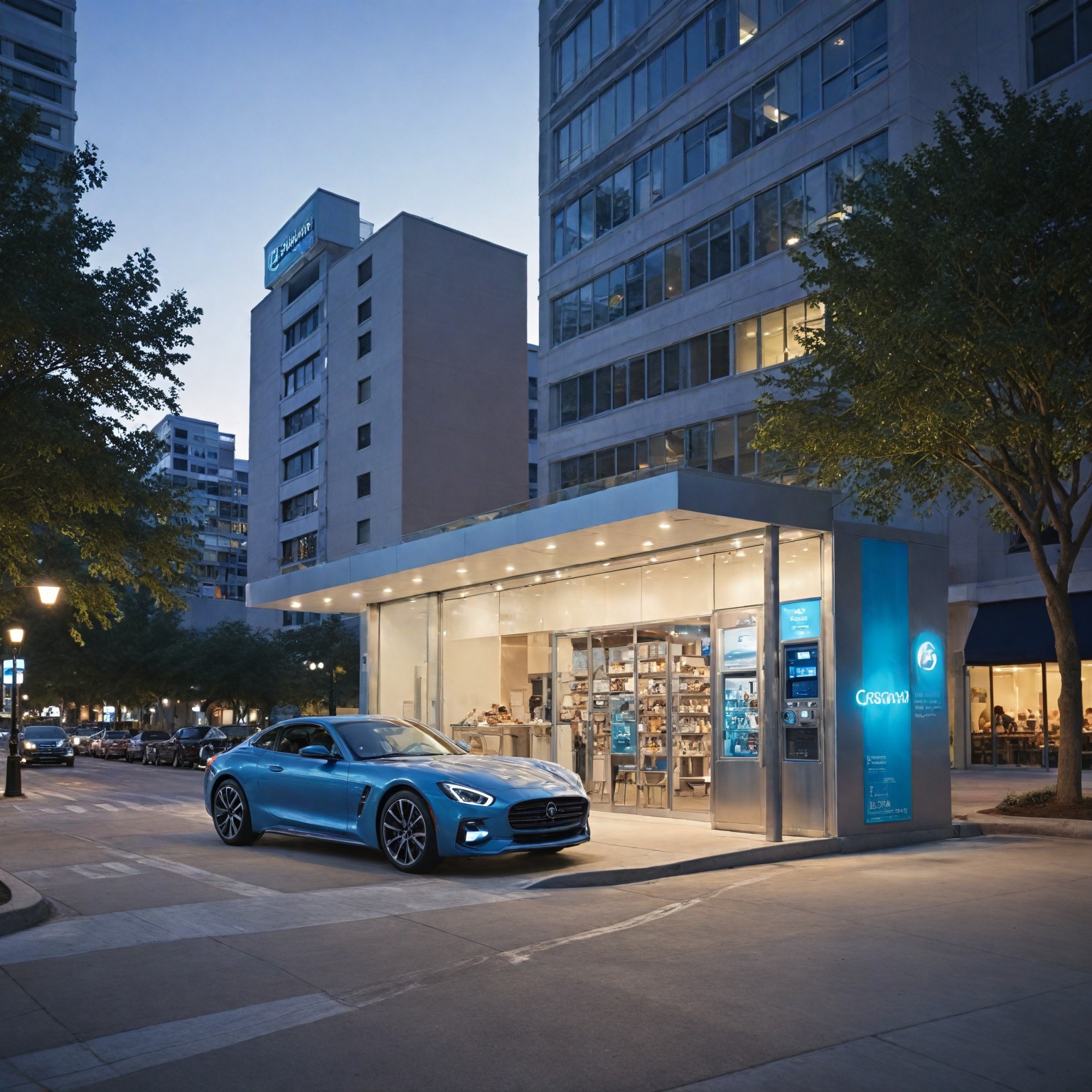
Carvana is an online used vehicle retailer known for its innovative approach to car sales, including its signature car vending machines. The company has experienced significant growth in recent years, marked by substantial increases in sales volume and financial performance. Carvana’s business model leverages e-commerce to streamline the car-buying process, enabling customers to purchase vehicles entirely online and have them delivered or picked up from unique vending machine locations.
In recent quarters, Carvana has demonstrated remarkable financial achievements, consistently exceeding Wall Street expectations. This includes a 46% year-over-year increase in sales during the first quarter, with nearly 134,000 units sold, which contributed to record revenue and net income figures. The company reported $4.23 billion in revenue and net income of $373 million for that quarter, significantly surpassing analyst estimates. Additionally, Carvana has updated its long-term objectives and quarterly guidance to reflect its strong growth trajectory.
CEO and co-founder Ernie Garcia has commented on market dynamics such as tariffs, suggesting that these factors have caused only minor fluctuations in demand and are unlikely to materially affect the company’s operations. He also noted that potential pricing adjustments could even benefit used car sales.
Carvana’s ongoing success is further evidenced by record results in subsequent quarters, with revenue reaching $13.67 billion, net income at $404 million, and adjusted EBITDA of $1.38 billion. The company has also maintained industry-leading retail unit growth rates, with 50% growth in the fourth quarter and 33% for the full year of 2024. These achievements have led to increased investor confidence, reflected in significant stock price gains and positive analyst forecasts.
Latest Quarterly Results
Carvana reported strong quarterly performance, surpassing Wall Street expectations in several key financial metrics. In the first quarter, the company achieved earnings per share (EPS) of $1.51, significantly higher than the consensus estimate of 67 cents. Revenue reached $4.23 billion, beating the expected $3.98 billion. The online used vehicle retailer experienced a 46% year-over-year increase in sales, with nearly 134,000 units sold during the quarter. Additionally, Carvana set records with net income of $373 million, adjusted EBITDA of $488 million, and operating income of $394 million.
For the subsequent quarters, Carvana continued to demonstrate strong growth. In one quarter, the company posted earnings per share of 14 cents versus an expected loss of 7 cents, with revenue totaling $3.41 billion compared to the anticipated $3.24 billion. This performance was driven by retail vehicle sales exceeding 101,400 units, marking a 32.5% increase over the prior quarter. If the company meets its 2024 earnings target, it will represent Carvana’s third consecutive annual EBITDA profit, building on 2023’s record $339 million EBITDA.
Year-over-year growth was further emphasized in wholesale sales and retail unit sales, with analysts forecasting a 22.5% increase in wholesale revenues to $804.95 million and retail vehicle unit sales reaching 129,401, up from 91,878 in the previous year. Per retail unit gross profit is also expected to rise to $6,956.18 from $6,432 recorded in the same quarter last year.
Carvana’s full-year 2024 performance highlighted a 33% year-over-year growth in retail units and a 50% increase in the fourth quarter alone. The company achieved record revenue of $13.67 billion, net income of $404 million, and adjusted EBITDA of $1.38 billion. This translated to an industry-leading net income margin of 3.0% and an adjusted EBITDA margin of 10.1%, underscoring strong profitability alongside rapid expansion.
Furthermore, Carvana posted positive net income margins and industry-leading adjusted EBITDA margins while growing retail units by 16% year-over-year in another quarter. The company set new records with net income of $49 million and adjusted EBITDA of $235 million, with expectations of continued sequential increases in retail unit growth rate and adjusted EBITDA.
Despite these operational achievements, some valuation metrics indicate caution. GuruFocus estimated an intrinsic value of $48.10 for Carvana’s stock, suggesting a potential downside of over 81% relative to the trading price of $258.81, reflecting a composite assessment of historical trading multiples, growth, and forecasts.
Investors can track upcoming earnings announcements through the company’s Earnings Calendar, which provides dates for future quarterly results.
Comparison with Wall Street Expectations
Carvana’s recent quarterly results have significantly exceeded Wall Street’s expectations, demonstrating strong growth across key financial and operational metrics. In the first quarter, the company reported revenue of $4.23 billion, surpassing the average analyst estimate of $3.98 billion. Earnings per share (EPS) also outperformed forecasts, coming in at $1.51 compared to the anticipated 67 cents. This performance was driven by a 46% year-over-year increase in sales volume, with nearly 134,000 vehicles sold during the period.
Additionally, Carvana posted record net income of $373 million, adjusted EBITDA of $488 million, and operating income of $394 million, all of which marked new quarterly highs for the company. These results highlight not only top-line growth but also significant improvements in profitability metrics relative to market expectations.
Further, consensus estimates for wholesale sales and revenues stand at approximately $805 million, reflecting a 22.5% increase year-over-year. Retail vehicle unit sales were forecasted at around 129,401 units, a substantial rise from the prior year’s 91,878 units. Analysts also projected per retail unit gross profit at $6,956, higher than the previous year’s $6,432, and wholesale vehicle selling prices at $9,647, up slightly from $9,625. The number of markets served remained steady at 316, consistent with the previous year.
In the second quarter of 2023, Carvana continued to beat expectations with revenue of $3.41 billion versus $3.24 billion estimated, and EPS of 14 cents compared to an expected loss of 7 cents. This was supported by retail vehicle sales exceeding 101,400 units, representing a 32.5% increase from the prior quarter. If the company achieves its 2024 earnings target, it would mark its third consecutive year of positive EBITDA, building on the record $339 million EBITDA posted in 2023.
Factors Driving Record-Breaking Results
Carvana’s record-breaking quarterly results were driven by several key factors that together propelled the company’s revenue, profitability, and sales volume to unprecedented levels. A primary contributor was the significant surge in retail unit growth, which reached 50% in the fourth quarter and 33% for the full year 2024, demonstrating robust demand for Carvana’s offerings. This strong sales momentum translated into a 46% year-over-year increase in vehicle sales during the first quarter, with nearly 134,000 units sold, far exceeding market expectations.
Another critical driver was the company’s ability to capitalize on industry-wide dynamics related to used vehicle pricing. Heightened fears of price increases due to potential auto tariffs spurred both dealers and consumers to accelerate purchases, resulting in elevated demand that supported Carvana’s sales growth and pricing power. Despite concerns over tariffs, Carvana’s CEO Ernie Garcia downplayed their impact, noting only minor fluctuations in demand that had since stabilized and suggesting that tariff-related price increases could potentially benefit used car sales.
Carvana also benefited from improved unit economics, as reflected in strong gross profit per unit (GPU) figures. The company reported record GPU metrics with Q3 figures reaching $5,952 for gross profit and $6,396 for Non-GAAP gross profit per unit, underscoring the strength and profitability of its business model. Analysts further projected rising per-unit wholesale prices and increasing retail unit gross profits, with expectations of approximately $6,956 in gross profit per retail unit, up from $6,432 in the previous year. This improvement in profitability metrics contributed significantly to Carvana’s industry-leading adjusted EBITDA margin of 10.1% and net income margin of 3.0% during its record performance.
Additionally, Carvana’s revenue consistently outpaced analyst estimates, with quarterly revenues reaching $4.23 billion compared to the $3.98 billion expected, reinforcing the company’s dominant market position. These results were supported by both higher-than-anticipated unit sales and favorable pricing conditions. The company’s focus on profitability alongside growth allowed it to deliver strong adjusted EBITDA of $1.38 billion and net income of $404 million in the reported period, setting new benchmarks in its financial performance.
Management Commentary and Official Statements
Carvana’s management provided insights into the company’s performance and the potential impacts of external factors during their recent quarterly call. CEO and co-founder Ernie Garcia addressed concerns related to auto tariffs, stating that while the company experienced “little gyrations” in demand, these fluctuations have since stabilized. Garcia downplayed the likelihood of tariffs having a significant adverse effect on Carvana’s operations, noting that any resulting price increases could potentially benefit used car sales rather than harm them. He remarked, “I don’t think we have too much interesting there,” indicating confidence in the company’s ability to manage tariff-related challenges effectively.
The company highlighted strong profitability metrics alongside growth in retail unit sales, with new quarterly records set for Net Income at $49 million and Adjusted EBITDA at $235 million. These achievements reflect a focus on profitability that complements the 16% year-over-year growth in retail units. Carvana anticipates continued sequential increases in both year-over-year retail unit growth rates and Adjusted EBITDA in upcoming quarters, signaling positive momentum in its business model.
Market and Investor Reaction
Carvana’s record quarterly results have generated a notable response from the market and investors. Following the announcement, Carvana shares experienced a significant increase, rising by 38.6% over the past month, a sharp contrast to the S&P 500 composite’s modest decline of 0.5% during the same period. This surge reflects strong investor confidence in the company’s performance and prospects.
Analysts had forecasted the ‘Per unit selling prices – Wholesale vehicles’ to reach $9,647.45, slightly above the year-ago figure of $9,625, indicating expectations of stable pricing power. Additionally, the ‘Markets at end of period’ metric was predicted to remain steady at 316, consistent with the previous year’s figure, suggesting a stable market position for Carvana.
Investors typically rely on consensus earnings and revenue estimates to evaluate company performance; however, the detailed projections of specific metrics such as vehicle pricing and market size provide a more nuanced understanding of Carvana’s operational outlook and have likely contributed to the positive market reaction.
Implications and Outlook
Carvana’s recent record quarterly results, which exceeded Wall Street expectations, have several implications for the company’s future performance and market position. Analysts forecast the wholesale vehicle selling price to rise slightly to $9,647.45, compared to $9,625 a year ago, indicating stability and modest growth in Carvana’s pricing power. Additionally, the market size at the end of the period is projected to remain steady at 316, consistent with the prior year’s figures, suggesting a maintained demand environment.
Despite these positive indicators, there is a nuanced outlook on the company’s stock performance. While some analyst price targets for Carvana range broadly—from as high as $340.00 to as low as $148.00—the average target price of $258.81 suggests a marginal downside of approximately 0.94% from the current trading price, reflecting tempered investor expectations amid market volatility.
From a strategic perspective, Carvana’s leadership, including CEO and co-founder Ernie Garcia, has downplayed concerns related to recent tariff impacts. Garcia noted that although the company experienced minor fluctuations in demand initially, these have since stabilized, and he does not foresee tariffs causing material disruption to Carvana’s business operations. Interestingly, Garcia suggested that potential price increases resulting from tariffs might even benefit used car sales, potentially enhancing the company’s competitive advantage in this segment.
Carvana also updated its long-term objectives and quarterly guidance alongside its earnings announcement, signaling a forward-looking approach to sustaining growth and navigating market challenges without committing to specific annual targets. Overall, these factors suggest that while Carvana faces some uncertainties, particularly regarding market pricing and external economic factors, its leadership remains confident in managing these risks and capitalizing on growth opportunities in the used vehicle marketplace.
The content is provided by Blake Sterling, Direct Bulletins