Highlights
- The office cleaning industry is projected to grow nearly 7% annually through 2030.
- Embracing technology and sustainability offers competitive advantages in the evolving cleaning job market.
Summary
Your Essential Guide to Office Cleaning Jobs in 2025: Key Trends and Opportunities provides a comprehensive overview of the evolving landscape of office cleaning employment as the industry adapts to technological innovations, sustainability imperatives, and workforce dynamics. Office cleaning jobs involve maintaining cleanliness and hygiene in commercial environments through tasks such as dusting, vacuuming, waste management, and specialized cleaning duties. These roles require physical stamina, attention to detail, and professionalism, while increasingly demanding technical skills to operate and supervise automated cleaning technologies.
The sector is experiencing steady growth, driven by a global cleaning services market valued at over USD 415 billion in 2024 and projected to expand annually by nearly 7% through 2030. Despite positive employment forecasts, the industry faces significant challenges, notably workforce shortages intensified by broader labor market trends like The Great Resignation. Employers are responding by enhancing recruitment and investing in training programs to bridge skill gaps, especially as job roles evolve to include managing AI-powered robotic systems and advanced scheduling software.
Technological advancements, including autonomous cleaning robots and Internet of Things (IoT) devices, are transforming traditional cleaning practices, improving efficiency, and enabling data-driven decision-making. These innovations complement growing emphasis on green cleaning and sustainability, where eco-friendly products and energy-efficient equipment align with Environmental, Social, and Governance (ESG) principles. Companies adopting these trends benefit from operational savings and improved environmental compliance, positioning themselves competitively in the market.
However, the industry must navigate controversies around workforce wellbeing, occupational safety, and equitable wages amid automation integration. The expected federal minimum wage increase in late 2025 aims to address income disparities but also introduces cost pressures for employers. Balancing technological adoption with employee support remains a critical challenge as the sector moves toward a future where human and machine collaboration defines office cleaning roles and opportunities.
Overview of Office Cleaning Jobs
Office cleaning jobs primarily involve maintaining cleanliness and hygiene within commercial and corporate environments. The core duties include routine tasks such as dusting surfaces, vacuuming carpets, mopping floors, sweeping, waste management, and wiping down various surfaces to ensure a clean and sanitary workplace. Cleaners may also be responsible for specialised duties like cleaning windows, sanitising computer peripherals, steam-cleaning upholstery, and removing graffiti from exterior surfaces, depending on the specific needs of the office.
These roles require a combination of physical stamina and attention to detail, as cleaners are often expected to perform labor-intensive tasks for extended periods and handle cleaning equipment and chemicals safely. Professionalism, flexibility, and the ability to work independently with minimal supervision are highly valued attributes in office cleaning positions.
Office cleaning jobs encompass a wide scope, covering both in-house and outsourced cleaning services for indoor areas of commercial buildings, including entryways, restrooms, lounges, and office spaces. However, these roles generally exclude maintenance of exterior areas such as parking lots or grounds.
With evolving industry trends, there is a growing emphasis on transparency, ethical practices, and adherence to safety protocols. Cleaners are expected to use appropriate personal protective equipment (PPE) like gloves, masks, and non-slip footwear to ensure safety and regulatory compliance. Furthermore, the integration of technology, such as autonomous floor-cleaning robots and scheduling software, is becoming increasingly common, improving efficiency and enabling flexible service models tailored to fluctuating office occupancy levels.
In addition to manual cleaning tasks, office cleaners may be called upon to report repairs or maintenance issues encountered during their duties, further supporting the overall upkeep of the workplace environment. Successful office cleaners typically demonstrate strong communication skills, reliability, and the ability to manage time effectively to complete all assigned tasks within stipulated schedules.
Employment Trends and Job Market Outlook in 2025
The cleaning industry is poised for steady growth through 2025 and beyond, with employment prospects reflecting this upward trajectory. The global cleaning services market was valued at approximately USD 415.93 billion in 2024 and is projected to expand at a compound annual growth rate of 6.9% between 2025 and 2030. North America is expected to dominate this market, holding an estimated 45% revenue share by 2037. Correspondingly, employment for janitors and building cleaners is forecasted to grow by 3% from 2023 to 2033, signaling sustained demand for workers in this sector.
Employment projections are grounded in comprehensive data collected across various states, metropolitan and nonmetropolitan areas, and multiple industry sectors. This broad data set enables reliable estimates and comparisons of employment growth within the cleaning industry and related occupations. Entry-level positions typically do not require formal educational credentials beyond a high school diploma or equivalent, and many janitors and cleaners acquire skills through on-the-job training. Employers often prioritize candidates demonstrating strong time management, attention to detail, and the ability to pass background checks over formal education credentials.
Despite the optimistic outlook, the industry faces significant workforce challenges. Staffing shortages remain a critical concern, with 63% of cleaning contractors identifying talent acquisition and retention as their top risk factors entering 2025. To mitigate these issues, 36% of companies are enhancing recruitment strategies, while 35% are investing in employee training programs to improve skill levels and job satisfaction. These efforts are crucial amid the broader context of The Great Resignation, where many workers are leaving current positions in search of better opportunities, prompting employers to focus on competitive pay, benefits, and a supportive work environment.
Wage conditions in the cleaning sector continue to evolve, with minimum wage rates varying by region and industry. The Minister of Employment and Labour is expected to announce adjusted minimum wage rates in February 2025, which will influence remuneration standards within the cleaning industry. Ensuring fair pay remains a vital component of addressing workforce stability and compliance. Overall, the job market outlook for office cleaning roles in 2025 is marked by steady growth, evolving workforce dynamics, and a clear emphasis on recruitment and retention initiatives.
Technological Advancements and Tools
The cleaning industry in 2025 is undergoing a significant transformation driven by technological advancements that enhance efficiency, reduce labor costs, and improve overall service quality. Central to this shift is the widespread adoption of automation and artificial intelligence (AI), which enable cleaning businesses to optimize operations and meet evolving client needs.
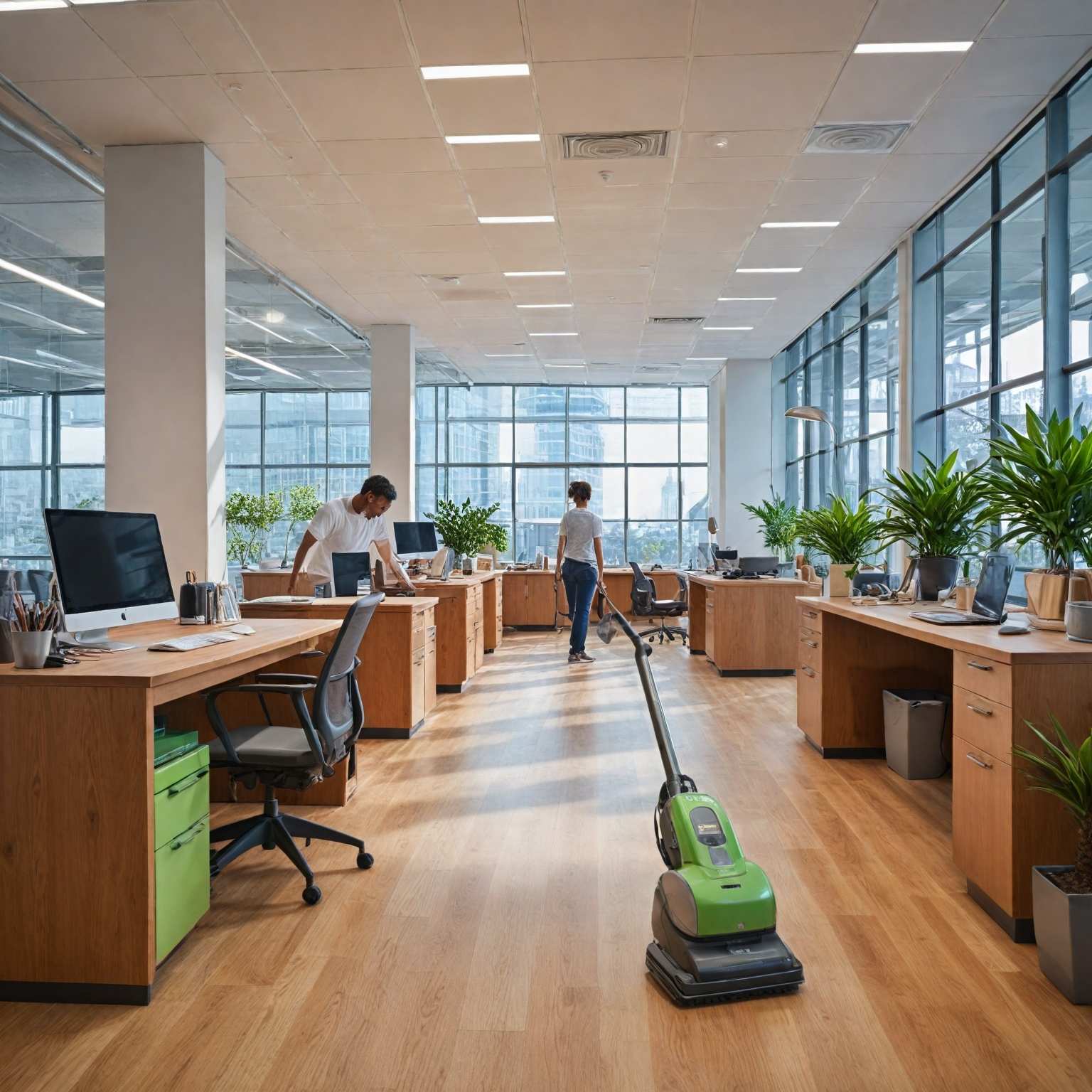
Robotic cleaning systems have evolved beyond basic floor vacuums to sophisticated machines equipped with sensors, AI-powered navigation, and real-time environmental mapping. These autonomous robots can scrub floors, clean windows, and even perform specialized tasks such as automated restroom cleaning, providing consistent, high-quality results while freeing human custodians to focus on more detailed and complex cleaning duties. Integration of AI reduces human error and enhances precision, allowing staff to concentrate on customer interaction and quality assurance.
The Internet of Things (IoT) plays a pivotal role in smart cleaning solutions, enabling real-time monitoring and data-driven decision-making. IoT-enabled devices track cleaning needs dynamically, ensuring spaces are cleaned only when necessary, which optimizes resource use and reduces waste. Proactive indoor air quality (IAQ) monitoring systems employ IoT technology to maintain healthier workspaces, thereby increasing client satisfaction and meeting stricter hygiene standards.
Advanced scheduling software and intelligent route optimization tools further enhance operational efficiency by reducing labor, fuel costs, and response times. These tools allow cleaning companies to quickly dispatch teams, avoid double bookings, and offer flexible, on-demand services that accommodate fluctuating office occupancy levels and hybrid work models.
To support the deployment of these technologies, cleaning businesses are investing in staff training focused on managing and maintaining new equipment, including cybersecurity basics to safeguard connected systems. Performance metrics such as hygiene outcomes, downtime reduction, and energy consumption are continuously measured to refine processes and ensure sustainable operations.
Green Cleaning Practices and Sustainability
In 2025, green cleaning practices have become a fundamental aspect of maintaining office environments that prioritize human health and environmental protection. Unlike traditional cleaning methods that focus mainly on appearance, green cleaning emphasizes the use of eco-friendly certified products designed to minimize harmful impacts on both people and the planet. These products are often non-toxic, biodegradable, and align with environmental standards set by agencies such as the Environmental Protection Agency (EPA), which provides guidance through its Green Cleaning Guide and Safer Choice certification program.
Adopting green cleaning methods can also result in operational cost savings by reducing the consumption of water, paper towels, and other consumables. Businesses increasingly recognize the value of certifications like Green Seal and LEED (Leadership in Energy and Environmental Design) to demonstrate their commitment to sustainable cleaning practices and to differentiate themselves in the marketplace. Additional certifications from organizations such as the Rainforest Alliance, Leaping Bunny, and One Percent for the Planet further assist companies in making responsible choices when selecting cleaning products.
Sustainability extends beyond product selection to include innovations in cleaning tools and processes. The industry is witnessing a rise in biodegradable cleaning agents, recycled materials for cleaning equipment and packaging, and energy-efficient machinery, all reflecting broader Environmental, Social, and Governance (ESG) principles influencing procurement and operational decisions. These practices not only reduce the environmental footprint of cleaning activities but also support ethical sourcing and social responsibility within the sector.
Workforce engagement plays a vital role in effective green cleaning implementation. Creating a culture of sustainability through employee education—such as workshops and expert-led discussions—encourages participation in eco-friendly practices, both at work and at home. Moreover, ergonomic and user-friendly equipment design helps improve worker safety and productivity, complementing sustainability goals.
The integration of smart technology and data-driven solutions further enhances sustainability efforts by optimizing resource use and minimizing waste. For example, AI-powered scheduling and route optimization reduce labor, water, and energy consumption, while predictive maintenance limits overuse of equipment and supplies. These advancements contribute to seamless, efficient cleaning operations that align with sustainability objectives.
Skills and Job Role Evolution
The office cleaning industry in 2025 is undergoing a significant transformation driven by the rise of automation and AI-powered technologies. As routine cleaning tasks become increasingly automated through the use of robots and intelligent scheduling systems, the nature of job roles within the sector is evolving rather than disappearing. Human workers are shifting from manual labor toward technical supervision, system integration, and management of automated cleaning systems.
New roles such as robot operators, maintenance technicians, and automation coordinators are emerging to support, optimize, and troubleshoot robotic equipment. These positions require a combination of skills in robotics management, software interfacing, diagnostics, and data interpretation to ensure smooth and efficient operation of cleaning technologies. This evolution reflects a broader trend of automation augmenting rather than replacing the workforce by redirecting responsibilities toward higher-skilled tasks.
To succeed in this changing landscape, reskilling and upskilling have become essential. Workers need to acquire competencies in digital tools, robotics interfaces, and basic troubleshooting to maintain long-term employability and career growth in janitorial services. Organizations that invest in comprehensive employee training programs—focusing on technological advancements, modern cleaning methods, and ergonomic best practices—are better positioned to retain experienced staff and modernize their operations.
Furthermore, hybrid cleaning models that combine traditional methods with automated solutions are gaining traction, requiring staff to be adaptable and proficient in both domains. This adaptability is critical as cleaning needs diversify across different industries and customized approaches become necessary to meet specific facility requirements.
Despite these opportunities, the industry faces challenges in workforce availability and skill gaps. Staffing issues remain a significant risk factor, prompting many companies to enhance recruitment efforts and strengthen training programs to bridge the divide between current workforce capabilities and emerging technology demands.
Economic and Industry Factors Influencing Wages
Wages in the office cleaning sector in 2025 are shaped by a variety of economic and industry-specific factors, including federal and state minimum wage adjustments, unionization rates, and broader employment trends across related industries.
One of the most significant influences on wages is the anticipated increase in the federal minimum wage. Reports indicate that the federal minimum wage is expected to rise from the current $7.25 to approximately $9.50 per hour in late 2025, likely around October or November. This increase will particularly benefit workers in low-paying sectors such as retail, hospitality, and cleaning services, including office cleaning staff. The wage hike will apply to full-time, part-time, and tip-based employees, potentially improving the income of many service industry workers.
In addition to federal changes, state-level minimum wages are also evolving. For instance, one state increased its minimum wage by $0.50 on January 1, 2025, with another scheduled increase of the same amount on January 1, 2026. Starting in 2027, this state plans to adjust its minimum wage annually based on the three-year moving average of the Consumer Price Index for Urban Wage Earners and Clerical Workers (CPI-W) for the Northeast Region. Wage rates may differ depending on industry and region, and tipped workers have varying rates based on location as well.
Employment data from all industry sectors reveals that production occupations, which include various assemblers and supervisors, have an annual mean wage of approximately $50,090—below the overall U.S. average wage of $67,920. While office cleaning jobs typically fall into lower wage brackets, these figures provide context for understanding compensation trends within production-related and service roles.
Union membership also plays a role in wage dynamics. The public-sector union membership rate stood at 32.2 percent in 2024, with local government workers showing the highest unionization levels at 38.2 percent, especially in occupations such as police, firefighting, and education. Conversely, sectors like food services and drinking places, which are closely related to cleaning and hospitality services, had very low unionization rates (1.6 percent). This low level of union presence in the cleaning and service sectors may limit collective bargaining power for higher wages and benefits in office cleaning roles.
Employment Patterns and Workforce Dynamics
The office cleaning industry in 2025 is experiencing significant shifts in employment patterns driven by technological advancements and evolving workforce needs. Employment data are primarily sourced from employer and establishment surveys, offering insights into job numbers, union representation, and occupational projections across the sector. While traditional cleaning roles remain prevalent, the integration of robotics, artificial intelligence (AI), and automation is reshaping the workforce landscape.
Automation is progressively taking over routine cleaning tasks, which has led to the emergence of new specialized roles focused on managing and optimizing these technologies. Workers are increasingly transitioning into positions such as robot operators, maintenance technicians, and automation coordinators. These roles emphasize oversight, diagnostics, and fine-tuning of robotic systems, marking a shift from manual labor to technical supervision and system integration. Essential skills now include robotics management, software interfacing, and data interpretation, reflecting the industry’s move toward a more technologically adept workforce.
AI and Internet of Things (IoT) technologies are central to this transformation. For example, autonomous cleaning robots like Avidbots Neo utilize AI-driven navigation to adapt dynamically to changing office environments, reducing human intervention by up to 80%. Furthermore, sensor technologies enable data-driven performance monitoring, predictive maintenance, and optimized cleaning schedules. A notable case study at DHL demonstrated an 80% reduction in labor hours through the deployment of these autonomous robots, allowing staff to be reassigned to higher-value tasks.
Despite the promising outlook, the industry faces persistent workforce challenges. Staffing shortages remain a critical concern, with 63% of contractors citing it as their top risk heading into 2025. To address this, 36% of companies are enhancing recruitment efforts while 35% are investing in employee training programs to equip workers with necessary technological competencies and updated cleaning methodologies. State-level occupational projections further support positive growth trends, suggesting expanding opportunities for a range of workers including full-time, part-time, and tip-based employees within cleaning and related service sectors.
Regional Perspectives
The office cleaning industry in 2025 exhibits distinct regional characteristics shaped by employment patterns,
Challenges in the Industry
The office cleaning industry in 2025 faces several significant challenges that must be addressed for sustained growth and operational success. Foremost among these is the workforce dilemma, with 63% of contractors identifying staffing issues as their biggest risk heading into 2025. This shortage is compounded by the ongoing effects of The Great Resignation, where many workers leave current positions in search of better pay, benefits, and working conditions. To combat this, companies are enhancing recruitment efforts and strengthening employee training programs, with 36% and 35% of firms implementing these strategies respectively.
Another critical challenge involves occupational safety. Although cleaning may not appear inherently dangerous, workers are frequently exposed to hazardous chemicals that can cause respiratory issues, skin irritation, and allergies. Proper use of personal protective equipment (PPE)—such as gloves, masks, eye protection, and non-slip footwear—is essential for reducing these risks. Facilities must ensure PPE availability, proper fitting, and regular replacement to maintain compliance and safeguard worker health.
Furthermore, the industry must navigate the complexities of automation integration. While AI-powered robots and intelligent scheduling systems offer improved efficiency and cost savings, the transition requires pilot programs, staff training, and hybrid workflows that blend human judgment with machine precision. Rather than displacing workers, automation is shifting job roles toward technical supervision, robot operation, and maintenance. However, adapting to these new responsibilities presents a learning curve and requires investment in upskilling the existing workforce.
Finally, the nature of cleaning work often involves nonstandard hours, including evenings, nights, weekends, and holidays, especially in office buildings and facilities requiring 24-hour maintenance such as hospitals. This scheduling complexity can further contribute to workforce dissatisfaction and turnover. Together, these challenges underscore the need for proactive strategies that balance operational demands with employee well-being and evolving technological landscapes.
Future Outlook
As the office cleaning industry approaches 2025, it is undergoing significant transformation driven by technological advancements, sustainability initiatives, and evolving workforce dynamics. The future outlook for office cleaning jobs is shaped by these key trends that will redefine operational standards and employment practices.
Technological Innovation and Automation
Automation is revolutionizing commercial cleaning by streamlining operations and improving efficiency. The adoption of advanced cleaning robots, such as those implemented by DHL which reduced labor hours by 80%, demonstrates the potential for reallocating staff to more value-added roles. Technology not only enhances productivity but also improves service quality through data-driven approaches, allowing companies to optimize cleaning schedules and resource allocation. As AI and robotics continue to evolve, workers will need to adapt by acquiring new skills that complement automated systems.
Sustainability and Environmental Responsibility
Sustainability has moved beyond being a mere trend to become a core industry standard. The cleaning sector is increasingly adopting biodegradable cleaning agents, recycled materials for tools and packaging, and energy-efficient equipment to minimize environmental impact. Environmental, Social, and Governance (ESG) principles are influencing procurement and operational decisions, encouraging ethical practices and responsible sourcing. Businesses embracing these green innovations are better positioned to meet consumer expectations and regulatory requirements while contributing to global sustainability goals.
Workforce Challenges and Development
Despite the optimistic technological and environmental outlook, the industry faces significant workforce challenges. Staffing shortages remain the most critical risk, with 63% of contractors identifying workforce availability as a top concern entering 2025. To address this, many companies are intensifying recruitment efforts and investing in employee training programs to improve skill levels and retention rates. Developing a knowledgeable and adaptable workforce is essential for leveraging new technologies and maintaining high service standards.
Market Competitiveness and Opportunities
For entrepreneurs and businesses entering the office cleaning market, staying abreast of these evolving trends is crucial for differentiation. Incorporating sustainable practices and cutting-edge technology can provide competitive advantages in an increasingly crowded marketplace. Companies that innovate, educate their workforce, and elevate operational standards will not only survive but thrive, meeting the dual demands of efficiency and social responsibility.
The content is provided by Avery Redwood, Direct Bulletins