Highlights
- Discover the vibrant blend of tradition and modernity at global Christmas markets in 2025.
- Plan your unforgettable holiday experience with essential tips on popular destinations and schedules.
Summary
Your Complete Guide to Christmas Market Experiences: What to Explore in 2025 offers an in-depth overview of the rich tradition and contemporary appeal of Christmas markets around the world. Originating in the German-speaking regions of Europe during the Middle Ages, these markets have evolved from practical winter fairs into vibrant cultural festivals featuring handcrafted goods, traditional foods, festive decorations, and communal celebrations. Today, they attract millions of visitors annually, making them a significant part of holiday customs and winter tourism across Europe, North America, and beyond.
The guide highlights notable markets in Germany, Austria, Switzerland, France, the United Kingdom, Central and Eastern Europe, and the United States, detailing their unique characteristics and historical significance. It emphasizes key features such as wooden chalets, mulled wine (Glühwein), and traditional ceremonies like the Christkind’s opening of the market season in Nuremberg, while also discussing modern enhancements including light shows, fairground rides, and cultural programs that keep the markets dynamic and accessible to diverse audiences.
For the 2025 season, the guide provides practical information on market schedules, popular destinations, culinary specialties, and safety considerations, helping visitors plan immersive and enjoyable experiences. It also notes the expansion of Christmas markets beyond Europe, illustrating how cities like New York and Chicago have embraced and adapted these festive traditions to local contexts. The evolving blend of commerce, culture, and community spirit underscores the ongoing relevance and popularity of Christmas markets worldwide.
While Christmas markets evoke nostalgic holiday sentiments and foster cultural exchange, the guide also acknowledges the commercial and security challenges that accompany their large-scale popularity. By balancing historical context with contemporary practices and travel tips, this comprehensive resource serves as an essential companion for anyone looking to explore the magical atmosphere and rich heritage of Christmas markets in 2025.
History
The tradition of Christmas markets originated in the German-speaking regions of Europe during the Middle Ages. Early forms of these markets were closely tied to late medieval sales fairs and one-day markets that allowed citizens to stock up on meat and other winter necessities at the onset of the cold season. The earliest documented Christmas market, known as the Striezelmarkt, dates back to 1434 in Dresden during the reign of Frederick II of Saxony. Over time, the concept of Christmas markets spread throughout the German-speaking world and the broader area of the former Holy Roman Empire.
Despite their seemingly ancient roots, the modern Christmas market as it is known today is a relatively recent creation. Historians emphasize that the contemporary form of these markets, with their characteristic festive decorations and communal atmosphere, largely developed in the 19th and 20th centuries, shaped by evolving cultures of commerce and consumption. Joseph Perry, a historian specializing in Christmas traditions, notes that the nostalgic appeal of Christmas markets often romanticizes a collective holiday harmony that may not have historically existed, while the markets themselves have a strong mercantile foundation. This resurgence of Christmas markets became an integral part of pre-Christmas customs, especially since the mid-20th century, with a notable revival occurring in the 1990s.
Christmas markets are not confined to Europe; they have also taken root in cities with large German immigrant populations, such as New York and Chicago. For example, Chicago’s Christkindlmarket, established in 1996 and inspired by Nuremberg’s Christkindlesmarkt, has become a popular holiday destination featuring authentic German foods and crafts. The appeal of these markets lies in their festive atmosphere, seasonal offerings, and the rich cultural heritage they represent, which continues to spread beyond their original geographic and cultural contexts.
Characteristics and Traditions
Christmas markets in Europe are a vibrant blend of historic customs and contemporary festivities, creating a unique holiday experience characterized by lively open-air stalls, traditional foods, handcrafted goods, and communal celebrations. They evolved from practical venues for stocking up on winter necessities into festive gatherings centered around family, faith, generosity, and community spirit, integrating Advent rituals and seasonal music.
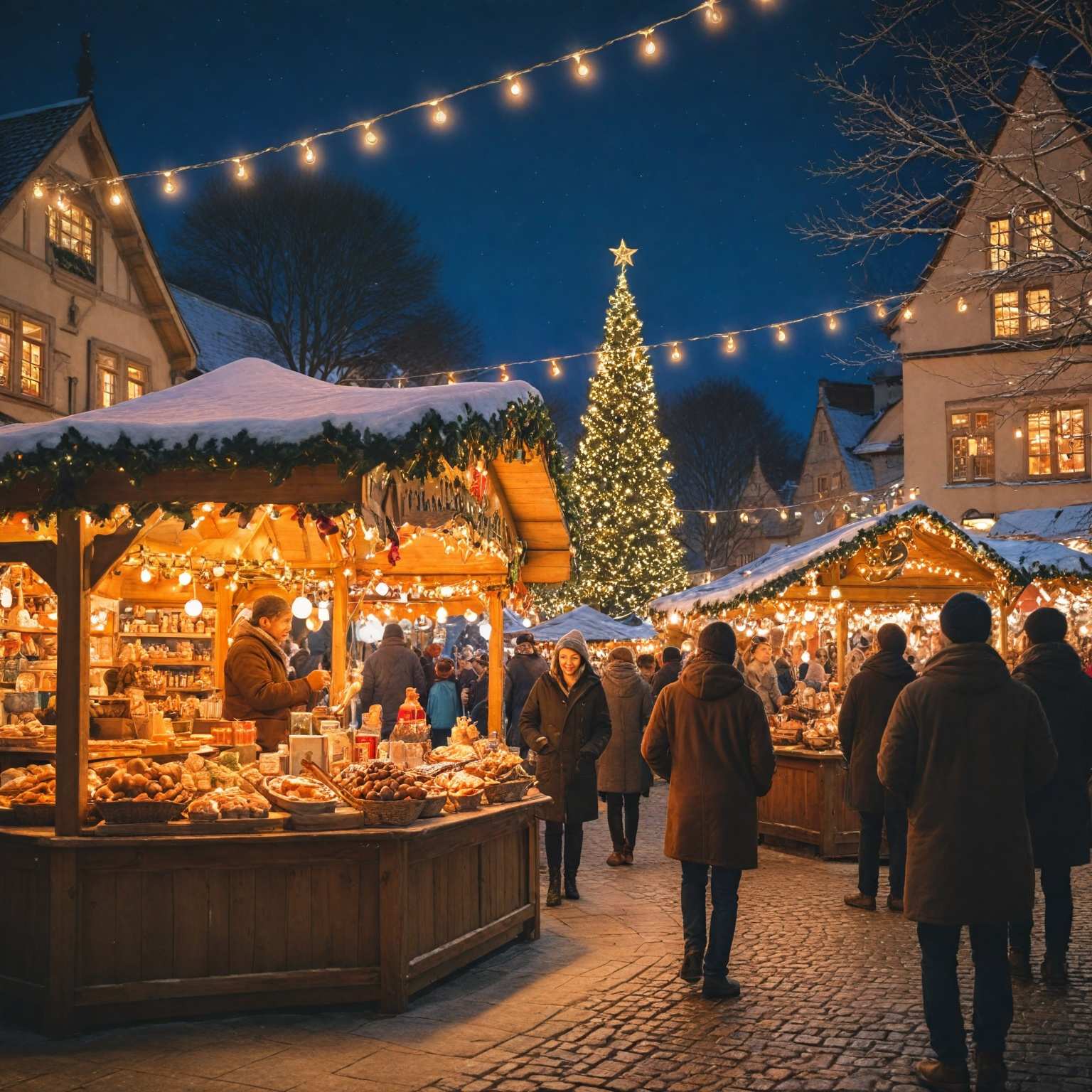
Typically held in town squares, Christmas markets feature wooden chalets or stalls adorned with lights and decorations, selling a variety of goods such as toys, ornaments, handmade crafts, and festive foods. Food specialties differ regionally but often include roasted chestnuts, gingerbread (Lebkuchen), Stollen (a sweet bread with candied fruit), and regional delicacies like Baumstriezel, Kartoffelpuffer, and Lángos in Central Europe, or tarte flambée and vin chaud in the Alsace region of France. Mulled wine (Glühwein), spiced with cinnamon, cloves, orange peel, and star anise, is a hallmark beverage that fills the air with its inviting aroma.
A distinctive tradition in some German markets, such as the famous Christkindlesmarkt in Nuremberg, is the ceremonial welcoming of the Christkind, a figure originally representing the infant Jesus but often portrayed as an angelic child, who inaugurates the market season. Many markets also feature traditional singing, dancing, and live nativity performances, enhancing their authentic and nostalgic atmosphere.
While Christmas markets evoke a strong sense of nostalgia and communal warmth, their modern incarnation is deeply influenced by commercial culture and tourism, with many cities enhancing the experience through light and sound shows, fairground rides, and cultural programs including workshops and children’s activities. This fusion of tradition and modern entertainment ensures the markets remain dynamic and widely appealing.
Major Christmas Markets Worldwide
Christmas markets have a long-standing tradition that originated in German-speaking Europe during the Middle Ages and have since become a cherished festive phenomenon worldwide. Today, there are more than 1,400 Christmas markets in Germany alone, with the tradition spreading across Europe and beyond, reaching cities from London to Moscow, and New York to Tokyo.
Germany
Germany remains the heartland of Christmas markets, featuring some of the oldest and most iconic events. Dresden’s Striezelmarkt, one of the oldest Christmas markets in the world, was first held for a single day on Christmas Eve in 1434. Another flagship market, Nuremberg’s Christkindlesmarkt, dates back to the early 16th century and draws around 2 million visitors annually, with about 200 stalls set up in the city’s central market square. Other major German markets include those in Dortmund, which attracts over 3.5 million visitors with its 300 stalls and giant 45-meter Christmas tree, and Cologne, welcoming around 4 million people each year. Frankfurt and Stuttgart also host markets that attract more than three million visitors each.
Aachen’s Christmas Market offers an authentic German experience, drawing more than 1.5 million visitors annually. From late November to late December, the city center transforms into a festive winter wonderland with numerous wooden chalets selling traditional treats and crafts.
Austria and Switzerland
Austria’s largest Christmas market, the Vienna Christmas World on Rathausplatz, is one of the most visited, attracting some 3 million visitors annually. It features around 150 stalls offering Austrian foods, decorations, handicrafts, and drinks, all set against the backdrop of Vienna’s historic city hall. Switzerland hosts renowned markets in cities like Basel, Bern, Lucerne, and Zurich, which are often included in multi-day itineraries of European Christmas market tours. These markets frequently showcase both traditional local foods and international cuisines, reflecting Switzerland’s diverse cultural influences.
France
Christmas markets are traditional in Alsace, where many towns have their own local markets. Strasbourg’s Christkindelsmärik, held around its cathedral since 1570, is among the oldest and most famous in the region, reflecting its historical ties to the Holy Roman Empire. French markets often blend Alsatian traditions with wider European influences, offering a mix of culinary delights and artisanal products.
United Kingdom
The UK has seen significant growth in Christmas markets, with over 100 held annually across the country. London’s Winter Wonderland in Hyde Park is the largest, featuring the UK’s biggest outdoor ice-skating rink, fairground rides, festive stalls, and live performances. It typically runs from mid-November through early January and attracts visitors looking for seasonal shopping and family-friendly entertainment. Edinburgh’s Christmas market at East Princes Street Gardens is another major festive event, open from mid-November to early January, offering a wide range of attractions and stalls.
Central and Eastern Europe
Cities such as Prague, Krakow, and Berlin host large Christmas markets that often stay open through the end of December. Krakow’s market, set in the vast Rynek Glowny square, is among the largest in Europe, while Berlin’s WeihnachtsZauber at Gendarmenmarkt is a highly recommended destination featuring a beautifully restored historic setting and numerous festive stalls.
United States and Global Expansion
The German-style Christmas market tradition has expanded worldwide since the 1980s and 1990s, including to the United States and Japan. Today, American cities such as New York, Chicago, and Leavenworth, Washington, host popular markets, often named Christkindlmarket in homage to their German origins. New York’s Bryant Park and Chicago’s Christkindlmarket are among the most notable, drawing locals and tourists alike for their festive atmosphere and diverse food offerings.
Market Features and Security
Modern Christmas markets retain many traditional elements, such as wooden chalets, festive lights, Nativity scenes, and seasonal treats like Lebkuchen (soft gingerbread), Glühwein (mulled wine), Bratwurst, and candied almonds. Some markets have incorporated elaborate sound-and-light shows and nightly concerts to enhance the visitor experience.
Due to occasional security concerns in recent years, especially in Western Europe, Christmas markets have adopted increased safety measures including bollards, uniformed and plainclothes police, and surveillance systems to ensure the safety of millions of visitors annually.
Christmas Market Experiences in 2025
Experiencing a Christmas Market remains one of the quintessential highlights of the holiday season, especially across Germany, Austria, Switzerland, and various other European countries. These markets, with roots dating back some seven centuries, continue to enchant visitors by reviving centuries-old cultural traditions, filling the air with festive sights, sounds, and aromas. The 2025 Christmas market season promises a rich array of events both in-person and virtual, capturing the authentic spirit of German-style Christkindlmarkets and beyond.
Most European Christmas markets commence in mid to late November—often around the third or fourth week—and continue through Christmas Eve or into the end of December. Several markets extend their celebrations into early January, particularly in France, Switzerland, and Austria, allowing travelers to enjoy the festive atmosphere even after Christmas. Market hours generally begin between 10 a.m. and midday and close by 8 to 10 p.m., with evenings and weekends drawing the largest crowds. For a more relaxed visit, early afternoon or weekday trips are recommended to avoid peak times and experience the magical dusk ambiance.
Among the most acclaimed markets in Germany for 2025 are those in Nuremberg, Munich, Cologne, and Dresden, renowned for their excellent organization and popularity. Other notable European destinations featuring vibrant Christmas markets include Vienna, Prague, and Berlin, the latter hosting the Christmas Magic market at Gendarmenmarkt from November 24 through December 31, 2025. Many markets incorporate a variety of attractions such as fairground rides, Christmas trains, light and sound shows, carnival games, and live performances, creating a festive environment that appeals to visitors of all ages.
Traditional culinary delights play a significant role in the market experience. Visitors can savor regional specialties like mulled wine (Glühwein), bratwurst, roasted chestnuts, sweets, and candies, which contribute to the warm and inviting atmosphere. Artisan stalls often showcase thousands of handcrafted treasures, from miniature nativity figurines to unique decorations, offering a glimpse into local craftsmanship and holiday customs. In some regions, such as Italy, live presepe performances bring nativity scenes to life with locals dressed as biblical characters, enhancing the cultural depth of the markets.
Christmas markets are not limited to Europe; similar events inspired by European traditions take place in other parts of the world, such as the Union Square Holiday Market in New York City, which runs through early January 2025 and emulates the European market style. Additionally, community-run markets like the Canandaigua Christkindl Market in the United States celebrate the season with a juried holiday craft show, continuing a longstanding tradition of local festive gatherings.
Whether traveling with family, friends, or as a couple, exploring the Christmas markets of 2025 offers a chance to immerse oneself in holiday cheer, discover unique gifts, and enjoy the enchanting ambiance that these markets provide across multiple continents.
Visiting Tips and Practical Information
Visiting Christmas markets offers a unique opportunity to immerse oneself in holiday traditions, from lighting advent wreaths and calendars to preparing regional recipes and engaging in seasonal crafts like gingerbread making or creating paper stars. To fully enjoy the experience, it is advisable to plan ahead by researching market dates, locations, vendor offerings, and event schedules through official websites, many of which provide detailed “Plan Your Visit” sections that are regularly updated.
Most Christmas markets open between 10 a.m. and midday and close between 8 p.m. and 10 p.m.. Peak visiting times are usually in the evenings and on weekends when the festive lighting and sound shows reach their full effect, but for a quieter experience with fewer crowds, visiting during weekdays, especially Monday or Tuesday, and earlier in the day is recommended. Crowds tend to be less intense during these times, which also reduces wait times at food and drink stands.
Security has become an important aspect of modern Christmas markets due to occasional threats in some Western European cities. Many markets now employ measures such as bollards, uniformed and plainclothes police officers, and surveillance to ensure visitor safety.
Food and drink are central to the market experience. Sampling traditional treats like candied almonds (Gebrannte Mandeln), soft gingerbreads such as Lebkuchen and Magenbrot, Bratwurst, and popular beverages like Glühwein (mulled wine) or Eierpunsch (an egg-based warm alcoholic drink) is highly recommended. To avoid the hassle of language barriers when ordering, it helps to familiarize oneself with common terms or bring along a translation app, though it is best to do so before the markets become crowded.
Many markets feature themed or international sections, such as the Place Gutenberg International Guest Christmas Market, which each year spotlights a different guest country with its unique cuisine, crafts, and cultural traditions, providing a multicultural holiday experience. Additionally, markets range from large urban events in cities like London, Basel, and Chicago, to smaller, more intimate markets in towns and villages, which many visitors find more charming and less crowded.
For ticketed events like Winter Wonderland London, entry is timed and visitors must arrive at their allocated time slot. The market is open daily from 10 a.m. to 10 p.m., except Christmas Day, with the last entry at 9:30 p.m. New package deals for 2025 include perks such as discounted attraction entry and ride credits, making it easier to plan a full day at the event.
To maximize enjoyment, it is advisable to plan itineraries based on available time; for example, a 5-7 day route might cover major markets in France, Switzerland, and Germany, while longer trips can include additional locations or smaller markets off the beaten path. Booking accommodations nearby can also enhance convenience, such as staying close to Baltimore’s Inner Harbor Christmas Village or near other popular market locations.
Cultural and Economic Significance
Christmas markets, while often perceived as an ancient tradition, are in fact a relatively modern cultural phenomenon rooted in 19th-century commerce and consumption. Historian Joseph Perry
Gallery
Christmas markets in Europe and beyond offer a vibrant and immersive festive experience, capturing the spirit of the holiday season through their unique settings, handcrafted goods, and traditional celebrations. Scenes from Salzburg’s Christkindlmarkt showcase historic architecture adorned with twinkling lights, bustling stalls filled with handcrafted treasures, and joyful musical performances such as public choir sing-alongs and traditional wind music from city towers.
At Cologne Cathedral, visitors can enjoy more than 100 free performances in a packed program that enhances the festive atmosphere, while children are entertained with puppet shows and storytelling in a dedicated children’s corner. Meanwhile, Hyde Park’s Winter Wonderland presents a lively open-air European market village featuring a wide range of vendors offering apparel, accessories, artwork, holiday décor, and specialty foods such as miniature donuts and artist-designed knit blankets.
Typical visual highlights across these markets include rows of stalls decorated with Christmas trees, nativity scenes, and lights, alongside scenes of visitors savoring traditional festive foods like mulled wine, bratwurst, roasted chestnuts, and seasonal sweets, all contributing to a warm and joyful holiday ambiance.
The content is provided by Blake Sterling, Direct Bulletins