Highlights
- The innovative gadget set to replace walkers aims to enhance safety and independence.
- Smart walking aids are projected to become a multi-billion-dollar market within the next decade.
Summary and Background
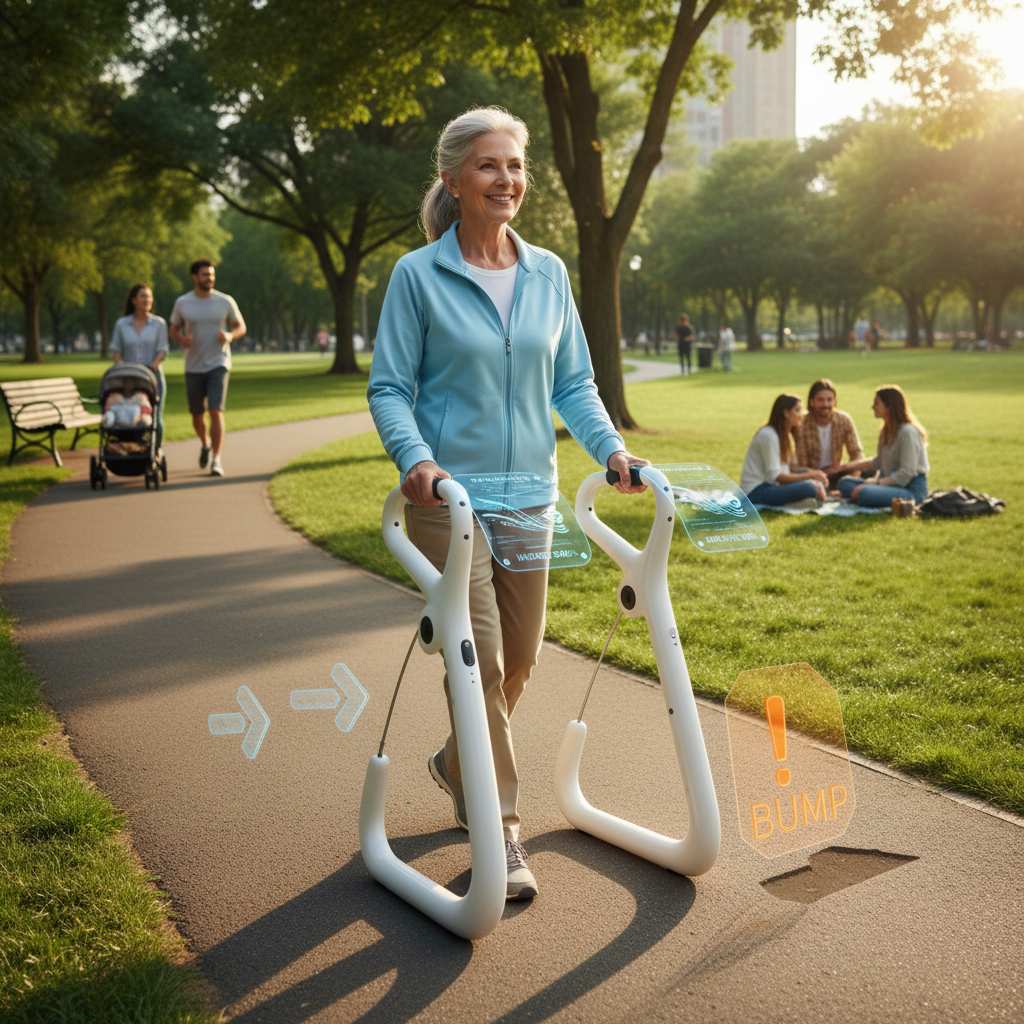
The new gadget set to replace traditional walkers in 2025 integrates AI, sensors, and personalized rehabilitation support, offering real-time hazard detection, gait analysis, navigation, and emergency response to improve safety and independence for older adults and those with mobility impairments. Developed by collaborations between tech companies and healthcare professionals, these devices are lighter, ergonomic, and customizable, using soft materials and AI to adapt to users’ walking patterns. Market growth is driven by an aging population and demand for smarter mobility aids, although challenges include infrastructure changes, privacy concerns, financial barriers, and the need for stronger clinical evidence.
Development and Features
Leading companies such as WIRobotics, Honda, and Lifeward are innovating through AI-powered gait analysis, sensor arrays, and user-friendly designs. The devices include force and torque sensors, cameras, and feedback interfaces tailored to user needs, with privacy safeguards for GPS data. Soft textiles and lightweight materials enhance comfort and safety, enabling use in homes and rehabilitation settings. Financing models and regulatory improvements aim to expand accessibility, positioning the gadget as an intelligent rehabilitation partner rather than just a mobility tool.
Clinical Applications
Advanced technologies like wearable robotics, VR, and avatar-based programs enhance rehabilitation by promoting motor learning, muscle strengthening, and engagement for conditions such as stroke and Parkinson’s disease. These devices support remote monitoring and personalized treatment, aiding continuity of care. Clinicians ensure alignment with patient needs and refine designs, although more clinical evidence is needed to validate cost-effectiveness and therapeutic benefits. Integration into postinpatient care helps maintain gains, reduce caregiver burden, and prevent falls.
User Experience and Feedback
The new walkers combine physical support with cognitive assistance via embedded sensors and interactive feedback, aiding daily activities and safe navigation. Caregivers and healthcare professionals emphasize the importance of safety features like alarms and fall detection. Devices like the Nitro Euro walker receive praise for comfort and adjustability. Assessing cognitive function before training is important, and more rigorous clinical trials are needed to confirm efficacy. Broader social engagement also supports adoption and addresses emotional needs.
Market Adoption and Impact
Market growth is fueled by advances making devices lighter, affordable, and customizable, with 78% of respondents planning investments in sensor-integrated models for home care. Key players drive adoption through partnerships and product diversification, with North America and Europe leading due to healthcare spending and tech adoption. Consumers prefer lightweight, foldable models with customizable features and augmented reality training. Despite high satisfaction ratings, market saturation signs and infrastructure transitions, such as the UK’s analog line phase-out, pose challenges and opportunities for manufacturers.
Comparison with Other Mobility Aids
Compared to traditional walkers and canes, the 2025 gadget offers AI-driven personalized support, real-time health monitoring, GPS navigation, and collision avoidance, surpassing mechanical assistance. While two-wheel and knee walkers improve gait and mobility, they lack smart features and digital integration. Recent enhancements in traditional aids focus on comfort but not safety or connectivity. The new device’s modular, sensor-integrated design aligns with home care needs, reflecting a shift toward portable, intelligent mobility aids that enhance autonomy and fall prevention.
Challenges and Criticisms
Infrastructure changes, such as the UK’s switch from analog to digital phone lines, threaten device connectivity. Rehabilitation robotics face limited research on cost-effectiveness and concerns about therapist deskilling, though robots may upskill clinicians. Assistive technologies prioritize user autonomy but must balance advanced features with usability. Financial and regulatory barriers remain, despite innovative financing options. Quality control challenges have led some companies to in-house manufacturing to ensure standards and rapid iteration, essential for meeting diverse user needs.
The content is provided by Jordan Fields, Direct Bulletins