Highlights
- Embrace advanced tech to boost warehouse efficiency and meet evolving customer expectations.
- Strengthening supplier relationships is key to navigating supply chain challenges in 2025.
Summary
Unlocking Warehouse Inventory Sales: Essential Strategies for 2025 explores the transformative approaches and technologies shaping warehouse inventory management and sales in the evolving business landscape of 2025. As supply chains face increasing complexity due to rising e-commerce demand, fluctuating market conditions, and geopolitical uncertainties, effective warehouse inventory sales have become critical for operational efficiency, cost control, and customer satisfaction. This article highlights the pivotal role of integrating advanced Warehouse Management Systems (WMS), automation, artificial intelligence (AI), and data-driven strategies in optimizing inventory turnover and enhancing order fulfillment.
The implementation of automation technologies—including autonomous mobile robots, automated storage and retrieval systems, and AI-powered predictive analytics—enables warehouses to increase throughput, reduce errors, and adapt dynamically to market demands. Coupled with real-time inventory tracking and the integration of inventory with Customer Relationship Management (CRM) systems, these innovations support seamless coordination between sales, supply, and warehouse operations. Furthermore, sustainability practices, such as energy-efficient automation and waste reduction through cycle counting, are increasingly embedded into warehouse strategies to align operational efficiency with environmental responsibility.
Supplier Relationship Management (SRM) emerges as a vital component in 2025, emphasizing collaboration, transparency, and contingency planning to mitigate risks related to supply disruptions and fluctuating trade policies. Strong supplier partnerships, facilitated by technology-enabled communication and data sharing, enhance supply chain resilience and inventory accuracy, which are crucial in the face of global market volatility. However, challenges persist, including labor shortages, cybersecurity risks, and the need to balance stock levels precisely to prevent costly overstocking or stockouts, underscoring the importance of agile and technology-driven management approaches.
Overall, the article provides an in-depth analysis of the strategic, technological, and operational factors unlocking warehouse inventory sales success in 2025. It underscores how emerging technologies and collaborative practices are reshaping sales strategies and supply chain outcomes, positioning warehouses to meet growing customer expectations while navigating a complex and rapidly changing environment.
Importance of Warehouse Inventory Sales
Warehouse inventory sales play a crucial role in maintaining efficient and cost-effective supply chain operations. Effective management of inventory sales ensures that businesses can meet customer demand without overstocking or holding obsolete products, which helps reduce costs and improve service quality throughout the supply chain. Balancing inventory levels is essential to avoid stockouts, which directly affect sales and customer satisfaction, as evidenced by studies showing that nearly a quarter of consumers were unable to purchase desired products due to inventory shortages.
In modern business environments, warehouse inventory management has evolved from a back-office function to a core strategic element impacting customer satisfaction and profit margins. Leveraging real-time tracking, artificial intelligence, space optimization, and data analytics enables companies to stay agile and accurate, thereby maximizing profitability in 2025 and beyond. Furthermore, efficient warehouse inventory sales facilitate faster order fulfillment, ensuring that customers receive the right products at the right time, which is vital for maintaining customer loyalty and positive supplier relationships.
Strong collaboration and communication with suppliers are also integral to optimizing inventory sales. Maintaining transparent and accountable relationships with suppliers helps streamline processes, improve supply chain visibility, and reduce risks associated with stockouts or delays. Regular review of lead times, delivery schedules, and stock levels, along with establishing backup supplier options, can prevent disruptions and sustain smooth inventory flows. Overall, warehouse inventory sales are foundational to achieving high-quality service, cost savings, and enhanced supply chain resilience.
Essential Strategies for Unlocking Warehouse Inventory Sales in 2025
Unlocking warehouse inventory sales in 2025 requires a blend of advanced technology adoption, strategic inventory management, and sustainability-focused practices. Warehouses must leverage modern tools and methodologies to optimize inventory control, enhance operational efficiency, and meet evolving customer demands.
Implementation of Warehouse Management Systems (WMS) and Automation
A cornerstone strategy is the deployment of advanced Warehouse Management Systems (WMS). These systems provide comprehensive capabilities such as real-time inventory tracking, optimized storage allocation, and streamlined order fulfillment processes, which collectively improve inventory accuracy and operational productivity. Integration of WMS with automation technologies—such as Automated Storage and Retrieval Systems (AS/RS), autonomous mobile robots (AMRs), and barcode scanning—accelerates picking, reduces errors, and minimizes manual labor, significantly boosting warehouse throughput.
Automation powered by artificial intelligence (AI) enhances decision-making across the supply chain by improving demand forecasting, optimizing inventory levels, and enabling real-time operational adjustments. AI-driven robots support tasks like picking, sorting, and packing with greater speed and accuracy, addressing labor shortages while improving safety and efficiency.
Inventory Optimization and Data-Driven Management
Effective inventory management balances stock levels to avoid excess or shortage, ensuring customer satisfaction while minimizing costs tied up in unsold inventory. Employing cycle counting and inventory reorganization techniques—such as re-slotting and the use of totes or dividers—unlocks hidden storage potential and supports nearly 100% inventory accuracy, a critical target for sustainable warehouse operations.
Data-driven decision-making facilitates alignment of inventory with actual market demand, reducing waste and enabling just-in-time (JIT) strategies. Accurate, real-time stock updates empower sales teams with current inventory data, enhancing quote accuracy and accelerating deal closure. Furthermore, personalization through customer buying behavior analysis allows stocking of relevant products, providing a seamless and tailored customer experience.
Integration of Inventory and Customer Relationship Management Systems
Integrating inventory management with Customer Relationship Management (CRM) systems streamlines operations by consolidating inventory and customer data. This fusion improves sales and marketing efforts, enhances customer service, and increases operational efficiency across accounting, purchasing, production, and warehouse functions. Real-time stock updates across multiple selling platforms—including e-commerce websites and marketplaces like Amazon and eBay—help prevent overstocking and stockouts, enabling businesses to respond swiftly to market changes.
Sustainability and Operational Efficiency
Cycle counting and accurate inventory tracking contribute to greener warehouse practices by minimizing overordering and reducing waste. Optimized inventory management supports better demand forecasting and purchasing strategies, lowering the environmental footprint and ensuring smoother supply chain operations. As warehouses embrace automation and AI, they also achieve greater resilience and process optimization, addressing labor challenges while improving overall efficiency.
Technological Innovations Shaping Warehouse Inventory Sales in 2025
Warehouse inventory sales in 2025 are being transformed by a convergence of cutting-edge technologies designed to enhance speed, accuracy, efficiency, and sustainability. As e-commerce sales are projected to exceed $6.86 trillion, warehouses must integrate these innovations to meet escalating customer demands and operational complexities.
Automation and Robotics
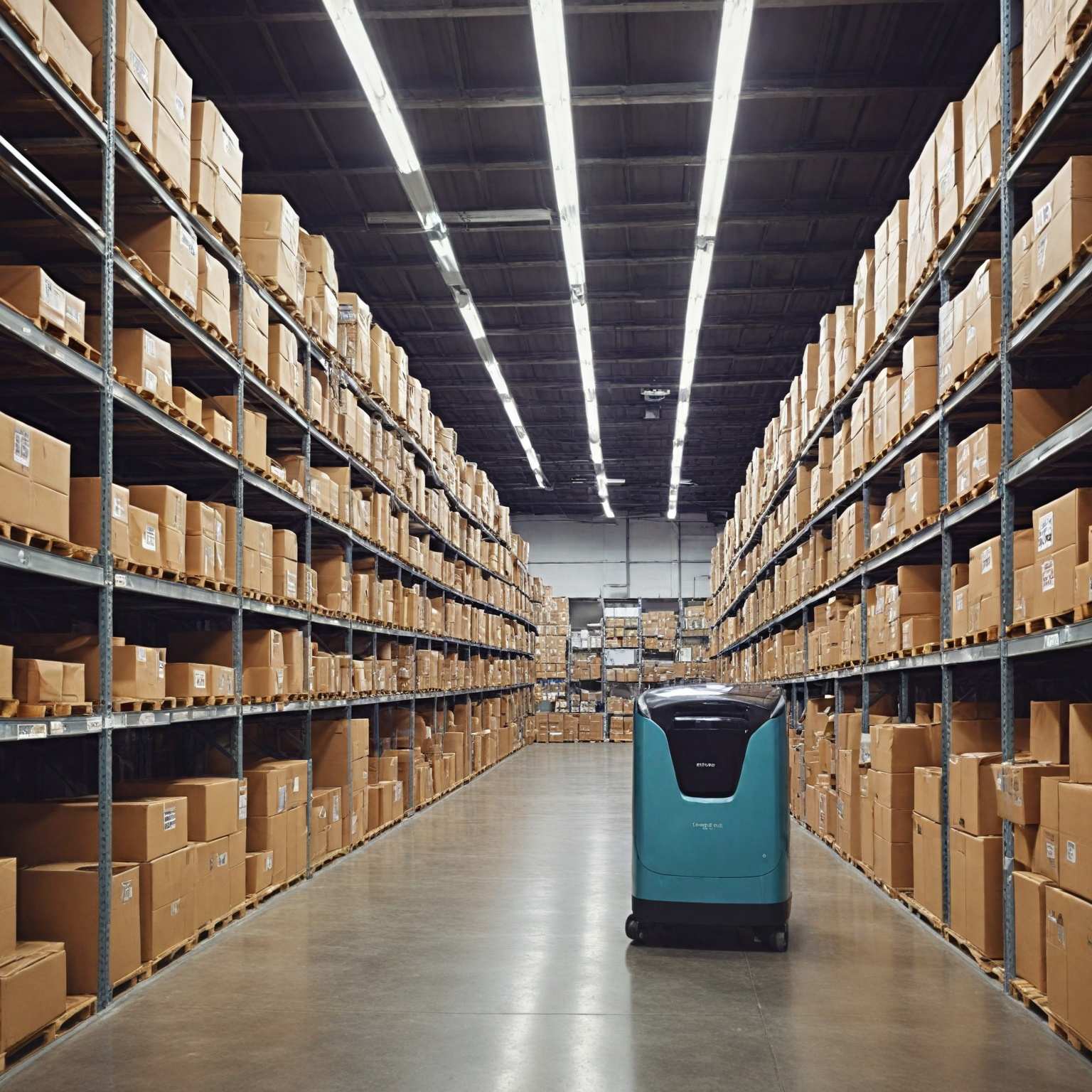
Automation remains at the forefront of warehouse modernization, with autonomous mobile robots (AMRs), automated guided vehicles (AGVs), and collaborative robots (cobots) increasingly deployed to streamline inventory handling, picking, packing, and sorting tasks. These robotic systems reduce labor-intensive manual work, minimize human error, and accelerate order fulfillment processes, thereby boosting productivity and scalability. Integration of these robots with modern Warehouse Management Systems (WMS) enables seamless coordination of automated workflows, further improving operational efficiency.
Artificial Intelligence and Predictive Analytics
Artificial intelligence (AI) is revolutionizing warehouse inventory management through advanced demand forecasting, real-time decision-making, and optimization of inventory levels. AI-driven algorithms analyze historical data, market trends, and seasonality to predict demand patterns and facilitate just-in-time inventory management, reducing stockouts and overstock situations. Additionally, AI enhances route optimization for picking and replenishment tasks, monitors equipment health via predictive maintenance, and improves workforce management by forecasting labor needs.
Warehouse Management Systems (WMS) and Cloud Technology
Advanced WMS platforms serve as the digital backbone of warehouse operations by providing comprehensive tools for inventory tracking, storage optimization, and timely order fulfillment. Modern systems extend beyond basic functions, incorporating real-time coordination of automated equipment, labor management, and inventory location optimization. Cloud-enabled WMS solutions offer centralized data access and increased flexibility, supporting scalability and agility for diverse business models—from large third-party logistics providers to growing small and medium-sized enterprises.
Internet of Things (IoT) and Edge Computing
IoT integration enhances warehouse visibility and control by enabling real-time tracking of goods, equipment performance, and workflow benchmarks through sensor networks. Managers can access live dashboards that provide actionable insights to prevent bottlenecks and optimize resource allocation. Edge computing complements IoT by processing data locally on the warehouse floor, facilitating faster response times and more agile decision-making without reliance on distant cloud servers.
Sustainability and Energy Efficiency Technologies
Sustainability is becoming a critical component of warehouse innovation. Solar-powered warehouses are increasingly common, leveraging large rooftop areas to generate surplus clean energy, often exceeding their consumption needs. Right-sized packaging automation minimizes material usage and shipping emissions by customizing package dimensions to products, while space optimization through vertical storage and high-density automation reduces land use and carbon footprints associated with construction. These green innovations not only contribute to environmental goals but also reduce operational costs.
Emerging Connectivity Technologies
The adoption of 5G technology in warehouses enhances communication speeds and supports the proliferation of connected devices, improving real-time data transmission and coordination among automated systems. This connectivity underpins advanced automation and AI applications, enabling more responsive and adaptable warehouse operations.
Together, these technological innovations are fundamentally reshaping warehouse inventory sales by increasing efficiency, accuracy, sustainability, and responsiveness, positioning warehouses to thrive in the dynamic landscape of 2025 and beyond.
Supplier Relationship Management and Collaboration
Supplier Relationship Management (SRM) is a critical component of modern supply chain practices, offering benefits such as risk reduction, cost savings, quality improvement, and innovation. In 2025, organizations are encouraged to avoid shortcuts in hiring procurement and strategic sourcing talent, instead engaging specialists who possess deep knowledge and foresight regarding global market trends and supplier dynamics. Establishing robust supplier relationships requires deliberate actions like regular engagement through scheduled meetings to review performance, resolve issues, and explore collaboration opportunities.
Effective collaboration with suppliers enhances supply chain efficiency, resilience, and competitiveness by fostering trust, transparency, and accountability. Shared visibility and real-time data exchange enable agile decision-making, proactive risk management, and streamlined operations across the supply network. The use of technology—such as procurement software, supplier portals, electronic data interchange (EDI), transportation management systems (TMS), and warehouse management systems (WMS)—facilitates seamless communication and strategic alignment between partners, thereby strengthening supplier relationships and improving overall supply chain performance.
Collaboration also positively impacts warehouse operations by ensuring timely deliveries, optimizing inventory levels, and reducing lead times. Sharing sales forecasts and inventory data with suppliers allows them to anticipate stock needs more accurately, leading to improved order quantities and delivery scheduling. This strategic exchange of information minimizes risks associated with inventory shortages and overstocking, contributing to enhanced supply chain resilience.
Furthermore, SRM strategies in 2025 emphasize having contingency plans such as backup suppliers to mitigate disruptions, which is essential for maintaining continuous inventory flow and meeting demand. As global trade becomes increasingly complex and geopolitically sensitive, these collaborative and proactive approaches to supplier management are vital for securing supply, controlling costs, and sustaining competitive advantage.
Operational Challenges and Risks in 2025
In 2025, warehouse inventory management faces a complex landscape shaped by evolving trade policies, market volatility, and technological advancements. One of the foremost challenges arises from fluctuating demand patterns and supply chain disruptions, which complicate maintaining optimal inventory levels. Businesses must navigate uncertainties related to tariffs and import duties, especially with U.S. trade policies influencing North American supply chains, making the timing of inbound shipments critical to cost management and operational continuity.
The risk of overstocking or stockouts persists as a central concern, directly impacting customer satisfaction and operational efficiency. Inaccurate inventory tracking—currently reported at only 63% accuracy among U.S. retailers—exacerbates these challenges, leading to frequent stock issues and increased costs. To address these risks, companies are encouraged to develop contingency plans such as securing multiple suppliers to mitigate single-supplier dependencies and supply disruptions.
Labor efficiency also presents a notable operational risk. Repetitive manual tasks can lead to fatigue-related errors and decreased throughput, emphasizing the need for automation and task reallocation. Autonomous mobile robots (AMRs) are increasingly adopted to handle transport and movement within warehouses, allowing staff to focus on higher-value activities like quality control and inventory exception handling, thereby reducing errors and improving productivity.
Moreover, the ongoing evolution of global markets and customer demands requires warehouses to adapt dynamically. The complexity of inventory challenges is heightened by the need for dynamic pricing and demand forecasting models that respond in real-time to shifting market conditions. Advanced technologies such as artificial intelligence (AI), Internet of Things (IoT) sensors, and machine learning are becoming critical tools for predicting demand accurately and maintaining inventory agility.
Finally, technological risks related to warehouse security and system reliability cannot be overlooked. As warehouses increasingly rely on integrated IT solutions—such as electronic data interchange (EDI), transportation management systems (TMS), and warehouse management systems (WMS)—they become vulnerable to cyber threats and operational disruptions. The adoption of advanced security technologies and robust collaboration platforms is essential to safeguard digital infrastructure and ensure seamless supply chain operations.
Influence of Emerging Warehouse Technologies on Sales Strategies and Outcomes
The rapid evolution of warehouse technologies is significantly transforming sales strategies and outcomes, especially as e-commerce continues its exponential growth. Automation, artificial intelligence (AI), robotics, and the Internet of Things (IoT) are central to this transformation, enabling warehouses to operate with greater speed, efficiency, and flexibility to meet rising customer expectations.
AI-powered systems enhance inventory management by tracking SKU performance in real time, identifying emerging trends, and dynamically optimizing product placements to reduce retrieval times. This adaptability allows companies to seamlessly pivot between business models—for example, shifting from primarily B2C to B2B operations within weeks—without disrupting warehouse workflows. Consequently, sales teams benefit from more accurate and timely inventory information, which supports faster quoting and deal closures. Features such as automatic balance control and customizable notifications help maintain up-to-date stock levels and prevent overselling, further improving sales efficiency.
Predictive analytics play a critical role in aligning sales and inventory strategies by forecasting demand based on historical sales data, customer behavior, and external factors like seasonal changes. These insights allow warehouses to optimize stock levels, reduce costs associated with overstocking or emergency shipments, and maintain consistent order fulfillment even during peak periods such as Black Friday. Additionally, automation technologies—such as voice-picking systems, pick-to-light technology, and wearable devices—streamline order processing, ensuring higher order accuracy and faster fulfillment that directly benefit sales outcomes.
The integration of automated storage and retrieval systems (ASRS) and advanced analytics platforms provides detailed visibility into warehouse performance metrics, enabling continuous improvements in both operational efficiency and sales responsiveness. Overall, emerging warehouse technologies empower businesses to meet escalating customer demands for faster deliveries and accurate orders while supporting environmentally sustainable operations, thereby enhancing the effectiveness of sales strategies in 2025 and beyond.
Examples and Industry Insights
In 2025, the integration of advanced technologies and strategic practices is reshaping warehouse inventory and sales management across industries. Companies such as vTradEx exemplify this shift by leveraging cloud technology to drive digital transformation within logistics, enhancing supply chain decision-making through their Transportation Management System (TMS) and Warehouse Management System (WMS) platforms. These systems automate warehouse operations and support the transportation ecosystem, catering especially to retail technology needs like merchandising and omnichannel inventory management. The expertise of vTradEx’s team in operations, supply chain, and merchandising enables brands to achieve automated decision-making, improved process accuracy, sustainability, and operational efficiency.
The strategic role of warehouses is increasingly recognized by retailers, prompting higher investments in automated warehouse systems (AWS). While traditional operational factors have long influenced these investments, emerging research highlights the importance of strategic considerations in successful AWS implementation. The concept of dynamic capabilities is proposed as a theoretical lens to better understand variation in outcomes, alongside the refinement of strategic intent profiles that can guide future empirical studies on warehouse automation adoption.
Supplier Relationship Management (SRM) remains a cornerstone of modern supply chains, offering benefits
Future Trends and Predictions
The landscape of warehouse inventory and sales management in 2025 is being reshaped by several key trends and technological advancements. Dynamic demand forecasting, powered by artificial intelligence (AI), Internet of Things (IoT) sensors, and machine learning, is becoming a critical differentiator for leading logistics companies. These technologies enable real-time analysis of consumer behavior, sales channels, and external market factors, allowing businesses to anticipate demand fluctuations with greater accuracy and agility. As a result, companies can implement just-in-time inventory management, optimizing supply to meet precise customer demand while minimizing excess stock.
AI also plays a vital role in operational efficiency within warehouses. Algorithms optimize picking routes to reduce retrieval times, while predictive maintenance systems monitor equipment health to prevent costly breakdowns. Furthermore, AI-driven workforce management predicts staffing needs based on historical labor data and seasonal trends, ensuring effective resource allocation. The integration of automation technologies, including robotic shelving and automated picking systems, further enhances productivity by streamlining repetitive tasks such as picking, packing, sorting, and inventory updates. These tools not only boost throughput but also reduce operational risks and labor costs.
Real-time inventory visibility is another emerging trend facilitated by cloud-based warehouse management systems (WMS). These platforms provide scalable, flexible solutions tailored to different business sizes and complexities—from high-volume third-party logistics (3PL) operators to lean e-commerce brands—enabling seamless tracking and management of thousands of SKUs across multiple facilities. Cloud WMS solutions generally adopt subscription pricing models that vary by user count and feature set, contrasting with more capital-intensive on-premise systems that require significant upfront investment in hardware and IT maintenance.
In addition to technology-driven innovations, supplier relationship management (SRM) is gaining prominence as a strategic focus for 2025. Strong supplier partnerships contribute to cost reduction, risk mitigation, quality improvements, and innovation. Collaborative supplier networks enhance supply chain visibility and inventory optimization, fostering trust, transparency, and accountability. This is particularly crucial amid the geopolitical uncertainties and trade challenges shaping global markets in early 2025.
External factors also continue to influence warehouse and inventory operations. The start of 2025 witnessed significant disruptions such as fires in Los Angeles and widespread snowstorms, affecting both supply chains and consumer demand. Road closures and safety concerns slowed logistics operations, while shifting priorities in affected areas reduced immediate freight needs. The net effect of these events on overall demand remains to be fully assessed, but their economic implications, especially in California, are notable. Additionally, evolving import duties and geopolitical tensions add complexity to the timing and management of shipments entering North America.
The content is provided by Blake Sterling, Direct Bulletins