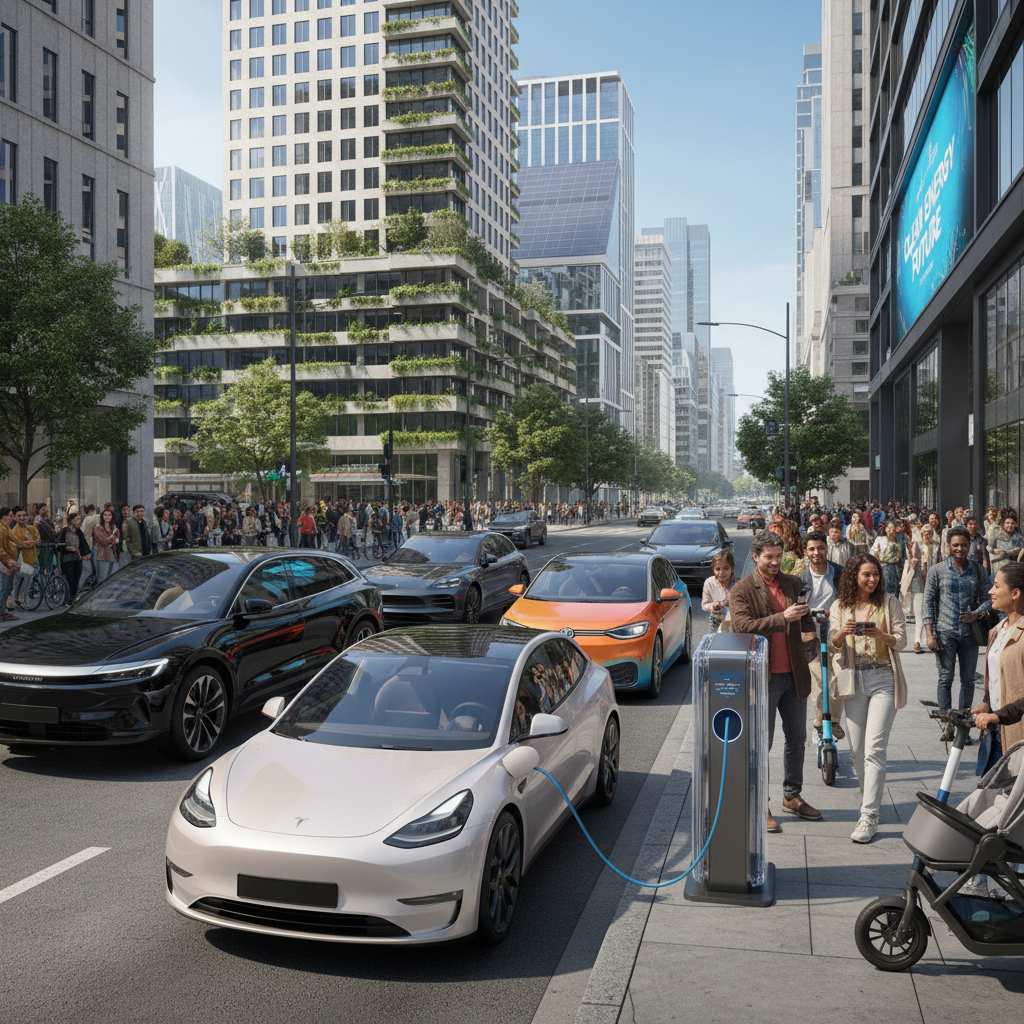
Highlights
- Electric vehicles are projected to constitute 23% of global sales by 2025, ensuring widespread adoption.
- Explore affordable and luxury electric models offering cutting-edge technology and performance advancements.
Summary
Unlocking the Future: Electric Car Models and Their Prices in 2025 highlights the significant growth in electric vehicles (EVs), forecasting a rise in their global market share to 23% by 2025 from just 3%. This shift is driven by advances in battery technology, a broader range of models, and changing consumer preferences alongside regulatory pressures. The introduction of new models including budget-friendly options like Tesla’s Model Q and Volkswagen’s ID.2, alongside luxury entries like Lucid Motors’ Gravity SUV, underscores the industry’s commitment to innovation. Economic factors, including dropping battery costs and changing government subsidies, will influence pricing and adoption rates, even as price parity with traditional vehicles becomes more feasible.
Electric Car Market in 2025
The 2025 electric car market is primed for expansion, with projections indicating that EVs will account for approximately 23% of global vehicle sales. This growth stems from enhanced battery technologies that allow for increased driving ranges and better performance, leading to a lower total cost of ownership compared to traditional internal combustion engine (ICE) vehicles. As manufacturers optimize production through supply chain partnerships and geographic concentration, competitive pricing is expected to drive wider adoption, particularly in burgeoning markets like Southeast Asia and Brazil.
Electric Car Models Releasing in 2025
In 2025, the electric vehicle market will introduce an array of models catering to diverse consumer needs. The focus on affordability is evident with Tesla’s Model Q and Volkswagen’s ID.2, both aiming to attract first-time EV buyers. The Fiat Panda Electric will also cater to urban drivers, while compact and family-oriented models like the Peugeot e-308 and the Renault 4 Electric promise solid performance and practicality. The luxury sector will introduce high-end models such as Lucid’s Gravity SUV and Porsche’s Macan EV, while emerging brands like Sony Honda Mobility’s Afeela highlight the industry’s commitment to integrating advanced technology.
Technological Innovations in 2025 Electric Cars
Technological progress is central to the development of 2025 electric vehicles, particularly in battery technology, which enhances driving range and reduces costs. Developments in solid-state batteries and alternative chemistries aim to improve safety and longevity while accelerating charging times. Charging infrastructure is also evolving, with ultra-fast charging stations becoming increasingly available. Innovations like Vehicle-to-Grid (V2G) technology will further contribute to grid stability and renewable energy integration, positioning EVs as integral to a sustainable energy future.
Pricing and Economic Factors
The pricing of electric vehicles in 2025 is influenced by various economic factors including the end of significant government incentives in key markets. While battery prices are projected to decrease, new trade policies may introduce uncertainties regarding cost competitiveness. In emerging markets, competitive pricing will foster broader EV adoption, with notable shifts in subsidy schemes and government regulations affecting overall costs. The development of charging infrastructure will also play a crucial role in managing total ownership costs, addressing concerns such as range anxiety and accessibility.
Environmental and Sustainability Considerations
Environmental impacts are central to the electric vehicle discourse, with the growth of EVs providing a pathway to reduce greenhouse gas emissions. Efforts to optimize battery production and recycling technologies are underway to minimize the ecological footprint of materials used. As manufacturers increasingly focus on sustainability and lifecycle management of batteries, innovations in recycling processes promise to enhance the overall sustainability of electric mobility, aligning with global carbon reduction goals.
Market Impact and Consumer Adoption
The EV market is transforming rapidly, driven by technological advancements and changing consumer attitudes. Projections indicate a significant increase in EV sales, influenced by broader model offerings and greater public awareness. Emerging markets are key players in this growth, benefiting from improved supply chains and government strategies designed to enhance local manufacturing. The presence of various EV options, including luxury and budget-friendly models, is likely to attract a wider consumer base and accelerate adoption rates.
Future Outlook
The outlook for the electric vehicle market in 2025 is optimistic, with substantial growth expected as new technologies and models emerge. Solid-state batteries stand to revolutionize the industry, offering faster charging and improved safety. Charging infrastructure development is crucial, with government initiatives driving fast-charging deployments even amid regulatory changes. Future consumer preferences will lean toward a diverse range of model types, aided by increasing integration of AI and autonomous features. The ongoing focus on sustainability and waste management in battery production will further enhance the desirability of electric vehicles in a rapidly changing market.
The content is provided by Harper Eastwood, Direct Bulletins