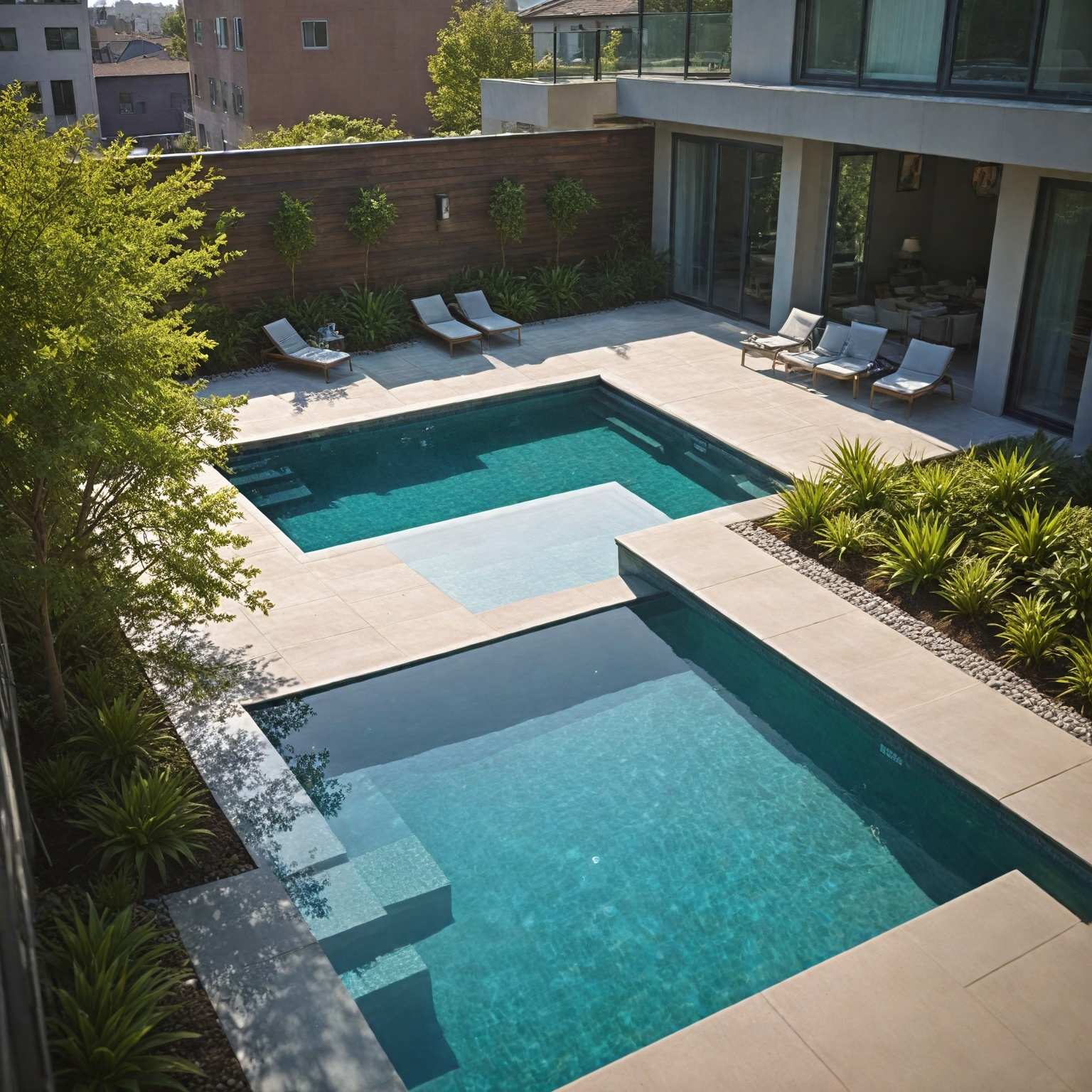
Highlights
- Space-saving pools offer functional luxury for urban and small residential environments.
- Innovative designs prioritize eco-efficiency, enhancing both sustainability and aesthetic appeal.
Summary and Definition
Space-saving pools are compact swimming pools designed for limited spaces like urban residences and small yards, offering recreation, fitness, and relaxation while minimizing spatial footprint. Common types include plunge pools, lap pools, and spools (spa-pool hybrids). These pools emphasize sustainability with energy-efficient heating, water conservation, and eco-friendly materials, addressing environmental concerns such as water and energy use. Their growing popularity is driven by urban densification and tiny living trends, supported by advances in construction and design that blend luxury with eco-efficiency.
History and Types
Swimming pools have evolved from large traditional designs to compact, versatile pools suited for smaller spaces due to lifestyle shifts and urban living. Modern space-saving pools use natural materials and multifunctional features, creating stylish, eco-friendly outdoor areas. Types include plunge pools (small, deep, for relaxation), lap pools (narrow, rectangular, for exercise), and spools (smaller than pools but larger than spas, for leisure and light workouts), each catering to different space and user needs.
Design, Construction, and Sustainability
Designing space-saving pools requires balancing aesthetics, functionality, safety, and durability, especially in urban or rooftop settings. Compliance with building codes and structural engineering is crucial to withstand site-specific forces. Materials like fiberglass, concrete, and vinyl liners enable customization and low maintenance, while geometric shapes optimize space. Sustainable features include energy-efficient heating, solar panels, water-saving measures like windbreaks and covers, and alternative disinfection methods such as saltwater chlorination, reducing environmental impact and operational costs.
Benefits and Challenges
Space-saving pools maximize limited space, allowing integration with outdoor living features and supporting fitness, relaxation, and wellness. They offer design flexibility and often lower water and energy consumption, aligning with sustainable practices. Challenges include structural demands, especially for rooftop pools, strict safety regulations, chemical management, and complex urban installation logistics. Successful projects require multidisciplinary planning to ensure safety, compliance, and sustainability.
Applications and Market Outlook
These pools suit various applications: plunge pools for relaxation in small yards, rooftop pools offering panoramic views in urban settings, combination pools merging multiple features, and swim spas used in fitness and therapy centers. The integration of eco-friendly materials and natural elements enhances their appeal. The market continues to grow, driven by demand for sustainable, stylish, and functional outdoor spaces, with ongoing innovations in automation and eco-efficient systems promising wider adoption.
Case Studies and Research
Case studies, such as a municipal pool in Thessaloniki, Greece, highlight strategies to improve sustainability through energy and water savings, employing cost-benefit and SWOT analyses for economic viability. Benchmarking models aid in identifying improvements, though some limitations remain in evaporation modeling. Research emphasizes reducing chemical use and enhancing pool heating technologies to minimize environmental impact, reflecting broader eco-efficiency trends in tourism and recreation industries.
The content is provided by Avery Redwood, Direct Bulletins