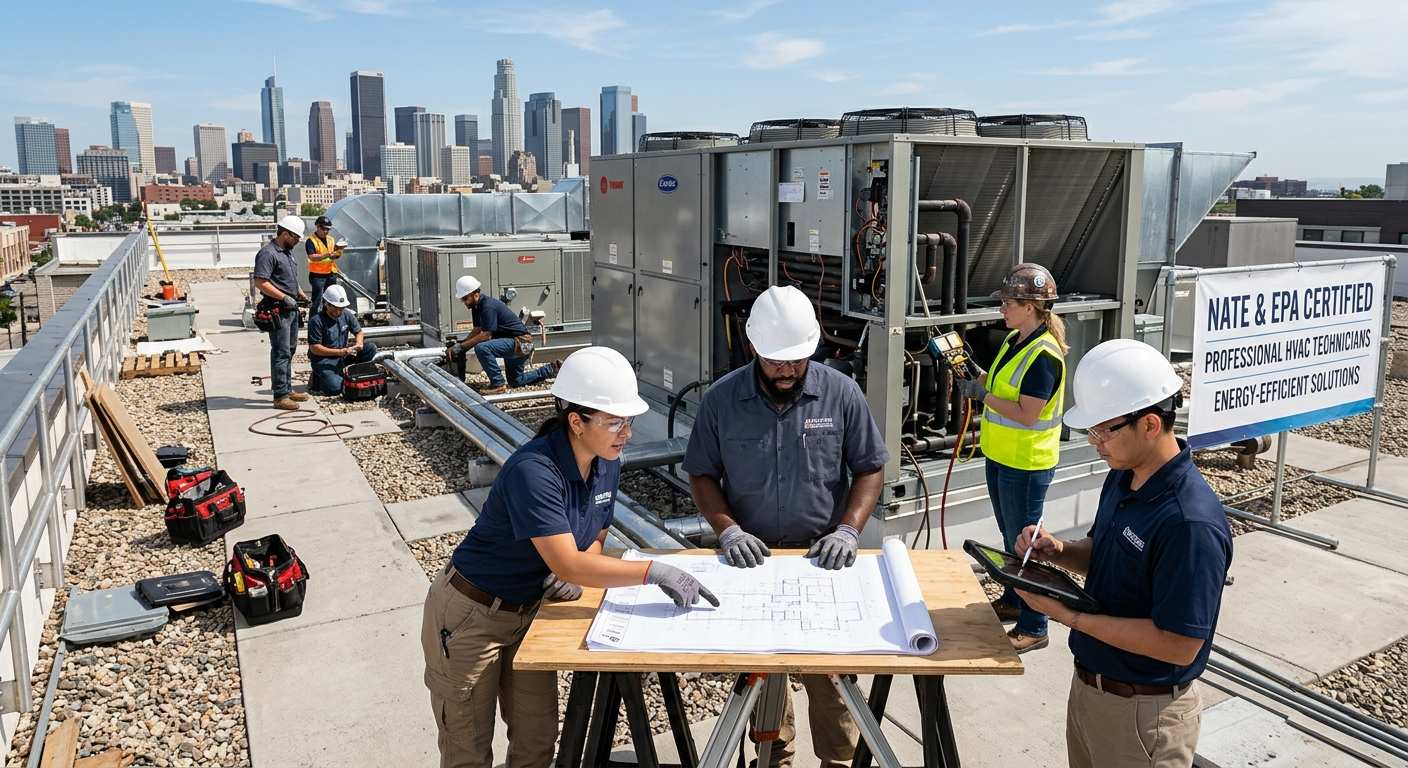
Highlights
- The HVAC industry offers robust job growth and high-paying career paths for skilled workers.
- Certifications in emerging technologies enhance credibility and unlock advanced opportunities in HVAC careers.
Summary
High-Paying HVAC Careers examines the diverse and lucrative opportunities available in the Heating, Ventilation, and Air Conditioning (HVAC) industry, which plays a vital role in maintaining indoor comfort across various settings. The U.S. HVAC employment is projected to grow by 13% from 2019 to 2029, indicating strong job prospects. Key roles such as Commercial HVAC Service Managers and Project Managers command salaries significantly above the national median, largely due to their specialized expertise and responsibilities. Certifications, including those from North American Technician Excellence (NATE) and the EPA Section 608 license, enhance professional credibility and facilitate access to advanced positions. The industry is evolving towards energy-efficient and sustainable solutions, driving demand for skills in green energy and smart HVAC systems.
Industry Overview
The HVAC sector is integral to ensuring safe and comfortable indoor environments, encompassing systems for heating, cooling, and air purification. Currently valued at approximately USD 31.26 billion, the U.S. HVAC market is projected to reach USD 38.45 billion by 2030, highlighting its robust growth rate, driven by a shift towards sustainable practices and advanced technologies. Career pathways often begin with entry-level positions like Tradesperson, advancing through training and certifications that validate skills and improve employability. The integration of new technologies requires HVAC professionals to remain adaptable and continually enhance their capabilities.
High-Paying Career Roles
Within the HVAC/R industry, high-paying careers vary by skill level and specialization. Positions exceeding the median salary of $48,630 for HVAC mechanics include Commercial HVAC Service Managers, earning a median salary of $118,500, with top earners approaching $172,000. HVAC Project Managers and specialized engineering roles also provide competitive salaries, generally ranging from $80,000 to over $129,000. Success in these roles typically requires a blend of technical expertise, regulatory certifications, and substantial practical experience.
Education and Training Pathways
To enter the HVAC field, prospective workers can pursue various educational routes, including registered apprenticeship programs, trade and vocational schools, and continuing education. Apprenticeships combine practical training with classroom instruction, generally spanning four to five years and often leading to journeyperson licensing. Trade schools provide essential theoretical and practical skills, potentially shortening apprenticeship durations. Acquiring industry certifications, such as NATE or HVAC Excellence, is crucial for career advancement and higher earning potential, as they demonstrate professional competence while facilitating specialization in high-demand areas like energy efficiency and smart systems.
Challenges and Working Conditions
HVAC professionals face several challenges, including physically demanding working conditions that require stamina and strength. Workers must navigate varying regulatory standards, which may differ by state, particularly regarding refrigerants and installation practices. As technological advancements continue to reshape the industry, technicians are required to keep their skills updated, creating both a challenge and an opportunity for career growth. Despite these hurdles, the HVAC sector remains stable, buoyed by increasing demand for climate control solutions and aging infrastructure necessitating system replacements and upgrades.
The content is provided by Blake Sterling, Direct Bulletins