Highlights
- Advanced technologies are transforming airline training, creating new career opportunities in aviation.
- Emphasizing continuous professional development is crucial for navigating the industry's evolving challenges.
Summary
Unlocking Opportunities: Exploring the Future of Airline Training Careers in 2025 outlines the evolution of aviation education amid technological advances, regulatory shifts, and sustainability demands. Training now spans pilots, maintenance engineers, cabin crew, and emerging fields like cybersecurity. Advanced simulation technologies—AI, VR, and AR—enhance skill acquisition and safety, while competency-based assessment replaces traditional knowledge exams. Challenges include regulatory fragmentation, pilot shortages, and adapting to new training methods. The future depends on embracing innovation, harmonizing standards, and preparing a workforce for complex, sustainable aviation operations.
Industry Overview and Innovations
The airline training sector is rapidly evolving with technology and regulatory changes. Demand for skilled Aircraft Maintenance Engineers (AMEs) in mechanical and avionics roles is rising alongside a growing need for qualified pilots trained via airline-focused programs emphasizing fast, efficient career pathways. Flight simulators with high-definition visuals and AI-driven scenarios improve training realism and reduce costs. Cabin crew receive comprehensive safety and service training, exemplified by programs like American Airlines’ six-week course.
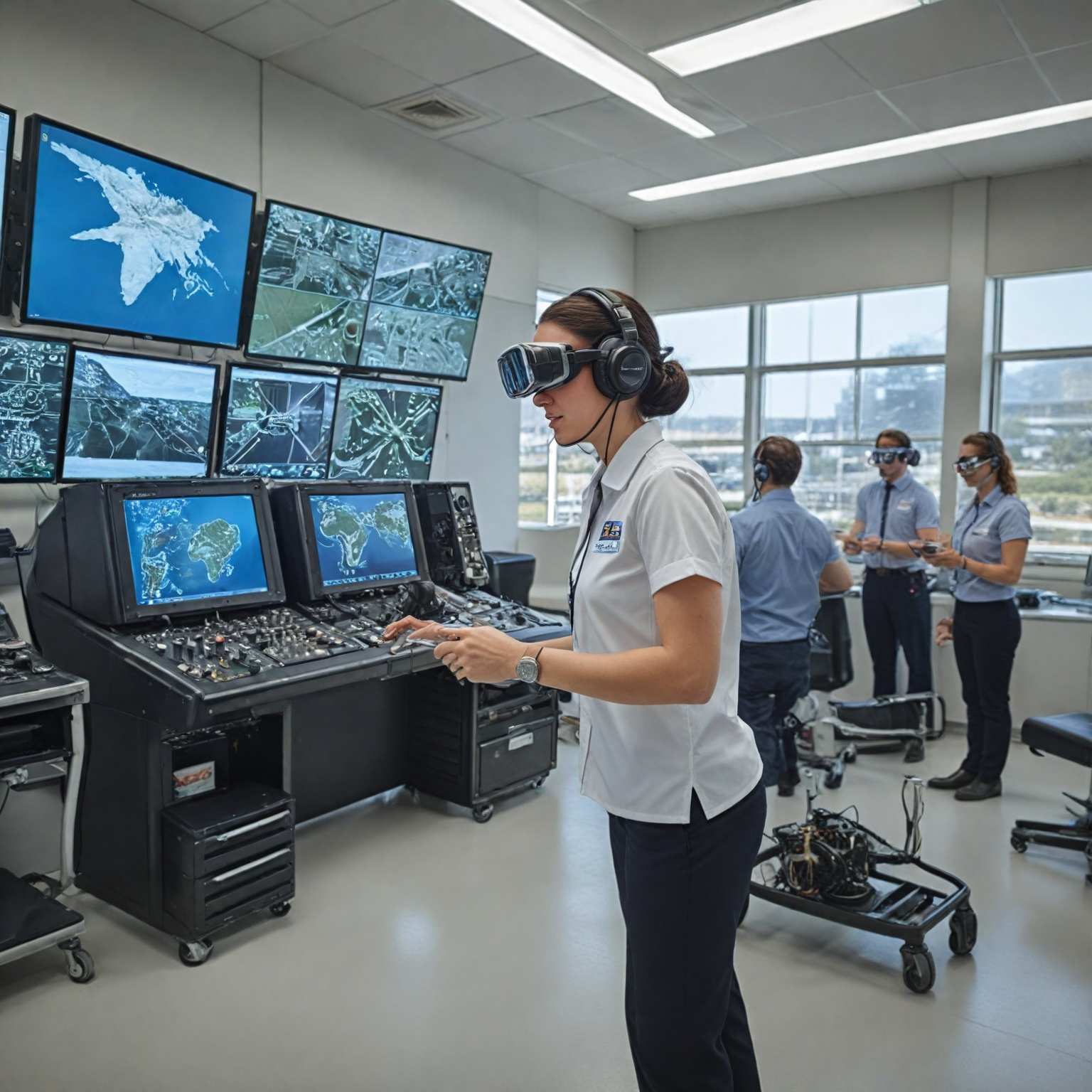
Technological advances such as VR and AR create immersive learning experiences, supporting diverse learning styles and enhancing emergency procedure training. AI optimizes pilot proficiency through adaptive training, biometric feedback, and predictive analytics, while digital platforms standardize global training for all aviation personnel. Sustainability is integrated into curricula, focusing on eco-friendly operations and compliance with evolving regulations. Gamification and interactive learning improve knowledge retention and prepare trainees for new aircraft technologies and autonomous systems.
Regional and Regulatory Landscape
Asia-Pacific leads pilot training growth, especially in China and India, driven by expanding academies and airline demand. The Middle East also sees strong enrollment increases supported by government initiatives. However, varying regional standards—such as FAA’s 1,500 flight hours versus EASA’s modular exams—complicate international certification and mobility. Upcoming regulatory updates from ICAO, FAA, EASA, and GCAA will influence training and operations, emphasizing sustainable aviation fuels (SAF) and green technologies.
Regulatory divergence challenges harmonization, but initiatives like ICAO’s NextGen aim to align training globally. Sustainability goals shape curricula, requiring new competencies in environmental stewardship. Training providers incorporate CBTA, EBT, AI analytics, and VR/AR to meet safety and regulatory demands. Regional centers, such as Singapore and Calgary, exemplify industry collaboration to develop skilled professionals aligned with evolving standards.
Technological Advancements and Challenges
Innovative training combines hands-on learning with digital platforms, using VR and AR to simulate complex scenarios safely and cost-effectively. AI enables adaptive learning, progress tracking, and personalized content. Electric and hybrid aircraft introduce eco-friendly training tools, promoting environmental responsibility. As aircraft automation and alternative propulsion grow, pilots and engineers must master advanced systems while retaining core manual skills.
Challenges include avoiding over-reliance on automation, ensuring engaging, evidence-based learning designs, and overcoming infrastructure and acceptance barriers for immersive technologies. Accelerated training amid pilot shortages pressures programs to maintain rigorous standards while incorporating emerging skills in AI, cybersecurity, and data analytics.
Career Paths and Skill Requirements
Pilot training remains central, with airline-oriented programs offering streamlined access to advanced aircraft and certified instructors. Pilots must adapt to automated cockpits and complex systems. Emerging roles in cybersecurity require expertise in network security, threat detection, incident response, and compliance, supported by certifications like CISSP and CEH. Career options span security analysts to risk managers, emphasizing continuous professional development.
Training increasingly employs CBTA, EBT, AI analytics, VR/AR, and gamified learning to enhance knowledge retention and skill application. Personalized learning paths and AI-driven performance tracking help organizations optimize training content and address competency gaps in a fast-evolving industry.
Education, Providers, and Simulator Technologies
Education and training providers are expanding offerings to include online ecosystems, immersive technologies, and competency-based frameworks. Regional hubs such as Singapore and Calgary invest in simulator-based training aligned with industry needs. Eco-friendly programs and mental wellness initiatives address sustainability and pilot well-being.
Simulators with AI-driven adaptive training and biometric feedback are central to pilot education, reducing flight hours while enhancing safety. VR and AR provide immersive environments accepted increasingly by regulators like EASA. High costs and obsolescence pose challenges, especially for smaller operators. AI also aids recruitment by efficiently matching candidates to requirements. Future integrations promise more seamless online and AI-enhanced training experiences.
Training Assessments and Certification Evolution
Assessment shifts from knowledge-based to performance-focused, emphasizing judgment, teamwork, and responsibility. AI, VR, and AR enhance immersive training and skill retention, with regulatory bodies beginning to approve these technologies. CBTA and EBT supported by AI analytics enable data-driven curriculum optimization and individual skill gap identification.
Cabin crew recruitment and assessment evolve to improve motivation and readiness, with proposals for standardized attestation. Automated hiring tools using predictive analytics support compliance and operational resilience amid sector growth.
Future Outlook
The aviation industry’s future hinges on sustainability commitments, technological innovation, and workforce adaptability. Sustainable aviation fuels and green technologies create new roles focused on environmental compliance and eco-efficient operations. Advanced training platforms integrating AI and immersive tools improve learning outcomes. Cybersecurity expertise grows in importance alongside continuous upskilling.
Technology-related competencies, including AI, big data, and networks, are increasingly vital. Staying current with regulatory updates and industry trends through professional development and engagement is essential for career longevity. Organizations embracing innovation and collaboration will lead the sector, while resistance to change risks obsolescence.
The content is provided by Blake Sterling, Direct Bulletins