Highlights
- Baby supply programs improve family stability by addressing essential infant care needs.
- Engaging with these initiatives can significantly enhance maternal and child health outcomes.
Summary
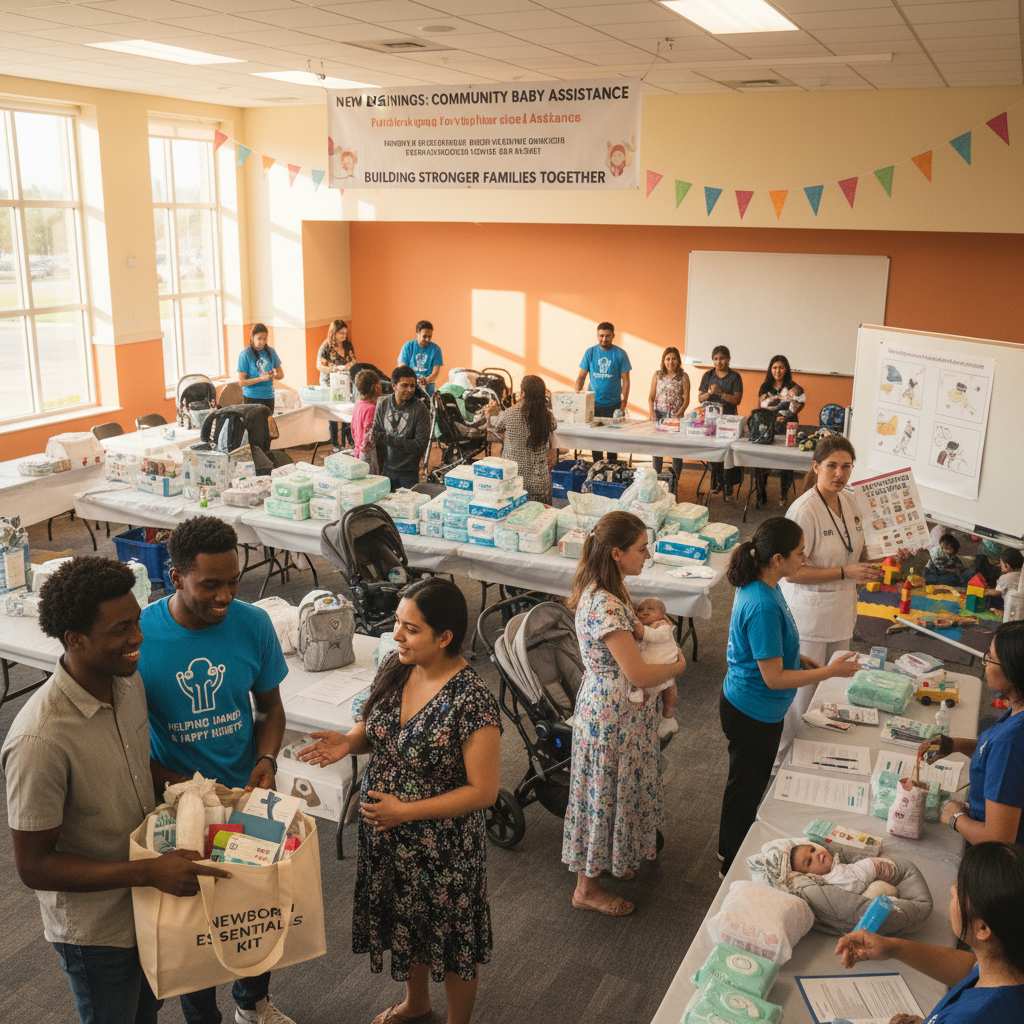
Baby supply assistance programs in the U.S. aim to support new and expecting families by offering essential items and educational resources, helping to alleviate stress and promote family stability. Programs like the Newborn Supply Kit, managed by the U.S. Department of Health and Human Services (HHS), provide kits with newborn essentials and caregiving information through hospitals and community organizations. Other initiatives, such as Helping Mamas and diaper banks, fill in gaps left by traditional assistance, ensuring critical supplies are accessible to families. Coupled with federal programs like WIC and CHIP, these efforts create a holistic support system focused on enhancing health outcomes for mothers and infants.
Overview of Baby Supply Assistance Programs
Baby supply assistance programs support new families by providing essential supplies and educational materials to promote infant well-being. The Newborn Supply Kit program is a key initiative that delivers necessary materials and information in collaboration with healthcare providers. Additionally, organizations such as Helping Mamas provide ongoing resource access to items like diapers and car seats, addressing gaps left by traditional public support systems. Eligibility typically aligns with federal guidelines, ensuring assistance reaches those in financial need while allowing flexible access through community partnerships.
Major Assistance Programs
Key assistance programs help families secure healthcare, nutrition, housing, and child care resources, particularly for those with young children. The Children’s Health Insurance Program (CHIP) and the Special Supplemental Nutrition Program for Women, Infants, and Children (WIC) improve health and nutrition for low-income families, while the U.S. Department of Housing and Urban Development (HUD) assists with safe, affordable housing solutions. Moreover, the Child Care and Development Fund (CCDF) supports affordability in quality child care for eligible families, helping to ensure children thrive in their early years.
Eligibility Criteria
Eligibility for baby supply assistance programs typically involves income limitations and family circumstances. For instance, the CCDF targets families with children under 13 and includes income caps related to the state median. Similarly, WIC requires participants to meet specific income thresholds while providing essential resources for mothers and young children. Streamlined processes are increasingly encouraged to reduce administrative burdens and improve access, often including guidance for families to navigate documentation requirements effectively.
Application Processes
Applying for baby supply assistance programs can be complex due to eligibility criteria and documentation requirements. However, many programs aim to simplify applications, resulting in less frustration for families. The CCDF has recognized the need for clearer and more straightforward applications to ease the burden on applicants. Families typically need to prepare proof of identity, address, and income, but there are resources available to assist them in collecting the necessary information.
Types of Baby Supplies Covered
Assistance programs provide essential supplies crucial for the first months of a baby’s life, including diapers, wipes, and safe sleep items. Many programs also offer comprehensive newborn kits equipped with multiple items necessary for new parents, along with educational materials. For instance, WIC offers not only baby food and formula but also nutritional counseling to further support family health, reducing the burden on new parents.
Coordination Between Government and Nonprofit Programs
Effective baby supply programs rely on strong partnerships between government and nonprofit organizations to ensure broad access to essential supplies. Collaborations, such as those between diaper banks and local agencies, enable critical supplies to reach families that need them most. These partnerships also enhance service integration, where multiple forms of assistance are available under a streamlined system, ultimately facilitating better health outcomes for mothers and children.
Impact on Infant and Maternal Health Outcomes
Improving health outcomes for mothers and infants is a primary goal of these assistance programs. Access to financial and nutritional support significantly boosts maternal and child health. Initiatives that promote breastfeeding and provide essential newborn items directly affect infant nutrition and maternal well-being, while community health efforts help address broader systemic health challenges affecting vulnerable groups.
Scale and Reach of Assistance Programs
Assistance programs have expanded by collaborating with various organizations to ensure effective distribution of crucial items to low-income families. By focusing on community needs and conducting assessments, nonprofits can tailor services to address specific local challenges and enhance program effectiveness. Multi-program applications further simplify the process for families, promoting access and operational efficiency across regions.
Challenges and Limitations
Many baby supply assistance programs face significant challenges, including cumbersome application processes and funding limitations. While streamlining eligibility is documented as beneficial, resource constraints can hinder the sustainability of these initiatives in underserved communities. Moreover, strict documentation requirements often pose barriers for families seeking assistance, necessitating ongoing improvements to increase accessibility and responsiveness to changing community needs.
Recent Developments and Future Directions
Recent policy updates have demonstrated a commitment to advancing the effectiveness of baby supply assistance programs. The 2024 CCDF Final Rule, for instance, aims to enhance child care affordability and accessibility for families. Public-private partnerships, exemplified by the Newborn Supply Kit program, continue to illustrate how collaboration can improve program reach and efficiency. Future initiatives will likely focus on expanding service delivery frameworks and incorporating community-driven assessments to better meet diverse family needs.
International Perspectives
Global challenges in maternal and infant health, particularly in low- and middle-income countries, have led to innovative solutions that combine public and private efforts. Programs like the Newborn Supply Kit exemplify how collaborative strategies can effectively address postpartum needs while enhancing community trust. International examples of community-based nutrition programs also emphasize the importance of tailored strategies to improve health outcomes amongst mothers and infants, illustrating that effective assistance programs adapt to fit various cultural and economic contexts.
The content is provided by Jordan Fields, Direct Bulletins