Highlights
- Adapt to aviation's technological advancements for a successful career by 2025 and beyond.
- Embrace continuous learning to thrive in evolving roles like Predictive Maintenance Analysts and Drone Specialists.
Summary
Unlocking Aviation Training Careers: Essential Skills You Need in 2025 explores the evolving landscape of careers in aviation training, highlighting the critical skills and competencies required to succeed in this dynamic industry by the mid-2020s. As aviation integrates advanced technologies such as artificial intelligence (AI), virtual and augmented reality (VR/AR), and sustainability-focused innovations, professionals in training roles—from pilots and maintenance technicians to aerospace engineers and instructors—must adapt to new tools, regulatory standards, and operational complexities. This article provides a comprehensive overview of these career paths, emphasizing the blend of technical expertise, soft skills, and continuous learning necessary for the future workforce.
The aviation training sector is notable for its pivotal role in ensuring safety, efficiency, and innovation within global air transport. Rapid advancements in digital diagnostics, automated flight systems, and data-driven maintenance are transforming traditional roles and creating emerging specialties such as Predictive Maintenance Analysts and Drone Inspection Specialists. Meanwhile, training methodologies are evolving through immersive simulations and competency-based frameworks that foster enhanced decision-making, risk management, and leadership capabilities among trainees. These shifts underscore the importance of an adaptive, technology-savvy, and sustainability-conscious workforce.
Amid these developments, aviation trainers themselves face new challenges and opportunities as they incorporate cutting-edge instructional technologies and mentor professionals to meet stringent regulatory requirements and industry standards set by bodies like the Federal Aviation Administration (FAA). The sector also confronts pressing issues such as environmental sustainability, mental health, and workforce diversity, driving curriculum changes and inclusive recruitment efforts that reflect the broader societal and ecological responsibilities of aviation.
However, the integration of rapidly advancing technologies and the increasing complexity of aviation operations present ongoing challenges, including the need for continuous skill upgrades and balancing automation with human judgment. This article addresses these controversies and opportunities, offering insight into how aspiring and current aviation professionals can prepare for successful careers in a field poised for significant transformation by 2025 and beyond.
Overview of Aviation Training Careers
Aviation training careers encompass a diverse range of roles that are critical to the safety, efficiency, and innovation of the aviation industry. These careers include specialists who install, inspect, test, and repair sophisticated flight control systems and advanced avionics such as glass cockpits, ensuring pilots have reliable information and control during flight. Aircraft maintenance technicians remain essential, with their work increasingly supported by digital diagnostic tools and predictive maintenance systems that anticipate and prevent equipment failures.
Pilots require advanced training to manage complex automated systems effectively while maintaining strong decision-making skills to handle dynamic flight situations. Meanwhile, ground staff roles are evolving with the integration of AI-driven tools for operations such as baggage handling and customer service, necessitating a workforce adept at using technology and adapting to new workflows.
Engineering careers within aviation are also critical, including aerospace engineers who design and improve aircraft, manufacturing engineers responsible for production and quality control, avionics engineers focused on electronic navigation and communication systems, and flight test engineers who evaluate new aircraft designs. These roles demand both advanced education and significant experience.
Effective aviation training today adopts a systemic approach, integrating ground and flight instruction with emphasis on aeronautical decision-making and risk management to enhance overall flight safety. Instructors play a vital role by delivering tailored lesson plans and comprehensive briefings, improving student learning outcomes and ensuring adherence to aviation regulations and operational protocols.
Looking toward 2025, aviation training careers will be shaped by innovations such as virtual reality (VR), artificial intelligence (AI), and augmented reality, which are enhancing pilot training and increasing accessibility globally. There is also a growing focus on sustainability, mental health, and adaptability, reflecting the industry’s commitment to preparing professionals for a rapidly evolving environment. Regulatory frameworks and continuous professional development, supported by organizations like the Federal Aviation Administration (FAA), further underpin the standards and quality of training programs across the sector.
Essential Skills for Aviation Training Careers in 2025
Aviation training careers in 2025 demand a combination of technical expertise, soft skills, and adaptability to rapidly evolving technologies and industry priorities. Professionals entering the field must develop a diverse skill set that enables them to excel in complex, safety-critical, and sustainability-focused environments.
Core Soft Skills and Leadership Abilities
The foundation of a successful aviation career begins with essential soft skills, including leadership, clear communication, and ethical decision-making. Programs like the Essential Soft Skills for NextGen Aviation Professionals provide training in these areas, emphasizing presentation skills, interpersonal effectiveness, and understanding the qualities required of aviation professionals. These skills foster teamwork, leadership potential, and a commitment to ethical conduct, all critical for career advancement in aviation management and operations.
Technical Competencies and Adaptability
Despite the growing importance of technology, strong technical engineering knowledge remains indispensable. Aviation students must master industry-standard design and simulation tools such as CATIA, SolidWorks, ANSYS, and MATLAB to thrive in aerospace engineering roles. Hands-on experience with aircraft systems under FAA Part 147 guidelines helps build practical competencies vital for maintenance and operational roles.
Adaptability to technological advancements is crucial, as the aviation sector integrates new digital tools, including augmented reality (AR), virtual reality (VR), and artificial intelligence (AI), into training and operations. AR overlays enhance classroom and simulator learning by projecting flight instruments and navigation data, improving knowledge retention and safety. Similarly, AI-driven applications such as predictive maintenance and digital twin technology optimize aircraft lifecycle management while improving job safety.
Physical and Psychological Preparedness
Maintaining peak physical and psychological health is essential for aviation professionals, particularly pilots, who must hold a Class II Medical Certificate throughout their careers. The demanding nature of FAA Academy training and operational environments requires mental resilience and problem-solving skills, including rapid mental math and decision-making under pressure.
Sustainability and Environmental Awareness
Sustainability has become a central priority in aviation training and careers. The industry is actively incorporating electric and hybrid aircraft into training fleets to reduce carbon emissions. Training curricula increasingly emphasize knowledge of sustainable aviation fuels (SAF), electric propulsion systems, and environmental regulations. This focus prepares the workforce to meet global net-zero targets and contribute to the eco-friendly transformation of the aviation sector.
Emerging Skills and Career Pathways
The rise of AI and data analytics is reshaping aviation roles, creating new career opportunities such as Predictive Maintenance Analyst, Drone Inspection Specialist, and Digital Twin Engineer. Training institutions are integrating these subjects into their curricula to prepare students for future job requirements. Additionally, the use of biometric technologies in airports and airlines is becoming widespread, requiring professionals to be proficient in digital identity management and seamless passenger processing systems.
Continuous Learning and Professional Development
Given the dynamic nature of aviation, ongoing education and skill development are necessary to remain competitive. Engaging in industry webinars, leadership projects, and certification programs helps transform theoretical knowledge into practical strength. Aviation professionals must embrace lifelong learning to adapt to evolving technologies, regulations, and operational challenges.
Educational Pathways, Certifications, and Training Methods
Aviation training careers in 2025 demand a comprehensive blend of formal education, certifications, and evolving training methodologies to prepare professionals for the complexities of modern flight operations and air mobility challenges. Prospective pilots and instructors typically begin their journey by acquiring foundational certifications such as the Private Pilot License (PPL), Instrument Rating, Commercial Pilot License (CPL), and advanced credentials like the Certified Flight Instructor (CFI) and Certified Flight Instructor – Instrument (CFII) ratings. These qualifications equip individuals with essential piloting skills and enable them to teach others to fly and navigate using instruments, forming a critical pathway for career progression within aviation instruction.
Beyond traditional pilot licenses, structured educational programs and specialized courses play an increasingly pivotal role. For example, executive programs like the Master’s in Advanced Air Mobility (MAAM) offer advanced knowledge on urban air mobility, sustainability, airspace management, and regulatory frameworks, preparing professionals to lead the evolving air transport industry. Additionally, essential soft skills—such as clear communication, rapid mental math, and problem-solving—are emphasized through targeted courses designed to enhance competency and readiness for demanding environments like the FAA Academy.
Training methods have also advanced considerably to meet industry needs and learner preferences. The integration of digital learning platforms, including cloud-based remote training tools, virtual simulations, and adaptive AI tutors, allows students to practice skills outside traditional classroom settings while maintaining high safety and operational standards. Competency-Based Training and Assessment (CBTA) frameworks combine online flexibility with rigorous in-person standards, often enhanced by gamification and data analytics to optimize knowledge retention and skill application in high-pressure aviation contexts.
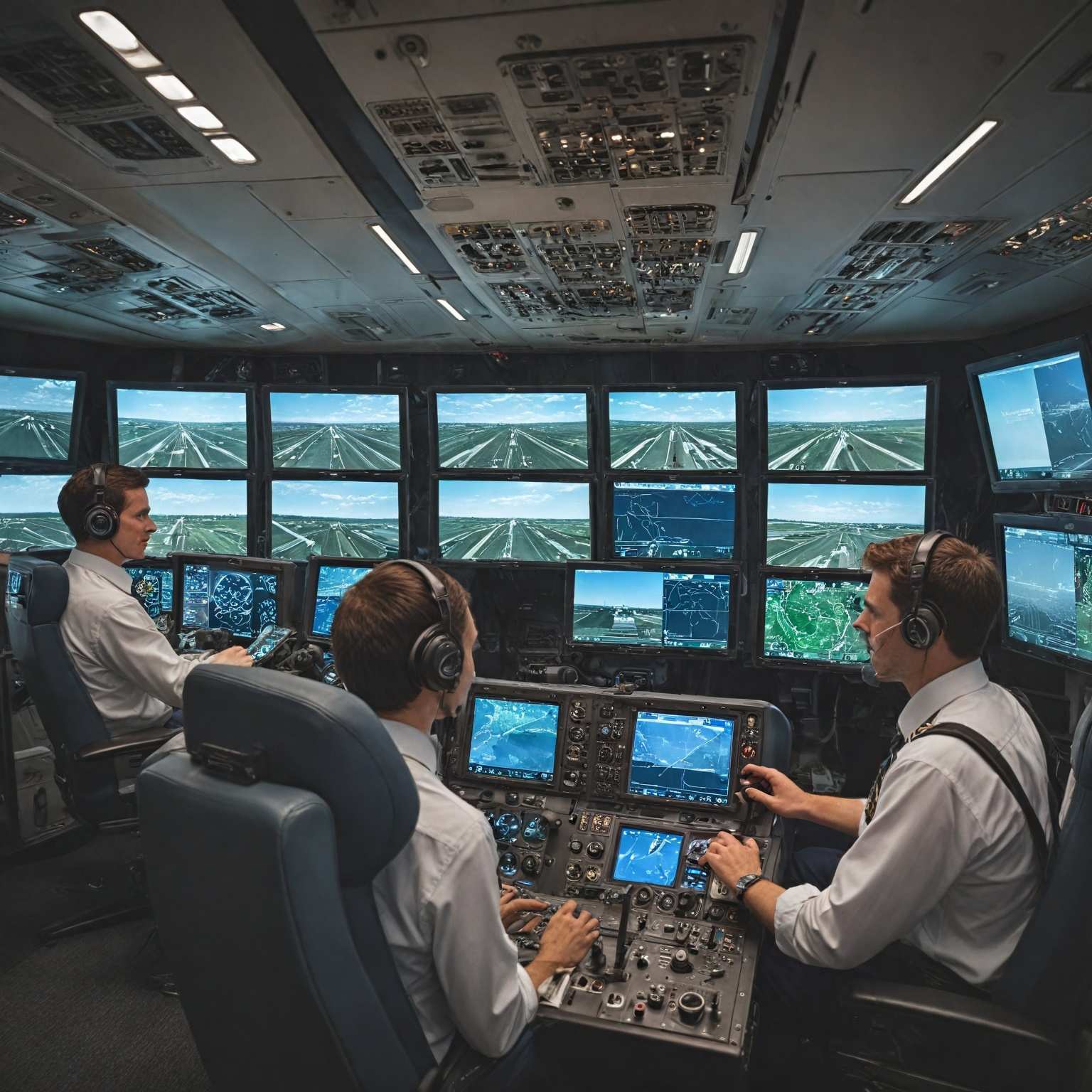
Simulators and scenario-based exercises, such as air traffic control (ATC) simulations, have become indispensable in bridging theoretical instruction with real-world operational challenges. These realistic training enhancements improve situational awareness, decision-making, and teamwork skills, which are vital for managing the dynamic and complex aviation environment. Additionally, flight schools increasingly incorporate sustainability principles into their curricula, including training on electric and hybrid aircraft, aligning with the broader aviation industry’s net-zero goals and regulatory priorities.
Complementing formal training, students and professionals are encouraged to engage in aviation internships, industry webinars, expos, and leadership projects to develop practical skills and stay updated with technological advancements and industry trends. Such continuous learning supports career growth and readiness for the fast-evolving aviation sector.
Role and Skills of Aviation Trainers in 2025
Aviation trainers in 2025 play a critical role in shaping the next generation of pilots and aviation professionals by combining technical expertise, leadership, and innovative teaching methods. Their responsibilities extend beyond traditional instruction to encompass mentorship, competency development, and fostering a positive image of the aviation industry.
Trainers deliver comprehensive education that covers flight operations and system management, including electrical, hydraulic, fuel, and pneumatic systems. While not required to perform maintenance, they must equip trainees to operate these systems effectively and troubleshoot minor malfunctions during flight. This technical foundation ensures pilots can respond swiftly to in-flight anomalies.
Effective aviation trainers demonstrate strong interpersonal skills and a professional attitude that inspire confidence and motivation in learners. Their conduct significantly influences student engagement and perception of aviation careers. Emphasizing leadership qualities, trainers help develop soft skills essential for teamwork, communication, and ethical decision-making—attributes increasingly prioritized within modern training curricula.
The integration of advanced technologies, such as virtual and augmented reality (VR/AR), has transformed the training environment. Trainers utilize immersive simulators to replicate complex flying conditions, enhancing cockpit coordination and decision-making without the risks of live flight training. This shift demands trainers stay adept with cutting-edge tools and continuously update instructional techniques to maximize training effectiveness.
In addition to technical and soft skills, aviation trainers contribute to a culture of continuous learning and adaptability. They encourage trainees to engage in lifelong education, including online certifications and participation in industry events, ensuring preparedness for the rapidly evolving aviation landscape. Their role also involves guiding students through competency-based training models that optimize knowledge retention and practical application.
Ultimately, aviation trainers serve as pivotal figures who blend expertise, innovation, and mentorship to prepare highly skilled professionals capable of meeting the safety, sustainability, and operational demands of the aviation industry in 2025 and beyond.
Evolution of Standards, Certification, and Regulatory Frameworks
The landscape of aviation training careers is profoundly influenced by the continual evolution of standards, certification requirements, and regulatory frameworks, which aim to enhance safety, efficiency, and accessibility in the industry. The Federal Aviation Administration (FAA) has been at the forefront of these developments, implementing significant amendments to rules governing the manufacture, certification, operation, maintenance, and alteration of aircraft, particularly light-sport aircraft. Recent FAA final rules have expanded eligibility for certification of light-sport category aircraft while maintaining distinctions between experimental and type-certificated aircraft. These rules also broaden privileges for sport pilots and light-sport repairmen, increasing the availability of safe, modern, and affordable aircraft for recreational aviation, flight training, and certain aerial work, thereby providing broad regulatory relief to the public.
Certification standards and practical test standards (PTS) continue to evolve alongside training methodologies. The FAA is updating certification requirements, simulator standards, and operational procedures projected to take effect in 2025, reflecting a commitment to incorporating modern technologies and safety protocols into pilot training programs. These updates ensure that flight instructors and trainees maintain high standards of competence, professionalism, and safety awareness, fostering a positive learning environment and reinforcing the aviation industry’s safety culture.
Moreover, policy changes in administrative processes reflect tightening regulatory oversight. As of May 23, 2025, the FAA mandates that applications for air carrier, air operating, and air agency certifications must be complete and submitted in an acceptable form, with incomplete applications no longer accepted. This move streamlines certification workflows and reinforces regulatory compliance integrity.
The integration of Competency-Based Training and Assessment (CBTA) frameworks within blended learning models illustrates the industry’s adaptation to the complexities of modern aviation training. By combining flexible online platforms with rigorous in-person standards and leveraging data analytics for progress monitoring, these frameworks meet the demands of a diverse and dynamic learner population. This systemic approach to aviation safety and training underscores the importance of aeronautical decision-making and risk management practices, contributing to safer flight operations overall.
Employment Trends and Future Career Outlook
The aviation industry is experiencing a robust recovery and expansion as global air travel demand accelerates beyond economic growth, with international traffic projected to return to pre-pandemic levels by 2024. This surge drives strong hiring trends across various aviation roles, extending beyond traditional pilot and mechanic positions to include airport operations, aerospace technology design, and advanced air mobility sectors. Airlines and training providers are actively preparing for this hiring wave by developing long-term strategies to address labor shortages and skill gaps.
Technological advancements are reshaping workforce requirements. The integration of AI, data analytics, automation, and robotics—especially in predictive maintenance, customer service platforms, and unmanned aerial vehicles (UAVs)—is creating demand for employees proficient in these cutting-edge technologies. Airlines and organizations invest in comprehensive training programs to upskill personnel, ensuring effective management of sophisticated systems and workflows.
Emerging fields such as Advanced Air Mobility (AAM) are expected to transform the industry’s demographic landscape by fostering diversity and expanding career pathways for pilots, flight engineers, and other professionals from varied backgrounds. This sector emphasizes adaptability, creative problem-solving, efficiency, and safety, highlighting the importance of diverse perspectives in driving innovation and broadening industry impact.
Soft skills are also becoming critical in the evolving aviation environment. Courses designed to enhance communication, teamwork, leadership, time management, and ethical decision-making are increasingly incorporated into aviation training curricula to prepare the next generation of professionals for dynamic, real-world challenges. Modern instructional approaches blend digital tools, e-learning, simulator training, and face-to-face interaction to deliver flexible and effective competency development.
Challenges and Opportunities in Aviation Training Careers
The aviation industry is undergoing significant transformation driven by rapid technological advancements and evolving passenger demands, which present both challenges and opportunities for professionals pursuing careers in aviation training. As passenger numbers are projected to reach 5.2 billion by 2025, marking a 6.7% increase from the previous year, the sector faces increasing complexity that requires a highly skilled and adaptable workforce.
One major challenge is the integration of advanced technologies such as AI-driven systems, big data analytics, robotics, and augmented reality into training programs and operational workflows. While these innovations promise improved efficiency, safety, and automation in areas like air traffic management and performance optimization, they also demand that aviation professionals continuously update their technical competencies and adapt to new tools. Emerging digital training methods—such as competency-based training and assessment (CBTA), gamification, and adaptive learning platforms—are reshaping how knowledge retention and skill application are achieved, necessitating a shift in traditional training paradigms to meet the expectations of a digitally native workforce.
Simultaneously, the industry is facing pressure to address environmental sustainability and diversify its talent pool. Airports and airlines increasingly adopt biometric solutions to streamline passenger experiences, while aviation stakeholders emphasize reducing the sector’s carbon footprint, adding new layers of complexity and responsibility for training curricula. Advanced Air Mobility (AAM)
Resources and Support for Aspiring Aviation Professionals
Aspiring aviation professionals have access to a wide array of resources and support systems designed to equip them with the essential skills required in 2025 and beyond. These include accredited courses, graduate programs, certifications, technical labs, and targeted training initiatives that collectively prepare the next generation of aviation talent. Many of these educational offerings are regularly updated through collaborations between industry and academic institutions to keep pace with the rapidly evolving aviation landscape.
Hands-on learning plays a critical role in skill development. Simulation tools, student aviation clubs, leadership projects, and participation in industry webinars and expos provide practical experience that complements theoretical knowledge, fostering both technical expertise and leadership capabilities. Institutions such as the Aviation Institute of Maintenance (AIM) offer training under FAA Part 147 guidelines, delivering classroom instruction alongside real-world aviation environment simulations, which greatly enhance students’ readiness for professional roles.
Sustainability has become an integral focus within aviation training. Professionals are encouraged to enroll in Aviation Sustainability Management certification programs, volunteer for organizational sustainability committees, and stay informed about key environmental regulations such as ICAO’s CORSIA requirements. Leadership in this domain demands a blend of emotional intelligence and strategic vision to address the industry’s ecological challenges effectively.
Diversity, equity, and inclusion (DE&I) initiatives are also gaining prominence in the aviation workforce. Airlines and aviation organizations actively implement DE&I programs to attract and retain talent from diverse backgrounds, which in turn strengthens innovation, problem-solving abilities, and organizational resilience. Coupled with a focus on employee well-being, these efforts are critical as the industry recovers from recent disruptions and moves toward a more sustainable future.
The content is provided by Blake Sterling, Direct Bulletins