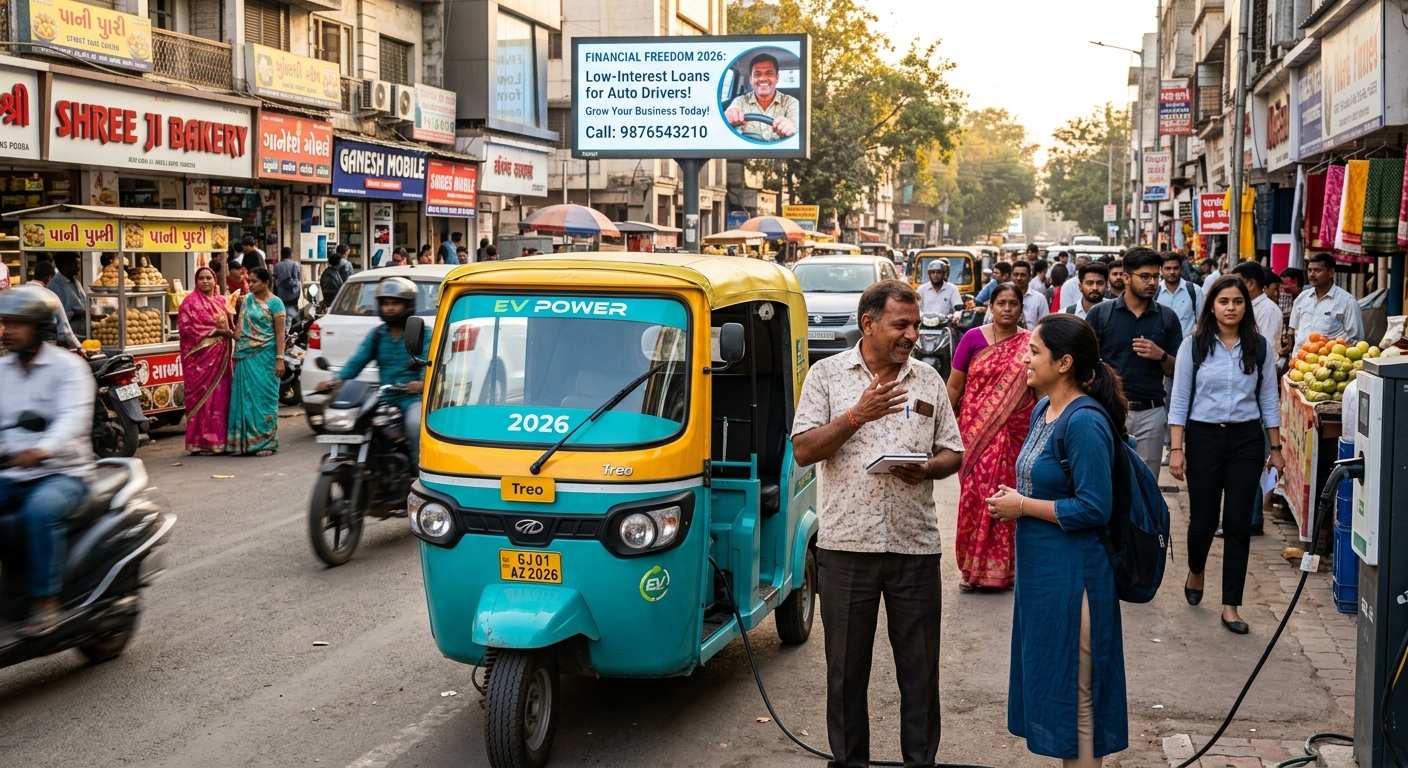
Highlights
- Discover flexible auto-rickshaw driver loans designed to enhance your business growth today.
- Explore innovative financing solutions that cater specifically to drivers in the informal economy.
Overview of Auto-Rickshaw Loans
Auto-rickshaw loans are crucial for drivers and small entrepreneurs aiming to establish or expand their presence in the urban transportation sector. These loans are typically structured under commercial vehicle financing and can fund the purchase of both new and used vehicles. They generally feature flexible repayment plans lasting up to five years, which help borrowers manage their monthly payments (EMIs) effectively. Additionally, many lenders facilitate the financing of multiple vehicles, allowing for business growth supported by streamlined application processes.
However, challenges persist within conventional loan appraisal systems. Traditional credit assessments rely heavily on formal financial documents, often unavailable to auto-rickshaw drivers operating in the informal economy, resulting in restricted access to credit. Emerging lending models utilizing behavioral data analysis and community-based approaches aim to enhance creditworthiness evaluations. These innovations are critical in addressing the financial needs of drivers, who often navigate unstable income patterns and other external economic pressures.
Rationale for Loan Acquisition
Auto-rickshaw drivers seek loans primarily to purchase or upgrade vehicles, particularly as demand for electric models rises. Transitioning to electric auto-rickshaws aligns with sustainability goals and offers potential cost savings due to government subsidies and reduced fuel expenses. Furthermore, loans serve as a financial safety net for emergencies and unanticipated expenditures, enabling drivers to leverage opportunities in a rapidly expanding market.
The accessibility of competitive interest rates and simplified processing encourages these drivers to pursue loans for both personal and business needs. Thus, as urban transportation continues to grow, securing adequate financing becomes increasingly viable for drivers aiming to capitalize on emerging opportunities.
Types of Available Loans
A variety of loan options exist for auto-rickshaw drivers tailored to meet different financing needs:
- New Auto Rickshaw Loans: Generally offer up to 100% funding based on the vehicle’s base frame. Repayment periods can extend up to five years.
- Used Auto Rickshaw Loans: Provide up to 90% funding based on the current market value, facilitating lower upfront costs for drivers.
- Refinancing Loans: Allow existing owners to restructure debts or take out new loans on unencumbered vehicles, easing repayment burdens.
- Low-Carbon and Electric Vehicle Financing: Cover the entire purchase price of electric vehicles, often with no collateral requirement, thus promoting eco-friendly transportation.
- Microfinance Options: Focused on providing accessible, small loans using simplified eligibility criteria to target informal sector workers seeking better financial inclusion.
Challenges in Loan Access
In 2026, auto-rickshaw drivers face significant hurdles when attempting to secure loans. The reliance of traditional lending systems on formal financial data excludes many drivers, who lack consistent income verification. Banks often view these individuals as high-risk borrowers due to factors such as vehicle depreciation and frequent defaults, severely limiting access to financing.
Additionally, despite rising interest in electric three-wheelers, financial options remain limited. First-time borrowers face cap restrictions on financing amounts, which typically cover only a fraction of total vehicle costs. Furthermore, subsidy programs for electric vehicles frequently have caps on beneficiary numbers, adding complexity and uncertainty for drivers seeking financial assistance.
Innovations in the Lending Landscape
Advancements in digital technology are progressively reshaping the financing landscape for auto-rickshaw drivers. Microfinance platforms are becoming notable as they streamline the loan lifecycle and provide efficient management tools, enhancing accessibility for underserved borrowers. Moreover, the increasing incorporation of alternative data in credit scoring has resulted in better risk assessment and improved loan approval rates.
Innovative practices, including hybrid financial products that merge loans with savings and microinsurance, are further elevating financial service responsiveness. As a result, these innovations are addressing existing gaps in lending, ultimately fostering greater financial inclusion for the auto-rickshaw driver community.
The content is provided by Sierra Knightley, Direct Bulletins