Highlights
- Affordable studio apartments are essential for diverse populations in a challenging rental market.
- Policy initiatives and reforms could enhance the availability of low rent housing solutions.
Summary
Unlocking Affordable Living: Your Guide to Low Rent Studio Apartments in 2025 provides a comprehensive overview of the landscape surrounding affordable studio apartment living in the United States as of 2025. Studio apartments—compact units that combine living, sleeping, and kitchen areas within a single room—are increasingly vital housing options for diverse populations, including students, young professionals, seniors, and individuals transitioning between residences. Their affordability, smaller size, and urban location make them attractive solutions for those seeking economical yet functional housing in a challenging rental market.
The rental market in 2025 is characterized by rising operational costs, regional disparities, and complex economic and regulatory influences that affect affordability and availability. While metropolitan areas like New York City exhibit some of the highest studio rents in the country, many Midwestern cities offer more accessible price points, underscoring significant geographic variation. Despite modest declines in median asking rents in late 2024 and early 2025, studios are projected to experience some of the steepest rent increases among apartment types in 2025, intensifying affordability concerns for vulnerable renters.
Multiple factors contribute to these trends, including supply constraints, zoning laws, and escalating construction costs influenced by global supply chains and domestic policies. Rent stabilization efforts, such as those in New York City, aim to mitigate rapid rent increases, though they also present challenges for landlords and housing supply. Additionally, low rent studio apartments serve critical roles in supporting populations disproportionately burdened by housing costs, including seniors, persons with disabilities, and low-income renters, highlighting the intersection of housing affordability with broader social equity issues.
Looking forward, the outlook for affordable studio living hinges on policy initiatives, market dynamics, and innovative housing solutions. Increased Low-Income Housing Tax Credit allocations in 2026, zoning reforms, and expanded use of accessory dwelling units (ADUs) promise to enhance affordable housing stock. However, ongoing challenges related to rising costs, regulatory hurdles, and demographic pressures necessitate coordinated efforts to ensure that low rent studio apartments remain accessible and livable options for those in need.
Overview of Low Rent Studio Apartments
Studio apartments offer an economical and practical housing option for a diverse range of renters, making them a popular choice across various demographics, from students to seniors. These compact living spaces typically combine living, sleeping, and kitchen areas into a single open room, generally ranging from 300 to 600 square feet, although layouts can vary significantly. In 2024, the average size of studios slightly increased alongside other apartment types, reflecting a trend toward more spacious living environments even within small units.
One of the primary advantages of studio apartments is their affordability compared to larger units, making them ideal for young professionals, students, or anyone looking to minimize living expenses. This affordability supports individuals undergoing life transitions—such as starting a new job, returning to school, or relocating to a new city—as studios serve as functional temporary homes that help manage budgets while providing essential amenities. Additionally, the compact size reduces maintenance efforts, allowing residents to spend more time enjoying their living spaces rather than managing them.
Geographically, the cost of renting studio apartments varies widely. For instance, cities like New York and Miami rank among the least affordable for solo renters, driven by local economic conditions, job opportunities, and lifestyle demands. Conversely, Midwestern markets generally offer the most affordable options, influenced by lower property taxes, insurance costs, and overall cost of living. Understanding these regional disparities is crucial for renters making informed decisions about where to live based on current and future market conditions.
Despite the relative affordability, rising operational costs such as insurance, maintenance, and utilities have increased overall expenditures for affordable housing units by 2.3% year-to-date through August 2025, which may impact rental pricing trends going forward. Meanwhile, rent stabilization policies, such as those adopted in New York City for 2024–2025, seek to moderate rent increases and maintain accessibility for tenants in rent-controlled apartments, including studios.
Market Trends in 2025
The rental market in 2025 presents a complex picture shaped by varying demand, supply constraints, and economic factors. While affordable housing development is expected to receive a boost in 2026 due to increased Low-Income Housing Tax Credit (LIHTC) allocation, 2025 remains marked by challenges such as rising expenses and rent increases that outpace wage growth.
Rent prices in the U.S. showed signs of moderation by the end of 2024 and into early 2025, with a slight decline in median asking rents reported in December 2024. The median asking rent stood at $1,695, down 0.5% from the previous month, suggesting a temporary easing in rental costs. Despite this, pockets of affordability persist mainly outside the highest-demand metros. For example, Austin, Texas, was recognized as one of the most affordable large metros where renter incomes generally surpass typical rental costs. This regional variation reflects the influence of local economic conditions such as job availability and population growth on rental prices.
Studio apartments are forecasted to experience the most significant rent increases in 2025 compared to other unit types, with median rents expected to rise by 5.9% to approximately $1,384. One-bedroom and two-bedroom units will also see notable increases of 5.3% and 4.8%, respectively, while larger units will experience smaller, yet substantial, growth. Studios remain an attractive option for many renters, especially young professionals and students, due to their lower rent and reduced maintenance responsibilities. Additionally, studios are often situated in urban areas offering convenient access to amenities and public transit.
Affordability remains a key concern, especially in major metropolitan areas where rents for studios can approach or exceed 30% of median earnings, a common benchmark for housing affordability. The cost of studio apartments varies widely across the country, with cities like New York City reporting average studio rents as high as $3,395, while Midwestern markets tend to offer more affordable options. Despite high prices in some locations, over a dozen metro areas across nine states maintain median rents below $1,000, providing some relief to low- and moderate-income renters.
Supply-side factors heavily influence rent dynamics. Reduced new housing development coupled with sustained rental demand tends to push rents upward, especially in popular neighborhoods where vacancy rates remain low. Conversely, a rise in apartment availability can temper rent increases. The demand for single-family rentals is also growing, with 31% of renters living in these units and rents increasing by 4.4% year-over-year, a trend that is attracting increased investor interest.
Characteristics of Low Rent Studio Apartments
Low rent studio apartments serve a functional purpose by providing affordable, flexible living spaces for a wide range of renters. These units are often chosen by individuals on a budget, students attending school for a limited period, or people testing new neighborhoods while saving to purchase property. They offer an accessible housing option at various stages of the renter’s journey.
Typically, a studio apartment combines living, sleeping, and kitchen areas into one open space. The size usually ranges from 300 to 600 square feet, with living spaces commonly measuring around 10 by 12 feet and kitchen areas approximately 5 by 8 feet or larger. Despite their compact dimensions, well-designed studios maximize functionality and style, avoiding the cramped feel often associated with small spaces.
Key characteristics of affordable studios include the efficient use of space through multi-purpose design elements. For example, furniture such as Murphy beds (wall beds) can transform the room by folding away when not in use, while vertical storage solutions allow renters to store belongings without sacrificing floor area. Brands like IKEA and The Container Store have popularized customizable storage systems that adapt closets or other spaces into organized storage, essential for maintaining an uncluttered environment in small apartments.
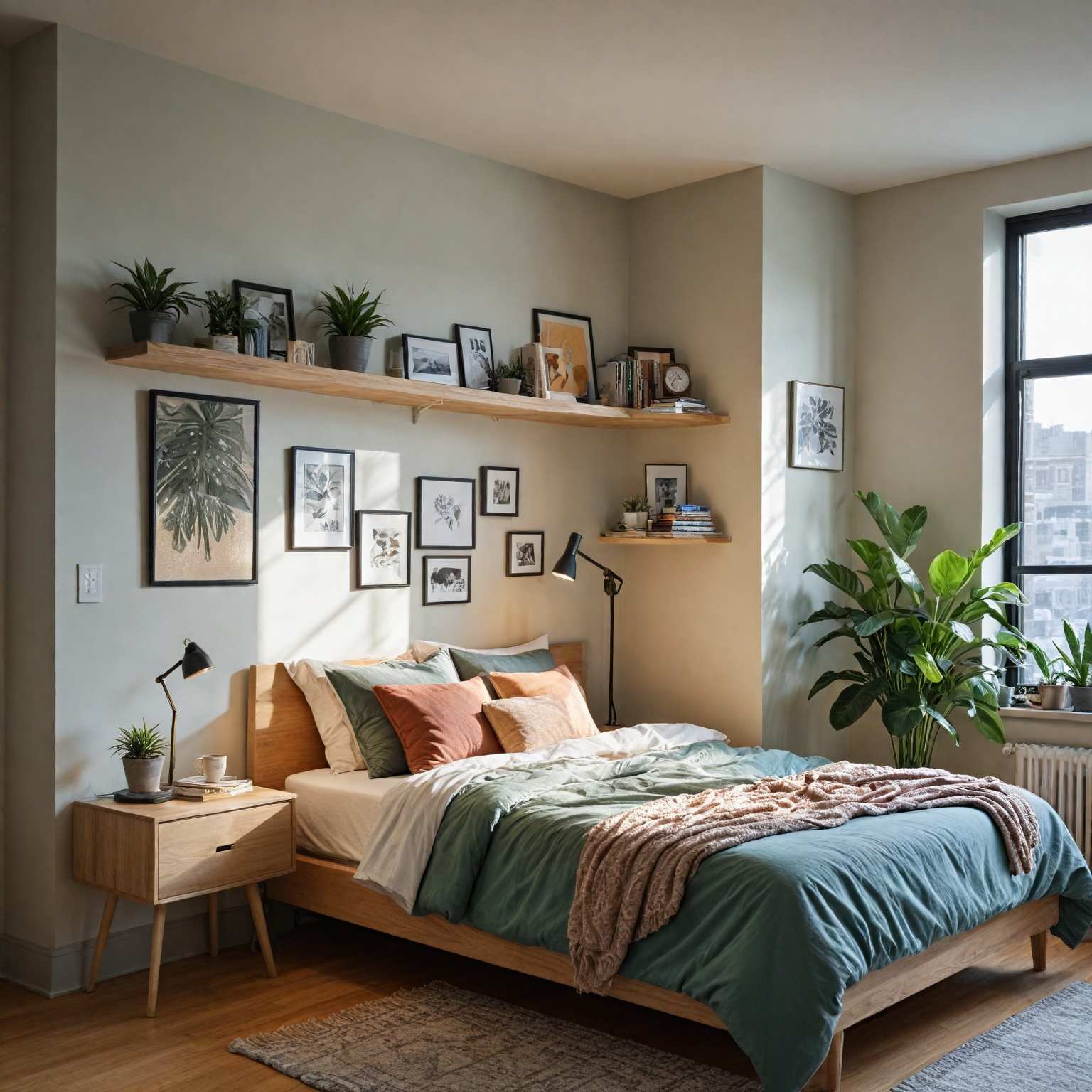
Design strategies in low rent studios focus on maximizing natural light, creating distinct functional zones within the open layout, and using visual illusions to enhance perceived space. Mirrors positioned opposite windows, vertical stripes on walls or curtains, and strategic lighting such as LED strips help make these compact apartments feel larger and more inviting. Light colors and reflective surfaces also contribute to a bright, airy atmosphere that improves comfort and aesthetics.
Building Materials and Construction Techniques
The selection of building materials and construction techniques plays a critical role in determining the affordability, sustainability, and durability of low-rent studio apartments. Materials used in construction come from global sources and are subject to geopolitical factors that affect availability and pricing, which are often beyond the control of local developers or regional communities. Federal government policies, such as trade regulations and tariffs, can influence domestic manufacturing environments to improve material accessibility and cost stability.
Cost-effective building materials include bamboo, used shipping containers, concrete sheets, and agricultural byproducts like straw bale. These materials not only reduce upfront expenses but can also offer environmental benefits. For example, straw bale is a low-cost, sustainable option but may face building code restrictions due to fire safety concerns, emphasizing the need to consult local authorities before use. Similarly, cob, a mixture of sand, clay, and straw, is an inexpensive natural material with high thermal mass properties that effectively moderates indoor temperatures by protecting homes from passive solar gain.
Innovative composites such as the SBR/leather waste blend have emerged as promising sustainable alternatives, exhibiting superior thermal insulation compared to traditional materials like plywood and fiberglass. With a thermal conductivity of 0.073 Wm⁻¹K⁻¹ and temperature attenuation near 15 °C, these composites can significantly enhance occupant comfort and energy efficiency in urban housing.
Steel framing, although more expensive upfront at approximately $10–$15 per square foot, offers long-term benefits by resisting common issues such as rot and warping. However, steel structures may require additional insulation measures to optimize energy efficiency. Incorporating energy-efficient design elements such as cool roofs—materials that reflect sunlight and reduce cooling costs in hot climates—can also contribute to lowering operational expenses over time.
From a construction perspective, the overall cost of apartment development is typically divided into land costs, hard costs (materials and labor), and soft costs (permits, design, and fees). Regulatory factors, including zoning and building codes, heavily influence building size, design, and materials used, often posing challenges for affordable and smaller-scale housing projects. While much research has focused on early development stages, emerging construction techniques such as off-site modular building and the use of micro-units provide opportunities to reduce costs in the design and construction phases.
Residents and Demographics
Low-rent studio apartments in 2025 attract a diverse group of residents, each with distinct needs and circumstances. These units often serve individuals who are place-bound, such as elderly populations who spend significant time within their homes and neighborhoods and face considerable health impacts related to housing conditions. Seniors, especially those aged 62 and older with very low incomes, can benefit from targeted programs like Section 202 Supportive Housing, which provides affordable rent alongside supportive services to help them age in place safely and independently.
Income disparities among renters are influenced by race and ethnicity, with declines in homeownership rates occurring broadly across demographic groups, resulting in a larger share of varied populations relying on rental housing. People with disabilities represent another critical demographic: in 2023, about 35% of individuals with disabilities spent 30% or more of their income on housing, compared to 25% of those without disabilities, highlighting how economic trends impact these groups differently.
Additionally, the number of low-income adults aged 65 and over is increasing, with nearly one in three older adults living below 200% of the federal poverty level, a threshold many seniors in states like California fall under. These demographic realities underscore the importance of affordable housing options such as low-rent studios, which offer accessible and budget-friendly living arrangements suited to younger adults beginning their housing journeys, students, or those transitioning between locations.
The geographic distribution of affordable housing is also affected by zoning practices that restrict access to high-opportunity neighborhoods, leading to disparities in life expectancy, education attainment, and health outcomes among vulnerable populations. Understanding the complex interplay of age, income, disability status, and local policies is crucial to addressing the housing needs of low-income renters residing in studio apartments across the United States.
Factors Influencing Rent Prices
Rent prices in 2025 are shaped by a complex interplay of economic, demographic, and regulatory factors that vary significantly across regions and cities. Understanding these elements is crucial for renters seeking affordable studio apartments and for stakeholders analyzing market dynamics.
One of the primary drivers of rent levels is the balance between supply and demand. Regions that maintain a more balanced dynamic between available housing and population needs tend to exhibit more stable and affordable rents. Conversely, urban centers with high demand and limited supply often experience elevated prices. Population trends and urban development patterns contribute to fluctuations in rental costs, making it essential for renters to stay informed about local market changes and economic conditions.
Local economies and lifestyle expectations also play significant roles. For example, in cities like New York, renters may accept smaller living spaces in exchange for proximity to amenities such as restaurants, shops, and cultural venues that define the urban lifestyle. This trade-off between space and location influences pricing, especially for studio apartments that combine living, sleeping, and kitchen areas within compact footprints.
Zoning laws and regulatory frameworks further impact rent affordability. Restrictive zoning, particularly single-family zoning, can limit housing supply by encouraging horizontal sprawl. This not only raises living costs but also contributes to environmental and public health concerns by increasing reliance on cars and associated pollution. Additionally, rent guidelines and legal adjustments, such as those stipulated in the Multiple Dwelling Law, set limits on allowable rent increases, affecting pricing trends in regulated markets.
Technological and job growth in certain cities, like Jersey City, attract dynamic populations seeking modern amenities and convenient transportation, which drives demand for affordable, efficient living spaces such as studios and one-bedroom apartments. Neighborhoods that cater to young professionals and families with community-oriented environments tend to experience higher demand, influencing rent levels accordingly.
Lastly, the size and amenities of apartments influence rental prices. The average apartment size in the U.S. increased in 2024, with studios expanding modestly in floor area. Amenities such as dishwashers, air conditioning, fitness centers, and pools have become important factors for renters, with a majority of available units also being pet-friendly. These features can contribute to higher rents but also increase the perceived value and livability of units.
Economic and Policy Influences on Affordability
Housing affordability in 2025 is shaped by a complex interplay of economic factors and policy decisions at both the national and regional levels. Construction materials, which are sourced globally, remain highly vulnerable to geopolitical dynamics beyond the control of individual developers or local communities. This underscores the critical role of federal government intervention through trade policies and tariffs aimed at bolstering domestic manufacturing and stabilizing supply chains.
Costs associated with affordable housing units have seen a significant rise, with average expenses per unit increasing by 2.3% year-to-date through August 2025, reaching $8,554. This marks a continuation of a longer-term trend where expenditures rose 35.1% from March 2020 to August 2025, driven by escalating insurance, maintenance, administrative, and utility costs that have outpaced income growth. Concurrently, rent prices are influenced by local economic conditions, cultural trends, and lifestyle preferences, contributing to the variability of affordability across different markets.
Regulatory frameworks, particularly zoning laws, profoundly affect housing affordability and accessibility. Restrictive zoning practices, such as single-family zoning, exacerbate socioeconomic disparities by limiting access to high-opportunity neighborhoods for vulnerable populations. These policies also promote urban sprawl, leading to increased reliance on automobiles and associated negative environmental and public health outcomes including higher rates of obesity, diabetes, cardiovascular disease, and respiratory problems. Furthermore, onerous regulations disproportionately burden smaller-scale developments and affordable housing projects, escalating costs during the design and construction phases.
Zoning restrictions that favor single-family homes contribute to the creation of “rental deserts,” limiting affordable rental housing options for lower-income households and increasing the demand for tenant protection policies like rent
Government and Community Programs
Government and community programs play a crucial role in addressing the persistent shortage of affordable housing for low-income renters, a problem exacerbated by factors such as rising interest rates, inflation, and stagnant wages. Various legislative efforts, including the pending 2025 reintroduction of bills aimed at financing renovation and preservation of affordable rental housing, highlight ongoing recognition of the Low-Income Housing Tax Credit (LIHTC) as a vital tool in expanding housing supply.
Local initiatives have introduced innovative strategies to maximize existing housing resources. For example, hiring dedicated Vacant Property Development Managers and forming inter-departmental Vacant Property Working Groups coordinate interventions such as probate assistance and tax-foreclosure support to bring vacant properties back into productive use. A key policy focus is on leveraging Accessory Dwelling Units (ADUs)—small secondary units like backyard cottages and converted garages—to increase affordable housing options without requiring new land development.
Reforming zoning laws is another essential approach to expanding housing capacity and affordability. Proposed changes include allowing diverse housing types such as ADUs, townhouses, duplexes, and apartment buildings, alongside reducing minimum lot sizes, increasing building height limits, and easing off-street parking requirements. These zoning reforms are coupled with efforts to integrate affordable housing with job opportunities, improved infrastructure, public services, and access to public spaces, particularly aiming to uplift marginalized and low-income populations.
Senior citizens represent a significant demographic benefiting from tailored housing programs. Creative housing models like low-income elderly housing and homesharing arrangements offer both community-based support and financial savings. For instance, hosts in homesharing programs can earn an average of $850 monthly, while renters save approximately $750 compared to renting independently. There are over 125 senior housing cooperatives nationwide, providing stability with modest annual increases in share values and fostering supportive community networks that help prevent isolation. State and federal programs supplement these initiatives by offering subsidies and support services, such as wellness programs and accessibility features, especially notable in states like California.
Furthermore, federal rental assistance programs address the needs of persons with disabilities, many of whom also fall within senior demographics. These programs ensure that eligible individuals receive support based on specific criteria defined by HUD and USDA, further extending housing affordability and accessibility.
Together, these government and community programs form a multifaceted response to the affordable housing crisis, combining legislative incentives, innovative local policies, zoning reform, and targeted support for vulnerable populations to increase the availability and quality of low-rent studio apartments and other affordable housing options.
Living in a Low Rent Studio Apartment
Living in a low rent studio apartment offers a practical and affordable housing solution for a variety of individuals, including students, young professionals, and those in transitional phases of their housing journey. Studio apartments typically combine a living area, bedroom, and kitchenette into a single room, often separated only by furniture or partial walls, making them a compact and efficient choice in urban environments where space is limited.
One of the primary advantages of choosing a studio apartment is the lower rent compared to larger units. This affordability makes studios particularly appealing to those seeking to minimize living expenses while maintaining access to vibrant city amenities such as restaurants, shops, and public transportation. Additionally, the smaller size translates to less upkeep and cleaning, allowing residents to spend more time enjoying their space rather than managing it.
Maximizing space within a studio apartment is crucial to creating a comfortable and functional home. Strategic design and organization techniques, such as using vertical storage solutions and multi-functional furniture, can significantly enhance the usability of the limited footprint. Brands like IKEA and The Container Store have popularized customizable storage systems that transform closets and other small areas into efficient storage, helping residents maintain an uncluttered and intentionally designed living space.
Moreover, studio apartments serve as a flexible option for renters testing new neighborhoods or saving to purchase their own property. Their affordability and compact nature cater to short-term or transitional living needs, providing a temporary home without the financial commitment of larger rentals.
Despite their benefits, renters should be mindful of market trends, as the affordability of studio apartments may fluctuate. Recent data indicates a slight decline in median asking rent prices in the U.S., presenting a current opportunity for renters to negotiate better lease terms, such as multiyear agreements at reduced rates. Taking advantage of such opportunities can help maximize the financial benefits of studio apartment living.
Future Outlook
The future of affordable living, particularly in the realm of low rent studio apartments, appears promising yet complex as we approach and move through 2025 and beyond. One of the most significant drivers for optimism is the anticipated increase in Low-Income Housing Tax Credit (LIHTC) allocation in 2026, which is expected to boost both the development and preservation of affordable housing units. This increase aims to address the strong and growing demand among low- and medium-income households across the United States.
However, despite this positive momentum, challenges remain. The rental market faces a reduction in new housing developments coupled with an increase in rental demand, which could place upward pressure on rent prices and limit availability in some regions. Policymakers and industry stakeholders are actively exploring incentives and legislation to support nonprofit organizations in renovating and preserving affordable rental properties. For example, ongoing discussions and hearings, such as the House Financial Services Housing and Insurance Subcommittee’s session titled “Building Our Future: Increasing Housing Supply in America,” highlight a legislative focus on increasing the housing supply through evidence-based and inclusive policies.
Innovations in housing solutions are also emerging as key trends shaping the future landscape. The expansion of Accessory Dwelling Units (ADUs)—secondary housing units like backyard cottages and converted garages—is gaining attention as a practical method to increase affordable housing on existing properties without requiring large-scale new construction. Furthermore, the adoption of new technologies and design strategies is influencing rental property development, especially in maximizing space efficiency and livability in smaller units such as studios.
Nevertheless, the affordability crisis is influenced by broader factors beyond housing policy and design. Construction costs remain susceptible to global geopolitical dynamics affecting materials supply chains, which complicates efforts to reduce development expenses. The federal government’s role in trade policies and fostering domestic manufacturing is thus critical to stabilizing and lowering construction costs over time.
Ultimately, addressing affordable living needs requires a coordinated approach that aligns national priorities with regional and urban demands. Policies must prioritize vulnerable populations while promoting sustainable urban growth, integrating data-driven strategies to effectively expand affordable housing options, including low rent studio apartments, in the coming years.
The content is provided by Harper Eastwood, Direct Bulletins