Highlights
- Urban gardening innovations like AI and hydroponics boost sustainability and productivity in cities.
- Engaging with urban gardening enhances community resilience while addressing food security challenges.
Summary
Understanding the Future of Urban Gardening: Innovations to Watch in 2025 explores the rapidly evolving field of urban gardening, emphasizing how technological advancements, sustainable practices, and community engagement are reshaping food production and green spaces within cities worldwide. Rooted in a rich history dating back to ancient civilizations and the community-driven victory gardens of the 20th century, urban gardening today serves not only as a means of food security but also as a tool for social empowerment and environmental resilience, particularly in marginalized urban communities.
In 2025, urban gardening is marked by significant innovations such as vertical farming, hydroponics, and smart gardening systems that utilize artificial intelligence (AI), the Internet of Things (IoT), and automation to optimize resource use and plant health. These technologies enhance productivity in limited urban spaces while promoting sustainability through water conservation, energy efficiency, and closed-loop nutrient cycles. Additionally, emerging tools like biometric plant sensors, augmented reality for garden design, and blockchain for supply chain transparency exemplify the integration of cutting-edge digital solutions within urban agriculture.
Cities around the world are increasingly embedding urban gardening into broader sustainability and resilience frameworks. Programs that combine policy support, zoning reforms, funding, and community participation enable urban agriculture to address challenges such as climate change, food insecurity, and social inequities. Leading metropolitan areas like Milan, Berlin, and New York showcase successful models that integrate high-tech indoor farming, community gardens, and green infrastructure, thereby reinforcing urban ecosystems and promoting inclusive access to fresh produce.
Despite its promise, urban gardening faces ongoing challenges including regulatory barriers, limited access to technology and resources, and environmental planning complexities. Addressing these issues requires coordinated efforts in policy, innovation, and equitable resource distribution to ensure the movement’s sustainability and scalability. The future of urban gardening hinges on the harmonious fusion of technology, ecological stewardship, and community empowerment, positioning it as a pivotal element of resilient and sustainable urban development worldwide.
Historical Background
Urban gardening has deep historical roots, tracing back to ancient civilizations where farmers in Mesopotamia and Persia dedicated plots of land within city boundaries to grow food and manage urban waste. In the United States, urban agriculture gained prominence in the early twentieth century through “vacant lot cultivation associations,” which provided employment opportunities for unemployed workers. This movement further expanded during World War II, when Americans cultivated victory gardens on private and public lands to alleviate pressure on the national food supply and support their communities.
The 1960s and 1970s marked a pivotal era for urban agriculture in racially diverse neighborhoods, particularly affected by systemic challenges such as racist zoning policies, violence, and urban blight. These factors led to the phenomenon of “supermarket redlining,” where major supermarkets abandoned central urban areas following patterns similar to post-war white flight. In response, Black and Latinx farmers established numerous urban community gardens both as acts of resistance and as vital sources of fresh, nutritious food for their communities. This legacy of urban gardening highlights its role not only in food production but also in social and political empowerment within marginalized urban populations.
Current Trends in Urban Gardening
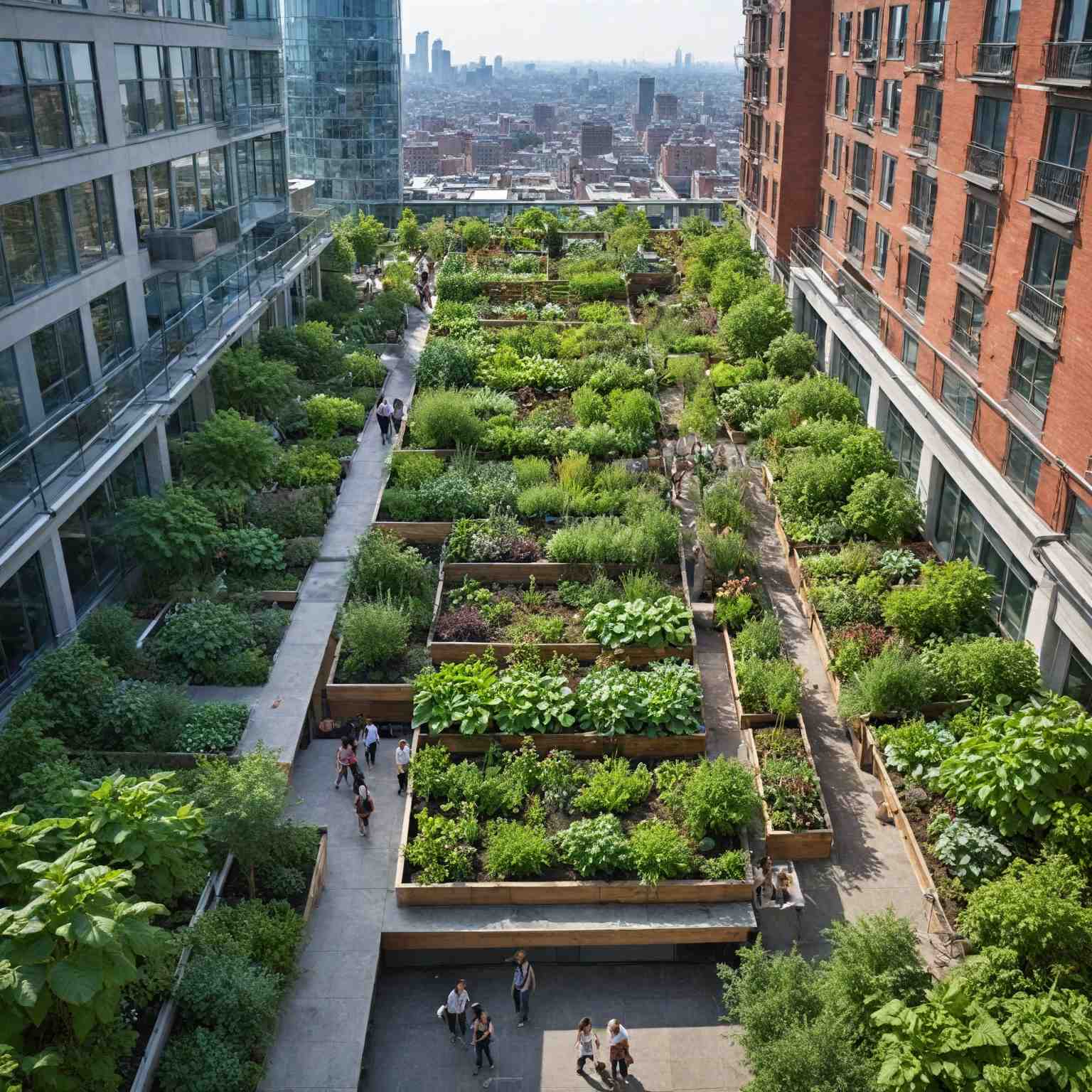
Urban gardening in 2025 has evolved into a dynamic and vital movement that connects city residents with food production, nature, and community resilience. One of the most prominent trends is the expansion of community gardens, which serve as collaborative spaces where people can grow food together, share knowledge, and foster social interaction. These gardens contribute to food security and promote the efficient use of urban land, making them an integral part of sustainable urban development worldwide.
Vertical gardening is gaining considerable traction as a practical solution for space-limited urban environments. By utilizing vertical surfaces to grow plants, these gardens maximize limited areas while also providing benefits such as natural privacy screens, improved air quality, and insulation to keep buildings cooler in summer. When combined with smart irrigation systems and grow lights, vertical gardens enable easy maintenance and support healthy plant growth, leveraging technology to create sustainable urban green spaces.
Innovative soil-less farming methods such as hydroponic and aquaponic systems are reshaping urban agriculture by allowing plants to grow with precisely regulated nutrients and water without soil. These techniques, often integrated within specialized indoor greenhouses equipped with AI, automation, and advanced energy management, offer independence from weather fluctuations and seasonal changes. In 2025, these scalable indoor farming solutions are increasingly recognized for their efficiency and potential to transform city landscapes and sustainable food production.
Innovations to Watch in 2025
The year 2025 marks a significant turning point in urban gardening, characterized by the integration of cutting-edge technologies and sustainable practices that are reshaping how city dwellers grow and manage plants. Central to these innovations is the increasing adoption of smart gardening systems that leverage the Internet of Things (IoT), Artificial Intelligence (AI), and automation to optimize plant care and resource management. Smart irrigation systems, equipped with IoT-enabled sensors, monitor soil moisture, temperature, and light intensity to deliver precise watering schedules, conserving up to 70% more water than traditional methods. These systems often connect to apps that enable remote control and data-driven decisions, making gardening more accessible for busy urban residents.
Biometric sensors are emerging to monitor plant health by detecting stress signals such as electrical resistance changes or gas emissions, transmitting real-time updates directly to gardeners’ smartphones. This plant-to-app communication helps users respond promptly to plant needs, enhancing growth outcomes. Alongside these advancements, augmented reality (AR) applications are revolutionizing garden planning by allowing users to visualize layouts, experiment with plant arrangements, and simulate sunlight and shade effects virtually before making physical changes. Such technology reduces trial and error and facilitates creative design tailored to individual urban spaces.
Urban agriculture is also benefiting from blockchain technology to foster transparency in food production and distribution. Blockchain-based traceability tools enable growers and consumers to verify the origin and quality of urban produce, supporting trust and sustainability in local food markets. Satellite-based innovations further augment urban gardening by providing real-time weather, soil, and plant health data, empowering both community gardeners and commercial vertical farms with actionable insights for efficient resource use.
Sustainability remains a key focus, with urban gardening innovations embracing energy-efficient, closed-loop systems that minimize waste and optimize resource cycles. Practices such as composting kitchen and garden waste to enrich soil, utilizing drought-tolerant native plants, and implementing pollinator-friendly flower beds promote biodiversity and ecological resilience within urban environments. Vertical farming and rooftop gardens maximize limited space, employing hydroponics and controlled environment agriculture to produce a variety of crops sustainably while reducing transportation emissions and land use.
Additionally, AI-powered advisory systems like Jeevn provide customized, real-time insights on weather and plant health, facilitating precision gardening tailored to specific urban microclimates. Robotic tools, including automated mowers and irrigation systems, further ease maintenance demands, making smart gardening both time-efficient and environmentally responsible. Collectively, these innovations underscore a future where technology and sustainability harmonize to create smarter, greener urban gardens that support food security, community engagement, and environmental stewardship in cities worldwide.
Leading Cities and Regional Implementations
Leading cities worldwide have embraced urban gardening and agriculture (UA) not merely as isolated initiatives but as integral components of broader urban systems designed to promote sustainable behaviors and resilience. These cities focus on creating environments where sustainable decisions—such as engaging in urban farming—are the most convenient, socially encouraged, and supported options, thereby addressing the paradox of urban areas contributing 70% of global carbon emissions despite substantial investments in green infrastructure.
Several metropolitan areas have developed comprehensive governance frameworks to embed UA within their urban planning and sustainability strategies. For example, the Milan Urban Food Policy Pact exemplifies a holistic approach that integrates urban agriculture with food waste management, redistribution, and resilience planning, showcasing the potential of policy-driven urban food systems. Similarly, Berlin and Tokyo have incorporated UA into their climate adaptation and biodiversity efforts through initiatives like green roofs, community-supported agriculture (CSA), and agroecological networks.
In high-income regions such as North America, Europe, and East Asia, urban agriculture has evolved into technologically advanced and policy-integrated food production systems. Cities like Los Angeles are known for their extensive rooftop farm networks, Chicago supports community gardens in underserved neighborhoods, and New York City has witnessed a surge in rooftop greenhouses and vertical farms. These cities combine innovative technologies—such as hydroponics, aeroponics, and controlled environment agriculture—with strong community engagement to maximize food production within limited urban spaces. Newark, New Jersey’s AeroFarms is a pioneering example of vertical farming, utilizing aeroponics to grow leafy greens with minimal resource use and positioning itself as an industry leader through technological innovation.
Urban agriculture in developing countries often arises from necessity and community efforts rather than formal policy or technological advancement, contrasting with the more systematized approaches seen in wealthier cities. Nevertheless, local governments globally are adopting various strategies to facilitate urban farming, ranging from enabling food sales within city boundaries to establishing community and demonstration gardens that educate residents about food production.
Community gardens have gained prominence as multifunctional spaces that promote food security, social interaction, and efficient use of urban land. Their role in enhancing urban resilience and social inclusion has been underscored by growing academic interest, especially highlighted during the COVID-19 pandemic when food insecurity and social isolation increased dramatically. Cities such as Chicago actively cultivate community gardens in underserved neighborhoods, thereby addressing food access disparities and fostering stronger local communities.
Indoor urban agriculture is also rapidly advancing, with cities adopting high-tech greenhouses, vertical farming skyscrapers, and modular stacked units equipped with AI-driven climate controls, precision LED lighting, and robotic automation. These systems enable year-round food production independent of weather or seasonal variability, significantly enhancing yield per square foot while conserving water and land resources. By 2025, such indoor farming models have become scalable urban solutions reshaping city landscapes and contributing to circular economy and carbon neutrality goals.
In sum, leading cities and regions demonstrate a range of urban gardening implementations that combine policy innovation, technological advancement, and community engagement. This integrated approach positions urban agriculture as a vital component of sustainable urban development, addressing climate challenges, food security, and social equity across diverse contexts.
Environmental and Social Benefits
Urban gardening offers a wide array of environmental benefits that contribute significantly to enhancing urban life. Green infrastructure within cities—comprising ornamental plants and food cultivation—plays a vital role in cooling urban areas, mitigating stormwater runoff, recharging groundwater, removing pollutants, and supporting biodiversity. The effectiveness of these benefits depends largely on the careful selection of appropriate plant species to maximize ecological functions while preventing the spread of invasive plants and pests. Moreover, integrating food-producing green spaces into urban environments contributes to climate regulation, waste recycling, and overall urban resilience, which are increasingly important amid rapid urbanization and climate change.
The incorporation of rooftop gardens and other green infrastructure into building designs has been empirically shown to enhance thermal insulation and manage stormwater effectively, reducing the strain on conventional infrastructure systems especially during extreme weather events. Green stormwater management techniques such as rain gardens, permeable pavements, and constructed wetlands are becoming key tools for urban areas to address flooding and improve water quality.
On the social front, urban gardening promotes significant physical and mental health benefits. Access to green spaces and fresh produce has been linked to reduced stress, improved nutrition, and enhanced well-being by fostering a connection with nature. These green spaces also provide residents with opportunities for exercise, relaxation, and social interaction, contributing to stronger community ties. Community gardens, in particular, serve as hubs for cultural preservation and social cohesion while also enhancing food access, especially in economically distressed areas.
Urban gardening initiatives have evolved from grassroots movements into technologically advanced, policy-supported systems that foster food security and economic development. Programs such as Urban Agriculture and Innovation Production (UAIP) grants support community gardens and nonprofit farms by increasing food production, providing job training, and enabling stakeholders to develop sustainable business and zoning plans, thereby strengthening urban food systems and social resilience.
Challenges and Limitations
Urban gardening faces a variety of challenges and limitations that impact its adoption and success within city environments. One major hurdle is regulatory barriers, which may arise from zoning codes, health department regulations, or local ordinances. For example, some communities restrict keeping livestock through health regulations rather than zoning laws, as seen in Baltimore, Maryland. Even noncommercial urban farmers who grow food for personal use or community donation can encounter limitations on the types and scales of agriculture allowed on private or public land. These restrictions may include permitted and conditional use designations, setbacks, design requirements, or soil safety regulations. Additionally, aesthetic concerns have led some municipalities to bar certain agricultural practices, such as front yard gardens, in urban zones.
Another limitation lies in the existing smart home and urban gardening technologies, which often do not fully address practical barriers such as location constraints, expertise levels, or time availability for urban growers. Although innovations like PlantPal have begun to target these issues by enabling garden cultivation regardless of user circumstances, more comprehensive solutions are still needed to overcome these persistent challenges.
Environmental and planning challenges also complicate the integration of food-producing green spaces into high-density urban developments. While urban gardens contribute important ecological functions—including climate regulation, biodiversity support, and stormwater management—their success depends on thoughtful species selection and regional planning to avoid negative impacts such as invasive species spread and inefficient land use.
Finally, despite increasing availability of streamlined application processes and funding opportunities to support urban gardening projects, financial and resource limitations continue to affect participation, particularly among marginalized communities. Ensuring equitable access to resources like seeds, compost, and technical assistance remains essential for broadening the impact and sustainability of urban agriculture initiatives.
Policy, Legislation, and Funding Support
Government policies, legislation, and funding play a crucial role in advancing urban gardening initiatives and ensuring their sustainability. Various federal, state, and local agencies, along with non-governmental organizations, provide agricultural funding programs that support both beginning and experienced urban farmers, researchers, and community groups involved in urban agriculture projects. For example, in 2024, the USDA invested $5.2 million across 17 grants aimed at increasing food production and access in economically distressed communities, while also providing job training, education, and assistance with business plans and zoning proposals.
Zoning reforms are increasingly recognized as essential tools for promoting urban agriculture. The Vermont Law and Graduate School’s Center for Agriculture and Food Systems offers guidance for planners, policymakers, and community members on how to modify zoning laws to better support urban gardening efforts. Their recommendations include action steps drawn from examples nationwide, illustrating how zoning can facilitate urban agriculture development. These reforms help integrate urban gardening into city planning, fostering food security and environmental benefits within urban landscapes.
In addition to direct funding, many grants now incorporate resource support, such as the provision of seeds, compost, and technical assistance, which lowers barriers for participants and strengthens community-based urban gardening initiatives. Digital application platforms and interactive portals are also making it easier to apply for such funding, with many cities expected to adopt streamlined application processes by 2025. Emphasizing clear community benefits—like improved food security, environmental quality, and social inclusion—has become a critical component of successful grant proposals.
State programs complement federal efforts. For instance, New York’s Urban Farms and Community Gardens Grant program awarded $1 million to 22 projects statewide in its second round and was renewed with an enhanced budget allocation of $2.5 million for fiscal years 2025 and 2026. This program provides technical assistance and promotes urban agriculture as part of the state’s broader commitment to community growing and urban farming.
Policy support from governments and NGOs is vital in creating accessible, sustainable urban gardening environments. By coupling funding with legislative reforms and technical resources, these stakeholders help nurture biodiversity, improve food access, and build resilient urban ecosystems. The combined efforts in policy, legislation, and funding are thus foundational to the continued growth and innovation in urban gardening expected throughout
Urban Design and Infrastructure Innovations
Urban design and infrastructure in 2025 are undergoing significant transformations to address the challenges posed by climate change, housing shortages, and the demand for sustainable and inclusive environments. These innovations focus on integrating multifunctional green infrastructure within urban landscapes to enhance ecological, social, and economic resilience.
A central aspect of these innovations is the incorporation of urban green infrastructure that includes ornamental and food cultivation. Such infrastructure contributes to critical ecosystem services like cooling urban heat islands, mitigating stormwater runoff, recharging groundwater, removing pollutants, and enhancing biodiversity. The effectiveness of these benefits depends largely on the careful selection of plant species and plant communities to maximize ecological function and prevent the spread of invasive species and pests.
Sustainable urban gardening practices are increasingly designed with organic methods, energy efficiency, and closed-loop systems that reduce waste and optimize resource use. Techniques such as composting food and garden waste enrich urban soils while decreasing landfill contributions. Water efficiency measures—including drip irrigation, rainwater harvesting, and the selection of drought-tolerant plants—help maximize water use in often water-scarce urban settings.
Innovative urban planning embraces the challenge of integrating food gardens within high-density developments by promoting inclusive, regional-level strategies that ensure these spaces remain multifunctional and accessible. This holistic approach fosters community engagement and social cohesion by turning residents into active stewards of urban nature rather than passive beneficiaries.
Moreover, leading cities demonstrate how urban systems can be designed so that sustainable choices become the easiest, most convenient, and socially rewarded options. This includes community programs such as urban gardening initiatives and environmental education that encourage behavior change as part of the broader urban ecosystem design. Despite ongoing investments in green infrastructure, urban areas still generate approximately 70% of global carbon emissions, highlighting the importance of coupling infrastructure innovations with effective social engagement to achieve meaningful sustainability outcomes.
Sustainability in urban gardening also involves creative reuse of materials, such as repurposing pallets, tires, or plastic bottles into planters or garden structures, contributing to the reduce-reuse-recycle ethos. These initiatives not only make urban gardens more environmentally responsible but also enhance local biodiversity by attracting pollinators and supporting urban habitats.
Finally, government and community programs are increasingly supporting the development and enhancement of urban farms, school gardens, and community gardens, providing critical funding and resources to scale these innovations and embed them within urban design frameworks. Together, these advances position urban gardening and green infrastructure as key components of resilient, sustainable cities in 2025 and beyond.
Future Prospects
The future of urban gardening in 2025 and beyond is poised for significant transformation driven by the integration of advanced technologies, sustainability goals, and community engagement. As urban populations continue to grow, urban agriculture is increasingly recognized not just as a hobby or trend but as a critical component of resilient and sustainable urban ecosystems. Innovations such as smart planters, hydroponic systems, satellite-based monitoring, and blockchain traceability are bridging the gap between traditional farming and modern gardening, making healthy and organic food accessible even in dense city environments.
Technology plays a central role in shaping these future prospects. Precision agriculture initiatives leverage data-driven tools to optimize crop health, track carbon footprints, and reduce operational costs, facilitating scalable urban farming projects. Artificial intelligence applications are also beginning to influence gardening practices, potentially revolutionizing how urban agriculture adapts to changing environmental conditions and enhances productivity. However, equitable access to climate-smart technologies remains a challenge, particularly in the Global South, where integrated policy frameworks and inclusive urban planning are essential to maximizing urban agriculture’s impact.
Community involvement continues to be a vital dimension of future urban gardening. Successful programs that combine environmental education with community gardening initiatives have demonstrated the ability to transform residents into active stewards of urban nature, fostering social cohesion and ensuring the longevity of green infrastructure investments. These behavioral shifts are key to sustaining urban agriculture as a strategy for addressing food insecurity, environmental degradation, and social exclusion in rapidly urbanizing areas.
Looking ahead, the convergence of cutting-edge technology, policy innovation, and empowered communities promises a more sustainable, resilient, and inclusive future for urban gardening, making it an indispensable element of urban planning and development strategies worldwide.
The content is provided by Sierra Knightley, Direct Bulletins