Summary
The Trump administration significantly escalated trade tensions with China by imposing and intensifying high tariffs on Chinese imports beginning in 2018, aiming to address what it characterized as unfair trade practices and to reduce the large U.S. trade deficit with China. These tariffs, which eventually reached rates as high as 145% on many Chinese goods by 2025, were part of a broader strategy of reciprocal tariffs applied to multiple U.S. trading partners based on bilateral trade imbalances. The administration framed these measures as tools to protect American manufacturing, promote reshoring of jobs, and enhance national security.
Despite a “phase one” trade agreement signed in 2020, under which China pledged to increase its purchases of U.S. goods, China fell short of these commitments, and retaliatory tariffs remained in place, contributing to sustained economic friction between the two countries. The tariff regime disrupted global supply chains, led to notable trade diversion effects—such as the sharp decline in U.S. soybean exports to China—and raised costs for American consumers and businesses, who bore much of the tariff burden through higher prices. Analysts and business leaders criticized the tariffs for creating uncertainty, strategic incoherence, and potential long-term economic harm despite some gains in domestic manufacturing sectors.
The intensification of tariffs in early 2025, including the removal of exemptions on low-value Chinese imports and the introduction of “reciprocal tariffs” on nearly all U.S. trading partners, further escalated the trade conflict, prompting strong retaliatory measures from China and complicating efforts to resume negotiations. Public statements from U.S. officials suggested ongoing talks, while Chinese authorities consistently denied formal negotiations were taking place, highlighting the contentious and ambiguous nature of the trade dialogue at the time.
The aggressive tariff policies attracted widespread criticism from domestic politicians, international leaders, and economists, who argued that the economic costs outweighed the benefits and that the tariffs failed to substantially alter trade balances in the long term. Nevertheless, the Trump administration maintained that tariffs were necessary to defend U.S. economic interests and reshape global trade practices in favor of American workers and industries. The legacy of these high tariffs continued to influence U.S.-China economic relations and global trade dynamics beyond the Trump presidency.
Background
The trade tensions between the United States and China escalated significantly during President Donald Trump’s administration, beginning in January 2018 with the imposition of multiple rounds of tariffs and non-tariff barriers. These measures aimed to address perceived unfair trade practices and reduce the U.S. trade deficit with China, which the Trump administration viewed as inherently harmful to the U.S. economy. Early actions included tariffs on approximately $60 billion worth of Chinese imports, starting with a 25% tariff on $34 billion of goods in July 2018 and extending to steel and aluminum imports with rates of 25% and 10%, respectively.
Despite a “phase one” trade deal signed in January 2020, under which China pledged to purchase $200 billion in U.S. goods over two years, China failed to meet these targets, ultimately importing less than before the trade war began. The tariffs triggered notable trade diversion effects, such as the dramatic decline in U.S. soybean exports to China and shifts in global supply chains, impacting producers and markets on both sides.
In 2025, the tariff regime intensified dramatically. Between January and April, the average U.S. tariff rate rose from 2.5% to approximately 27%, with new “reciprocal tariffs” applied broadly across imports from nearly all U.S. trading partners, excluding certain product-specific tariffs and select energy goods. For example, on April 2, 2025, President Trump announced a baseline 10% tariff, escalating to rates as high as 50% depending on trade imbalances, with China facing a 34% tariff rate that later surged to 145%, and specific products subjected to taxes as high as 245%. China retaliated by imposing matching tariffs, including a 125% tariff on U.S. goods, and suspended negotiations on key issues such as the sale of TikTok.
The ongoing trade conflict has been criticized for creating uncertainty and strategic incoherence, with business leaders warning about rising prices, supply shortages, and the long-term economic repercussions of an unpredictable tariff environment. While the Trump administration emphasized tariffs as a tool to encourage reshoring of manufacturing and to correct trade imbalances, analysts noted the complexity of global trade dynamics and questioned the effectiveness of such broad and aggressive tariff policies. The trade war has also influenced regional trade relationships, prompting efforts by China, South Korea, and Japan to strengthen trilateral cooperation in response to U.S. tariffs.
Implementation of High China Tariffs
In early April 2025, the Trump administration intensified tariffs on Chinese goods as part of its broader reciprocal trade agenda aimed at addressing perceived unfair trade practices and reducing the U.S. trade deficit. On April 9, tariffs on Chinese imports were raised sharply, with most goods facing a 145% levy and certain products subject to rates as high as 245%. This marked the heaviest tariff burden imposed on any trading partner, reflecting the administration’s emphasis on countering what it characterized as China’s persistent trade imbalances and non-tariff barriers.
The administration ended an exemption that had previously allowed Chinese goods valued under $800 to enter the U.S. without tariffs, effective May 2, 2025. Post-exemption, shipments faced a duty of 90% or $75 per item, increasing to $150 per item after June 1. These measures formed part of a wider set of tariff increases unveiled on April 2, which included a universal baseline tariff of 10% on imports from nearly every U.S. trading partner, with some countries subjected to higher rates based on trade imbalances—reaching as high as 50% in some cases. China’s tariffs were subsequently escalated further to a total reciprocal rate of 125% by mid-April in response to the U.S. moves.
The implementation of these high tariffs followed a series of previous escalations in the U.S.-China trade conflict that began under the Trump administration in 2018, including 25% tariffs on steel and 10% on aluminum imports announced in March 2018, and multiple rounds of Section 301 tariffs on Chinese goods starting in September 2018. These earlier tariffs culminated in a $79 billion tariff regime primarily targeting Chinese imports, which have been maintained and expanded under the Biden administration.
China responded to these U.S. tariffs with retaliatory tariffs, imposing duties as high as 125% on American goods. The ongoing tit-for-tat tariff increases contributed to heightened tensions between the two largest global economies and sparked concerns about a potential global economic slowdown. Both governments engaged in high-level talks aiming to negotiate tariff adjustments, though progress remained uncertain amid conflicting signals from U.S. officials and Chinese representatives.
The rationale behind the tariff implementation emphasized economic sovereignty and the protection of American manufacturing and jobs. The Trump administration argued that the tariffs were necessary to correct unfair trade practices, incentivize the reshoring of production to the United States, and ensure national security by reducing reliance on foreign suppliers for essential goods. However, economic analyses suggested that while tariffs raised prices for U.S. consumers and reduced aggregate real income modestly in both countries, they also underscored the complex trade-offs involved in this protectionist approach.
Economic and Political Impact
The imposition of high tariffs on Chinese imports under the Trump administration had multifaceted economic and political repercussions in both the United States and China. Economically, these tariffs aimed to address longstanding trade imbalances and promote the reshoring of manufacturing jobs to the U.S., with some studies indicating that they “strengthened the U.S. economy” and stimulated growth in sectors such as manufacturing and steel production. The tariffs served as a tool to correct unfair international trade practices, reduce the chronic goods trade deficit—which exceeded $1.2 trillion in 2024—and incentivize domestic production, reinforcing “Made in America” as both an economic and national security priority. A 2023 report from the U.S. International Trade Commission noted that tariffs on over $300 billion of imports from China effectively reduced those imports and encouraged U.S. industrial activity.
However, the tariffs also imposed costs on American consumers and businesses. Analyses suggest that the tariffs functioned as a tax increase averaging nearly $1,300 per U.S. household in 2025, contributing to higher prices on imported goods. Research indicates that the trade war lowered aggregate real income in both the U.S. and China, albeit modestly relative to GDP, and that retaliatory tariffs resulted in direct U.S. export losses estimated at $27 billion from 2018 through 2019. Further modeling estimated that the Trump tariffs could reduce long-run U.S. GDP by approximately 0.8 percent, with retaliatory tariffs potentially decreasing GDP by an additional 0.2 percent. The tariffs also caused trade diversion, as U.S. imports shifted away from China toward other countries, affecting global trade patterns and producers in various sectors, notably soybeans, where exports to China fell sharply after retaliatory tariffs were introduced.
On the Chinese side, the tariffs contributed to economic challenges, with reports indicating that U.S.-China trade slowed significantly in key trading hubs and inventories of American goods accumulated at Chinese factories. Despite this, China’s economy continued to grow, albeit below government targets, with Goldman Sachs forecasting a 4.5% growth rate in 2024 compared to a 5% target. The complex and varied nature of U.S.-China trade meant that the impact of tariffs differed across industries and supply chains.
Politically, the tariffs intensified tensions between the world’s two largest economies, raising concerns of a protracted trade standoff or mutual embargo. The Trump administration framed the tariffs as part of a reciprocal trade agenda to level the playing field for American businesses and workers by confronting unfair tariff disparities and non-tariff barriers imposed by other countries. This stance sought to pressure China into rebalancing trade relationships and addressing issues such as intellectual property rights and market access. Meanwhile, global observers remained watchful as the tariffs affected not only bilateral relations but also global economic dynamics, given the critical interdependence of U.S. and Chinese markets.
Trade Talks and Negotiations Leading up to Discussions
In the period leading up to the trade talks between the United States and China, there was considerable ambiguity and conflicting statements regarding the status of negotiations. President Donald Trump and his aides publicly suggested that trade negotiations were underway to address the escalating tariff war, which had already begun to impact prices, supply chains, and business operations in both countries. Despite these assertions, Chinese officials consistently denied that any formal talks were taking place. The Ministry of Commerce spokesperson He Yadong stated, “At present there are absolutely no negotiations on the economy and trade between China and the U.S.”, a position echoed by Foreign Affairs Ministry spokesman Guo Jiakun who described reports of talks as untrue and said, “China and the US are not having any consultation or negotiation on tariffs, still less reaching a deal”.
Meanwhile, the U.S. administration maintained that a process for negotiations was in place, with officials such as Rollins and Bessent emphasizing ongoing conversations regarding trade flows and the unsustainability of Chinese tariffs. Bessent mentioned that talks were scheduled to occur over a weekend, potentially helping to ease the month-long trade standoff between the world’s largest economies. National Economic Council Director Kevin Hassett highlighted that the Trump administration was managing numerous requests from other countries, including South Korea, seeking to negotiate tariff mitigations. South Korea’s government confirmed high-level discussions aimed at adjusting U.S. tariff rates, reflecting broader international concerns about the impact of American trade policies.
The trade tensions had escalated significantly after the U.S. imposed steep tariffs on Chinese goods—up to 145% on certain exports—as part of Trump’s protectionist agenda. China retaliated with its own tariffs and restrictions, including suspending negotiations on key issues such as the sale of TikTok and filing complaints to the World Trade Organization. Economists noted that China’s position was conditioned on the U.S. reducing tariffs to previous levels or lower, but the Trump administration appeared reluctant to roll back tariffs without securing substantial concessions, reflecting a shift in Chinese negotiation strategy from a cooperative stance to one focused more on national interests.
Despite these tensions, President Trump and Treasury Secretary Scott Bessent hinted at potential easing of the dispute, though some analysts warned that discussing tariff reductions prior to any substantive concessions could be perceived as a strategic retreat by the U.S.. The contrasting narratives from Washington and Beijing underscored the complexity of the negotiations and the significant economic and political stakes involved in the U.S.-China trade relationship at that time.
Trump’s Statements and Policy Positions
President Donald Trump consistently framed tariffs as a crucial tool to protect the national interest and advance American security and economic priorities. He emphasized that tariffs served as leverage to safeguard the United States against unfair trade practices, particularly targeting China’s intellectual property theft, forced technology transfer, and other behaviors deemed unreasonable. Trump positioned his tariff policy as a decisive action to defend American safety and national security, contrasting his approach with previous administrations that he claimed failed to use America’s economic strength effectively.
In response to what he described as a national emergency posed by illegal immigration and drug trafficking, Trump implemented additional tariffs on imports from Canada, Mexico, and China, citing the International Emergency Economic Powers Act (IEEPA). He also asserted that tariffs on steel and aluminum imports were necessary to protect U.S. national security from global oversupply. The president’s rhetoric linked tariffs not only to economic goals but also to broader national security concerns, portraying them as part of a comprehensive strategy to re-shore manufacturing and reduce the chronic trade deficit, which in 2024 exceeded $1.2 trillion.
Trump touted the success of his tariff strategy publicly, claiming the measures were working to benefit American workers and industries. However, behind the scenes, his administration’s trade team expressed more caution regarding the impact and sustainability of the tariffs. Trump maintained that he had been in frequent contact with Chinese President Xi Jinping to negotiate terms, although Chinese officials disputed the occurrence of such talks. The administration indicated intentions to adjust tariff rates as part of ongoing negotiations, reflecting the dynamic and often contentious nature of trade discussions with key partners such as China and South Korea.
The president’s introduction of “reciprocal tariffs” in April 2025 aimed to impose duties on imports from nearly all U.S. trading partners, with rates varying based on trade imbalances. In response to Chinese retaliation, Trump escalated tariffs on China to as high as 125%, signaling a hardline stance in the trade war. His policy sought to balance unfair trade practices and incentivize the return of manufacturing jobs to the United States, underscoring the administration’s narrative of “Made in America” as both an economic and national security priority.
Despite the aggressive tariff posture, critics and some economic experts warned of the tariffs’ negative effects, including higher prices for U.S. consumers and potential harm to U.S. businesses. Studies found that the costs of tariffs were largely passed through to American consumers and that the trade war had modest but notable negative impacts on real income in both the U.S. and China. Nonetheless, Trump remained committed to using tariffs as a bargaining chip to secure trade concessions and reshape global trade relationships in favor of the United States.
Reactions and Criticism
The imposition of high tariffs on Chinese imports by the Trump administration elicited a wide range of reactions and criticisms from political figures, international actors, and economic analysts. Democratic Representative Josh Gottheimer characterized Trump’s tariff strategy as “the art of stupidity,” highlighting domestic opposition within the United States to the protectionist measures. Similarly, China’s government maintained a consistent stance of condemnation toward the tariffs, with state media and social media platforms such as Weibo framing the tariffs as emblematic of populist protectionism that destabilizes global trade.
Internationally, China accused the United States of breaching World Trade Organization rules and threatened “resolute and forceful” countermeasures to protect its interests following the implementation of tariffs that, at their peak, reached a net total of
Outcomes and Subsequent Developments
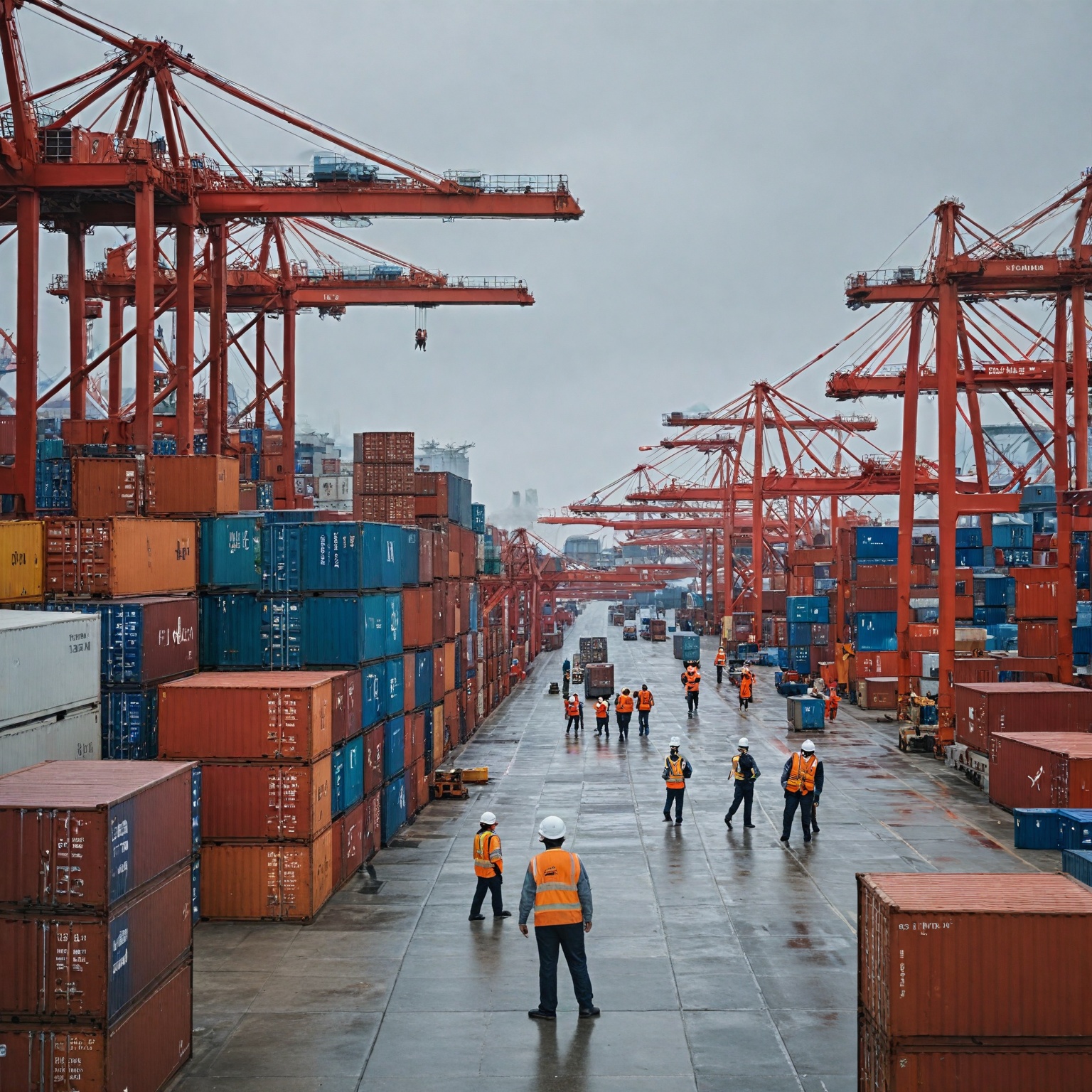
The imposition of high tariffs during the Trump administration had significant impacts on U.S.-China trade and the broader economy. One of the most evident effects was trade diversion, where the decline in imports from China was largely offset by increased imports from other countries such as Mexico, Japan, Korea, and Canada. For example, after China imposed retaliatory tariffs on U.S. soybeans in 2018, U.S. exports to China fell dramatically, with Mexico increasing its soybean imports to the United States to compensate, leaving overall U.S. imports broadly unchanged. This trade diversion indicated that while bilateral trade flows shifted, the aggregate trade volume remained relatively stable due to substitutions among trading partners.
The tariffs and ensuing trade tensions also drove up prices for U.S. consumers and businesses. Higher tariffs raised the cost of imported goods, contributing to inflationary pressures and product shortages in some sectors. Business owners and analysts warned that these price increases and supply disruptions could lead to store closures and broader economic harm if the trade war continued unabated. Despite these concerns, President Trump and his administration maintained that the tariffs were necessary to correct unfair trade practices, reduce the U.S. trade deficit, and encourage reshoring of manufacturing jobs to the United States.
Trade negotiations during this period were marked by uncertainty and conflicting signals. While the Trump administration suggested that talks were underway or imminent, Chinese officials repeatedly denied that active negotiations were occurring. This lack of clear communication added to market volatility and complicated efforts to de-escalate tensions. In April 2018 and subsequent months, the U.S. escalated tariffs, including a 25 percent tariff on steel and 10 percent on aluminum, followed by reciprocal tariffs targeting multiple trading partners and reaching as high as 125 percent on certain Chinese goods.
Economic analyses of the trade war’s impact found that U.S. consumers bore much of the cost through higher prices, and both the U.S. and Chinese economies experienced reductions in real income, though the magnitudes were relatively small compared to overall GDP. The U.S. Department of Agriculture estimated direct export losses from retaliatory tariffs at $27 billion from 2018 to 2019, and reports from the U.S. International Trade Commission confirmed near-complete pass-through of tariffs to U.S. prices for products such as steel and aluminum. Conversely, some studies credited the tariffs with strengthening certain sectors of the U.S. economy and fostering significant reshoring, particularly in manufacturing and steel production.
The trade war culminated in a “phase one” deal signed in January 2020, in which China committed to purchasing $200 billion in U.S. goods and services over two years. However, China failed to meet this target, importing even less than before the trade war began. Following the change in U.S. administration, President Joe Biden largely maintained and expanded these tariffs, signaling a bipartisan consensus on a tougher trade stance toward China.
Throughout the period, the complexity of U.S.-China trade meant that the effects of tariffs varied widely across sectors and supply chains. Some exporters reported that shipments had resumed after interruptions, reflecting the nuanced and multifaceted nature of the trade relationship. Overall, the high tariffs imposed by the Trump administration resulted in significant shifts in trade patterns, economic costs to consumers, and ongoing challenges in U.S.-China economic relations.
The content is provided by Avery Redwood, Direct Bulletins