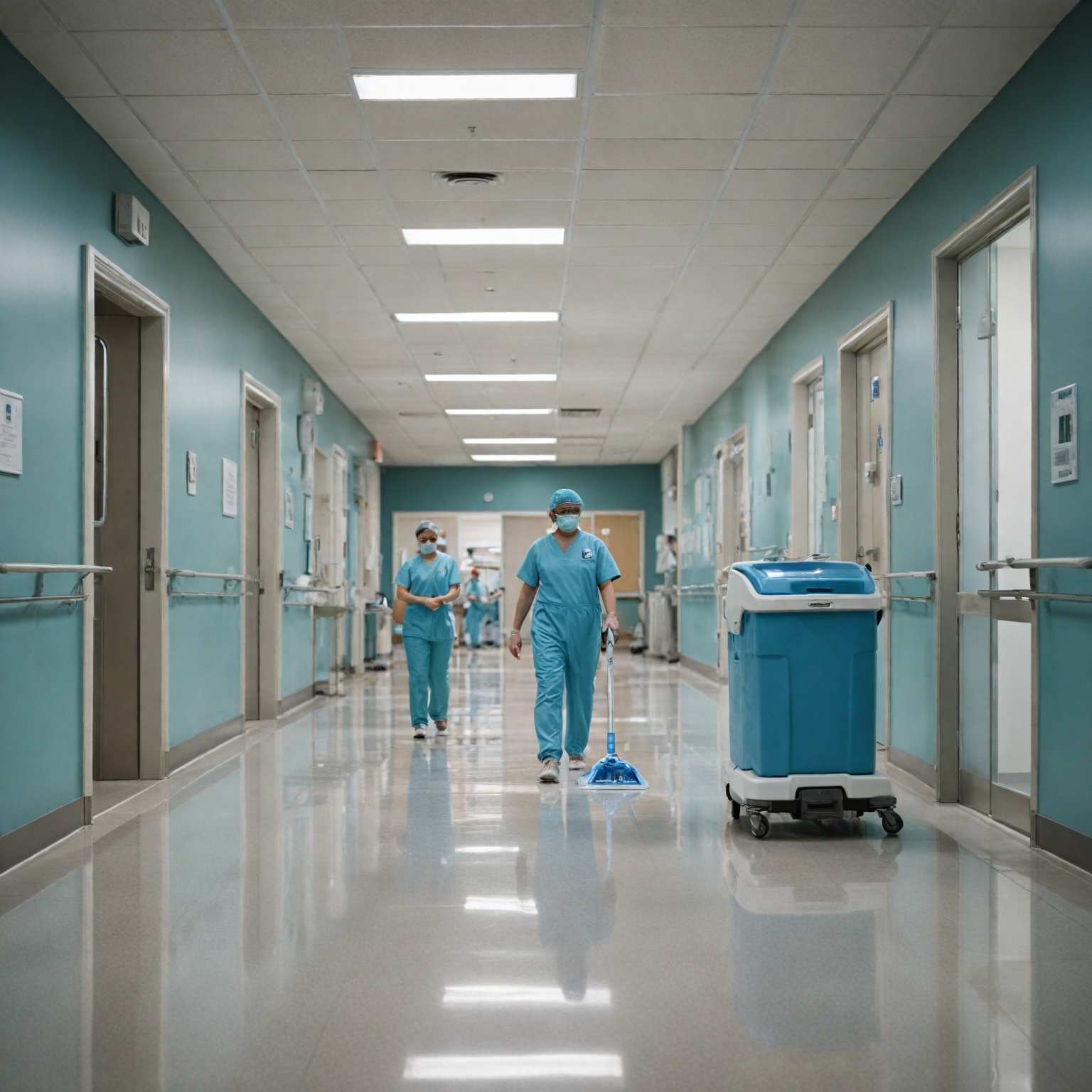
Highlights
- Advanced cleaning technologies are revolutionizing patient safety and infection control in healthcare.
- Embracing AI and automation enhances cleaning efficacy while addressing workforce challenges and regulatory compliance.
Summary and Historical Context
Hospital cleaning practices have evolved from basic manual methods to evidence-based protocols crucial for preventing healthcare-associated infections (HAIs) and enhancing patient safety. Early skepticism about cleaning’s impact gave way to microbiological standards and structured training to address persistent contamination and multidrug-resistant organisms. Regional differences influenced the pace of adopting advanced technologies, with developed areas moving towards automation and centralized systems to improve consistency and infection control.
Technological Evolution and Current Trends
Advancements in hospital cleaning include automated washers, robotic cleaners, enzyme-based formulations, and no-touch disinfection technologies such as ultraviolet-C (UV-C) light and hydrogen peroxide vapor. AI integration optimizes cleaning schedules and enhances pathogen eradication. Current trends emphasize AI-driven tracking software, electrostatic sprayers, and sustainable disinfectants like Sniper and Vital Oxide. Emerging approaches involve self-disinfecting surfaces coated with antimicrobial metals and probiotic cleaning, though further research is needed. Manual cleaning remains essential, supported by technology-based quality assessments to address workforce challenges and improve hygiene consistency.
Innovations to Watch in 2025
In 2025, automation and AI-powered cleaning protocols will advance hospital sanitation by optimizing schedules, predicting infection risks, and supporting clinical decisions. Smart disinfection technologies including electrostatic sprayers, UV light systems, and vaporized hydrogen peroxide will enhance thoroughness and sustainability. The COVID-19 pandemic has accelerated adoption of advanced disinfectants and robotic sterilization to combat antimicrobial resistance. Additional innovations include color additives in wipes and rigorous environmental cleaning programs emphasizing training and monitoring.
Regulatory Framework and Operational Challenges
Hospital cleaning is regulated by agencies like OSHA and guided by CDC best practices, with accreditation bodies promoting evidence-based policies. International initiatives such as WHO’s “Clean Care is Safer Care” emphasize global hygiene standards. Compliance requires systematic monitoring, training, and organizational structure adjustments. Operational challenges include infrastructure needs, integrating mechanized and AI technologies with existing systems, workforce training, and balancing cost pressures. Effective change management and investment in training are vital to maintain safety and efficiency.
Effectiveness and Outcomes
Hydrogen peroxide vapor (HPV) and ultraviolet-C (UVC) radiation significantly reduce bacterial contamination, with HPV generally more effective due to UVC’s line-of-sight limitations. Despite their efficacy, high costs and regulatory requirements limit routine use. Effective hospital cleaning reduces HAIs by removing pathogens from surfaces, relying on appropriate products, techniques, and competent staff. Automated systems and AI-driven monitoring enhance consistency and quality, while ongoing evaluation and adaptation are essential to maintain high hygiene standards.
Past Decade Trends and Future Directions
Over the past decade, hospital cleaning has shifted from manual disinfection to targeted chemical agents, automated technologies, and digital monitoring to improve infection control and operational efficiency. Probiotic cleaning and UV sterilizing robots have emerged as complementary approaches. Looking ahead, integration of automated disinfection, AI-driven scheduling, and sustainable products will shape hospital cleaning. Growing emphasis on antimicrobial resistance frameworks and environmental sustainability will drive innovation. Continued research, interdisciplinary collaboration, and robust monitoring remain critical for advancing hospital hygiene and patient safety.
The content is provided by Blake Sterling, Direct Bulletins