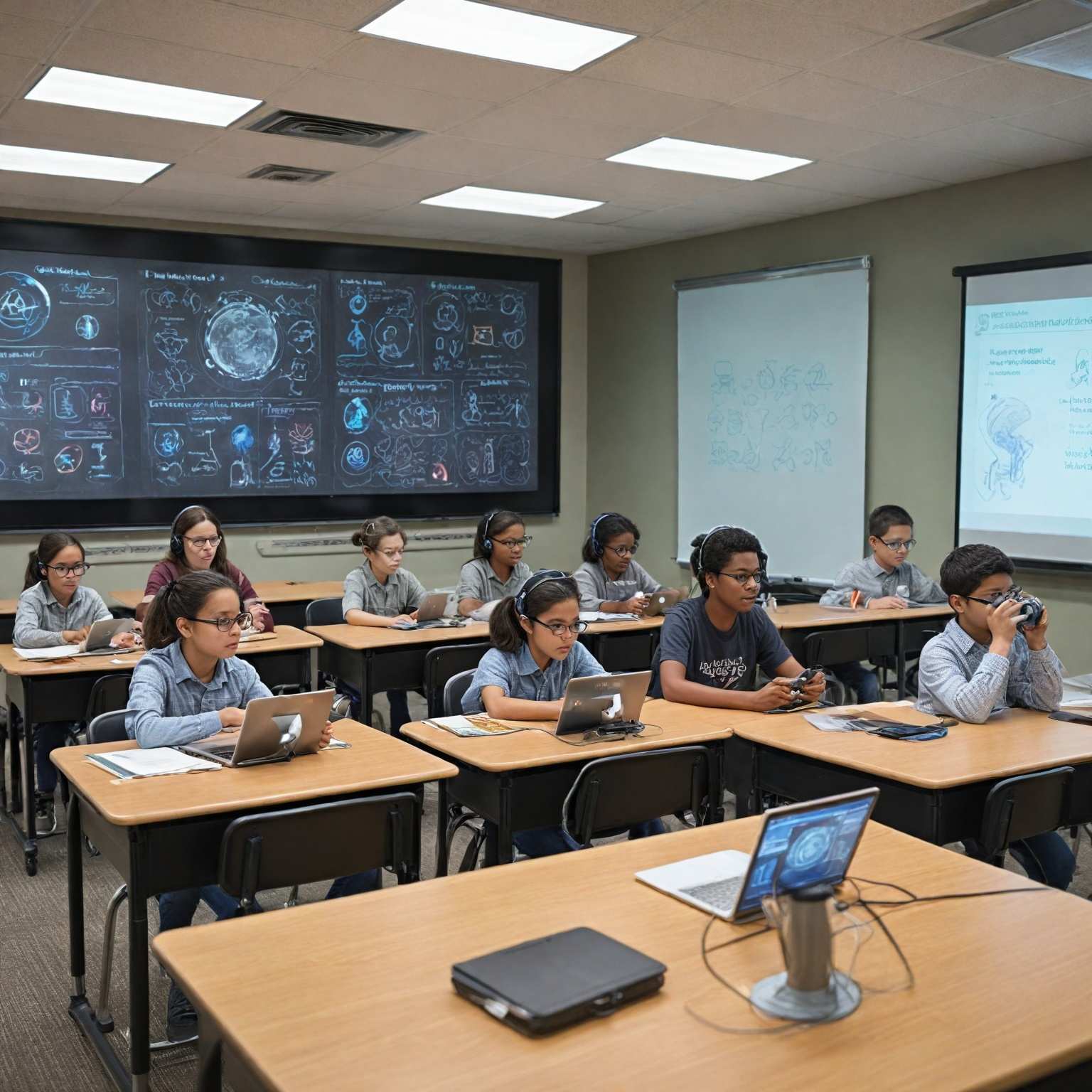
Highlights
- Explore transformative technologies like AI and XR to enhance educational experiences and outcomes.
- Address critical challenges in education technology to promote equity, privacy, and sustainability.
Summary
The Complete Guide to Emerging Technologies Shaping the Future of Education explores the transformative impact of cutting-edge digital innovations on teaching and learning across educational levels. As education evolves in 2024, technologies such as artificial intelligence (AI), extended reality (XR), adaptive learning systems, biometric authentication, and neuromorphic computing are increasingly integrated into classrooms and institutions worldwide. These technologies aim to personalize learning, enhance student engagement, and streamline administrative processes, marking a significant shift toward more immersive and efficient educational environments.
Among the most notable advancements, AI-driven platforms enable real-time customization of instructional content tailored to individual student needs, supporting diverse learning styles and improving academic outcomes. Meanwhile, XR technologies, including virtual and augmented reality, offer experiential learning opportunities that make abstract concepts tangible and foster deeper comprehension, particularly in STEM subjects. Adaptive learning systems dynamically adjust curricula based on performance data, while emerging tools like biometric authentication and neuromorphic computing promise to enhance security and cognitive computing capabilities in education.
Despite their potential, the integration of these technologies raises critical challenges related to data privacy, algorithmic bias, equitable access, and environmental sustainability. Concerns over the digital divide highlight disparities in infrastructure and access, especially in rural and underserved communities, which could exacerbate educational inequities if unaddressed. Ethical considerations surrounding AI’s impact on human interaction, transparency, and fairness are prompting calls for thoughtful policy and collaborative frameworks to ensure responsible and inclusive deployment.
The guide also examines evidence from research and real-world case studies demonstrating both the promise and complexity of educational technology adoption. While many studies report improvements in engagement and learning outcomes, success often depends on factors such as teacher professional development, infrastructure readiness, and the balanced integration of human and technological elements. Looking ahead, the evolving edtech landscape emphasizes the importance of aligning innovation with pedagogical goals, fostering equity, and addressing ethical concerns to sustainably shape the future of education.
Overview of Emerging Technologies in Education
Emerging technologies are profoundly reshaping education by enhancing teaching methodologies and learning experiences across various educational levels. As education enters 2024, several technological trends continue to gain momentum, including immersive technologies, artificial intelligence (AI), personalized learning, and online or hybrid learning models. These innovations are driving a technology-fueled rebirth in education, aiming to engage students more effectively and improve learning outcomes. Immersive technologies such as virtual reality (VR) and augmented reality (AR) enable experiential learning by creating interactive and engaging environments that enhance comprehension and retention. Simultaneously, AI and machine learning (ML) have revolutionized adaptive learning systems, allowing for real-time personalization of educational content tailored to individual student needs, thereby improving efficacy and accessibility. Learning management systems (LMS) also play a critical role in digitalizing the education process, emphasizing user experience and personalized learning pathways.
The integration of these technologies creates complex, dynamic educational ecosystems. Complexity theory provides a useful framework for understanding the non-linear interactions among various technological elements within education systems. This theoretical lens helps explore how smart digital technologies interact and influence systemic change, revealing challenges and opportunities inherent in technology-enhanced learning environments. In addition to facilitating personalized and adaptive learning, emerging technologies promote collaborative activities and multimedia engagement, often through accessible and low-cost platforms. This democratization of educational technology ensures broader adoption and helps bridge gaps in educational equity.
Key Emerging Technologies
Emerging technologies are rapidly transforming the educational landscape by enhancing personalized learning, improving engagement, and streamlining administrative tasks. Among the most influential technologies shaping the future of education are Artificial Intelligence (AI), Extended Reality (XR), adaptive learning systems, biometric authentication, and neuromorphic computing.
Artificial Intelligence (AI)
AI is playing a pivotal role in revolutionizing education by automating routine tasks, personalizing instruction, and supporting both students and educators. AI-driven intelligent tutoring systems (ITS) provide tailored learning experiences by adapting content based on individual student performance, thereby increasing engagement and academic achievement. These systems analyze data such as student pace and comprehension to deliver feedback and break down difficult concepts, often using natural language processing (NLP) to simulate teacher-like interactions without replacing human instructors. Moreover, AI-powered predictive analytics help identify students at risk of underperforming, enabling timely interventions to improve retention and outcomes, as demonstrated by institutions like Georgia State University. AI tools also support special education needs by catering to students with Dyslexia, Autism, ADHD, and Down syndrome through personalized assistance.
Despite these benefits, challenges remain regarding data privacy, social equity, and environmental impact. AI systems risk perpetuating societal biases embedded in training data and require significant computational resources, raising concerns about energy consumption and carbon emissions. Balancing AI’s advantages with ethical considerations and preserving meaningful human interaction in learning environments is an ongoing challenge.
Extended Reality (XR)
Extended Reality, encompassing virtual reality (VR) and augmented reality (AR), is increasingly integrated into educational settings to provide immersive, hands-on learning experiences that traditional classrooms cannot offer. Particularly in STEM education, XR enables students to engage interactively with complex concepts and scenarios, fostering deeper understanding and motivation. By 2024, approximately 30% of schools globally are expected to adopt VR/AR tools as part of their curricula, with notable growth in K–12 institutions across North America and Europe. Combining XR with AI-powered personalized learning is an emerging area of research aimed at creating even more interactive and customized educational experiences.
Adaptive Learning Technologies
Adaptive learning platforms dynamically adjust instructional content based on student performance data to optimize learning outcomes. Systems such as ALEKS and Smart Sparrow tailor lessons to individual needs, enhancing personalized education and improving test scores compared to traditional methods. These technologies leverage machine learning algorithms to provide timely feedback and personalized pathways, supporting diverse learning styles and abilities. However, concerns about reduced human engagement and potential isolation when students interact predominantly with technology highlight the need for thoughtful integration to maintain social learning elements.
Biometric Authentication
Biometric authentication is an emerging technology aimed at enhancing security and access to educational materials. Methods like face recognition and fingerprint scanning could provide secure and convenient ways for students and educators to unlock devices and resources, safeguarding sensitive academic content.
Neuromorphic Computing
Neuromorphic computing represents a futuristic advancement in cognitive computing, designed to emulate the human brain’s learning and adaptive capabilities. This technology has the potential to create systems capable of more sophisticated learning processes and real-time adaptation in educational applications, although it remains in the early stages of exploration.
Together, these emerging technologies are expected to continue reshaping education by making learning more personalized, immersive, and efficient while addressing the evolving needs of students and educators worldwide.
Impact on Teaching and Learning
The integration of emerging technologies in education has significantly transformed teaching and learning processes by enhancing personalization, engagement, and accessibility. Artificial intelligence (AI) and virtual reality (VR), for example, enable tailored learning experiences that adapt content and delivery methods to individual student needs and learning styles, fostering a more immersive and effective educational environment. AI-powered adaptive learning algorithms optimize learning paths, improve academic performance, and increase student engagement, with some studies reporting measurable gains in test scores.
Teacher professional development is critical for maximizing the benefits of these technologies. Training that focuses on the pedagogical use of technology enhances instructional approaches and positively influences student outcomes, particularly when teachers receive ongoing support to integrate educational tools effectively. Furthermore, instructors’ attitudes and perceptions towards Information and Communication Technologies (ICTs) play a vital role in the success of educational technology adoption, highlighting the need for fostering positive technological self-concepts among educators and students alike.
The use of educational technology also promotes more student-centered and flexible learning environments. Curriculum intelligence tools enable educators to analyze student learning patterns and adapt lesson plans to better meet diverse needs, thereby increasing lesson relevance and comprehension. Social and peer influences further affect students’ acceptance and engagement with AI-driven educational tools, indicating that supportive learning communities contribute to technology adoption.
Despite these advancements, challenges remain, including limited infrastructure such as high-speed internet access in rural areas, which hampers equitable technology implementation, especially in K-12 settings. Nonetheless, ongoing efforts in technology integration continue to open doors to flexible, personalized, and accessible education, with a growing number of institutions adopting innovative digital solutions to meet evolving educational demands. Future research is encouraged to explore the long-term impacts of educational technologies and the potential synergy of combining AI with other emergent technologies like VR and augmented reality (AR) to further enrich learning experiences.
Evidence and Research on Effectiveness
Research on the effectiveness of emerging technologies in education presents a nuanced picture, highlighting both positive impacts and important contextual factors. Studies have shown that technology use can lead to improved learning outcomes, though the magnitude and consistency of these effects vary across different settings and learner groups. For instance, Chauhan (2017) reported a medium positive effect of technology on the learning effectiveness of primary school students compared to traditional instruction, while other large-scale reviews have found smaller but consistent positive associations between technology use and academic attainment among school-age learners aged 5 to 18 years.
Despite some neutral findings, particularly concerning devices like tablets, scholars emphasize the need for deeper investigation into the potential of such technologies, considering variables such as school context, teaching practices, curriculum, professional development, and learner characteristics that significantly mediate the impact of ICTs on student learning. Performance Expectancy and Effort Expectancy have been identified as crucial determinants for technology adoption, where perceived enhancements in learning outcomes and ease of use drive engagement and sustained use. Additionally, Social Influence, including cultural contexts, peer support, and institutional policies, alongside Facilitating Conditions like infrastructure and institutional support, play pivotal roles in shaping technology acceptance and effective integration.
AI-driven adaptive learning systems represent a particularly promising avenue, offering personalized and efficient educational experiences. Platforms such as ALEKS and Smart Sparrow analyze student data to customize instruction, potentially enhancing engagement and academic performance through tailored content that aligns with individual learner needs. However, these systems also pose challenges, such as reducing human interaction, which may lead to isolated learning experiences if not carefully balanced with opportunities for peer and instructor engagement. The broader application of AI in education also encompasses academic integrity tools and inclusive solutions that further enrich learning environments.
Beyond AI, immersive technologies like augmented reality (AR), virtual reality (VR), and gamification are increasingly integrated into education, particularly in language learning and STEAM subjects. These technologies provide interactive, collaborative, and experiential learning opportunities, enabling students to develop real-world skills safely and engage with content in novel ways. Gamified AR fosters collaboration and content visualization by bridging reality and virtuality, whereas gamified VR emphasizes immersion and supports self-regulated learning. The implementation of these technologies faces challenges related to technology readiness, student engagement, and teacher preparedness, prompting calls for co-construction of learning materials involving students, teachers, and researchers.
Challenges and Considerations
The integration of emerging technologies in education presents numerous challenges and considerations that must be carefully addressed to ensure equitable, ethical, and effective implementation. Among these, ethical concerns such as privacy, algorithmic biases, and technological trust are paramount. The use of artificial intelligence (AI) and related tools raises issues surrounding data security, fairness, and transparency, with biases—especially gender bias—manifesting in AI-driven language learning applications and reinforcing existing power structures within educational settings.
Privacy remains a critical concern, particularly as adaptive learning platforms and AI systems collect and analyze vast amounts of personal and academic data. Cloud computing technologies offer robust authentication facilities to enhance data security, yet maintaining trust and compliance with regulatory frameworks demands continuous attention and adaptation. Additionally, the ethical deployment of AI in education calls for collaborative policies that safeguard users while promoting innovation.
Another significant challenge is the digital divide, which impacts equitable access to emerging technologies across diverse student populations. While AI and smart campus operations have the potential to enhance engagement and provide personalized learning experiences, disparities in infrastructure—such as limited high-speed internet access in rural or remote areas—continue to restrict technology adoption and widen educational inequities. Addressing these disparities is essential to ensure that technological advancements benefit all learners fairly.
Environmental considerations also emerge as a critical but often overlooked factor. AI systems, particularly large language models and deep learning algorithms, demand substantial computational resources, contributing to high energy consumption and increased carbon emissions. The cumulative environmental impact of integrating AI-powered tools in teaching, learning, and administration could be considerable, prompting some higher education institutions to incorporate sustainability discussions into curricula and technology governance.
Moreover, the rapid pace of technological change presents challenges for educators and institutions striving to keep up with emerging tools and practices. Professional development and teacher training focused on the effective pedagogical use of technology are vital to successful implementation and positive learning outcomes. Studies indicate that ICT interventions accompanied by adequate teacher support yield significantly better student results than those without such training. Augmented reality (AR) and other interactive technologies are also being leveraged for teacher professional development, enhancing instructional techniques and classroom management skills.
Finally, concerns persist regarding the commercial interests influencing the edtech sector and the potential for emerging technologies to exacerbate the digital divide or widen existing inequalities. Critical evaluation of these impacts is necessary to foster inclusivity and fairness while maximizing the benefits of technological innovation in education.
Practical Applications and Use Cases
Emerging technologies are increasingly integrated into educational settings, transforming how students learn and educators teach across various levels and disciplines. One prominent example is the use of artificial intelligence (AI) in personalized learning systems. Platforms like ALEKS and Smart Sparrow employ adaptive learning algorithms to analyze student data and customize instruction to individual needs, enabling students to progress at their own pace and receive tailored feedback. These AI-driven systems support teachers by providing timely assessments and relieving them from the expectation of possessing all knowledge, although care must be taken to maintain meaningful human interaction within the learning process.
Augmented reality (AR) and virtual reality (VR) have gained traction as immersive tools that simulate real-life scenarios, allowing students to engage in experiential learning through virtual experiments and interactive experiences. For example, AR platforms enable teacher professional development by immersing educators in practical scenarios where they can practice strategies and receive instant feedback to enhance their teaching skills and classroom management techniques. Furthermore, gamification combined with AR, VR, and mixed reality (MR) technologies is revolutionizing education by transforming traditional tasks into engaging, interactive activities. This approach facilitates virtual field trips, 3D modeling, and simulation-based learning in subjects ranging from history to medical training, fostering deeper student engagement and skill acquisition.
In K-12 settings, AI applications extend to chatbots, predictive analytics, and facial recognition systems, which assist in managing mixed-ability classrooms and providing detailed feedback on student work. These technologies contribute to more inclusive and efficient educational environments while addressing challenges such as data privacy and faculty support. Additionally, emerging technologies like blockchain are beginning to secure educational credentials, ensuring transparency and security in managing academic records.
Looking ahead, the development of neuromorphic computing and biometric authentication holds promise for further advancements in cognitive computing and secure access to educational resources. These innovations, coupled with cloud computing’s authentication capabilities, represent the ongoing evolution of technology-driven education toward more adaptive, secure, and personalized learning experiences.
Case Studies and Real-World Implementations
The integration of emerging technologies in education has been demonstrated through various case studies and real-world implementations, showcasing their potential to transform learning experiences. For instance, tools like Wolfram Alpha employ artificial intelligence (AI) to illustrate practical applications of theoretical concepts, helping students grasp the interconnectedness of different academic disciplines by simulating real-life scenarios in virtual environments. This approach enables learners to conduct experiments and gain practical knowledge through immersive experiences.
Augmented reality (AR) and virtual reality (VR) have been notably effective in concretizing abstract concepts. Gun and Atasoy (2017) conducted a study where AR was used to make geometric objects tangible, allowing students to observe and manipulate these objects from multiple perspectives. Similarly, Chang and Hwang (2018) proposed the use of VR and AR in K-12 science experiments to provide personalized guidance, which can enhance
Future Trends and Predictions
The future of educational technology is poised for transformative growth, driven by advancements that promise to reshape teaching and learning processes across K–12 and higher education. One of the foremost trends is the increasing integration of artificial intelligence (AI), which enhances personalized learning, automates administrative tasks, and supports student engagement through tools like chatbots and plagiarism detection systems. Alongside AI, technologies such as blockchain, the Internet of Things (IoT), augmented reality (AR), and virtual reality (VR) are expected to become more prevalent, offering immersive and interactive learning experiences that cater to diverse educational needs.
In the K–12 sector, shifts in federal funding and policy, particularly following the expiration of the Elementary and Secondary School Emergency Relief (ESSER) funds, necessitate adaptability among school IT administrators to sustain and expand digital learning initiatives. The National Education Technology Plan (NETP) revisions will reflect lessons learned from the pandemic-driven digital transformation, emphasizing the consolidation and enhancement of educational technology integration. Furthermore, equitable access remains a critical focus, with assistive technologies (AT) playing a pivotal role in supporting inclusive education and reducing disparities.
Emerging credentials such as microcredentials and digital badges are gaining momentum as flexible alternatives to traditional certifications, allowing learners to demonstrate skills in a more dynamic and career-aligned manner. This trend is expected to influence not only learner motivation but also institutional approaches to curriculum design and professional development.
Ethical considerations and regulatory frameworks are also at the forefront of future trends. Concerns about privacy, algorithmic bias, and technological trust demand thoughtful policy development to ensure responsible deployment of technologies like generative AI (GenAI). Educational stakeholders are urged to balance innovation with pedagogical effectiveness, prioritizing human-centric and ethical uses of technology to improve learning personalization and outcomes.
Moreover, assessment and feedback practices are anticipated to evolve through the adoption of extended reality (XR) tools and other emerging technologies, with research emphasizing formative assessment and the human dimensions of educational technology use. Overall, the next wave of edtech innovation aims to future-proof classrooms by aligning technological adoption with meaningful pedagogical goals rather than merely embracing trends for their novelty.
The content is provided by Harper Eastwood, Direct Bulletins