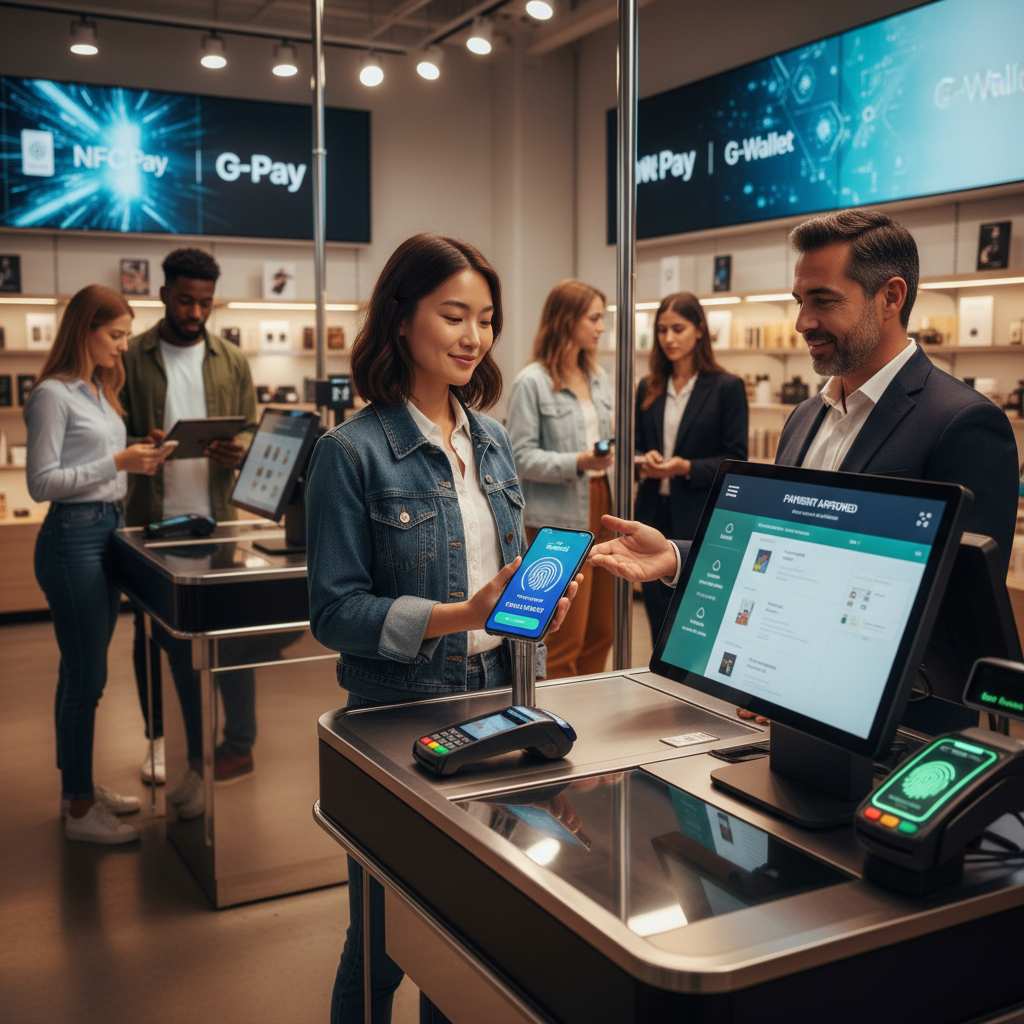
Highlights
- Digital wallets essentialize secure, efficient transactions in both online and physical retail environments.
- The integration of innovative POS systems can enhance customer engagement and reduce operational costs.
Summary
Digital wallets and point-of-sale (POS) systems have become foundational technologies transforming how businesses process payments and engage with customers in the digital economy. Digital wallets, also known as e-wallets or mobile wallets, enable users to store payment information securely and conduct electronic transactions both online and in physical stores, often leveraging technologies like near-field communication (NFC) for contactless payments. The integration of digital wallets into POS systems—hardware and software platforms that manage sales transactions and business operations—has streamlined checkout experiences, improved payment security, and enhanced operational efficiency for retailers worldwide.
The evolution of digital wallets from early encrypted payment tools to ubiquitous platforms used by billions reflects a significant shift in consumer behavior and technology adoption. Today, digital wallets account for nearly half of global online payment value in some markets and are widely favored for their convenience and security features, such as biometric authentication and tokenization. This growth has been accompanied by innovations in POS technology, including SoftPOS and mobile POS solutions that transform smartphones and tablets into payment terminals, reducing infrastructure costs and expanding payment acceptance.
Despite these advances, integrating digital wallets with POS systems presents challenges related to hardware compatibility, software interoperability, security, and regulatory compliance. Varying technical standards and proprietary protocols complicate seamless cross-platform interactions, while evolving legal frameworks require businesses and providers to implement robust anti-money laundering (AML), know your customer (KYC), and data privacy measures. High-profile technology companies such as Apple, Google, Samsung, PayPal, and Meta have been central to regulatory discussions, underscoring the complex landscape fintech innovations must navigate.
Looking forward, ongoing innovations—including biometric security enhancements, cryptocurrency wallet integration, and AI-powered fraud prevention—promise to further reshape digital payments and POS ecosystems. Regulatory developments continue to influence the pace and nature of adoption, emphasizing the need for secure, transparent, and interoperable payment solutions that meet global standards and consumer expectations. As businesses increasingly embrace these technologies, digital wallets and POS systems are set to play a pivotal role in the future of commerce.
History
The concept of digital wallets emerged over two decades ago as a pioneering effort to encrypt money and facilitate its movement digitally. Over the past 25 years, this innovation has evolved into a global payments industry deeply integrated into consumers’ daily lives, with digital wallets now accessible on billions of mobile devices worldwide. What started as a niche technological advancement has grown to the extent that many users regard traditional plastic payment cards as outdated, much like a landline phone.
Early digital wallets were developed to store credit and debit card information securely on smart devices, enabling users to pay for goods and services through smartphones, smartwatches, and other connected devices. The proliferation of smartphones and improvements in mobile technology accelerated the adoption of digital wallets, eventually making them one of the dominant methods of payment. Today, digital wallets account for nearly half of the global online payment value, with penetration rates reaching approximately 49% in certain markets.
The growth of digital wallets has been accompanied by the integration of these payment methods into business operations, particularly at the point of sale (POS). POS systems, originally designed to handle basic customer transactions, have evolved into comprehensive solutions that manage inventory, customer relationships, and sales tracking. The seamless incorporation of digital wallets into POS systems has transformed checkout experiences, enabling customers to make faster and more secure payments by simply tapping their devices, eliminating the need to handle cash or cards.
Alongside consumer adoption, regulatory landscapes have also influenced the development of digital wallets. For instance, major technology companies such as Google, Apple, Samsung, PayPal, Block’s Cash App, and Meta’s Facebook have been central to regulatory discussions, especially concerning oversight of digital wallet services and peer-to-peer payments. While efforts have been made to introduce new regulatory frameworks, these have faced reversals, highlighting the ongoing challenges regulators face in keeping pace with fintech innovations.
The widespread adoption of digital wallets is also supported by advanced security measures embedded within the technology. Multiple layers of protection help users feel confident about the safety of their financial information, even as transactions become increasingly swift and convenient. This combination of convenience, security, and technological advancement has firmly established digital wallets as a cornerstone of modern commerce.
Technology
Digital wallets, also known as e-wallets or mobile wallets, are electronic devices, software programs, or online services that enable users to store payment information and conduct electronic transactions. These transactions can occur both online and in physical stores, utilizing mobile payment technologies on smartphones, tablets, or other connected devices. At the core of their functionality, digital wallets often leverage near-field communication (NFC) technology to enable contactless payments by transmitting payment data wirelessly to point-of-sale (POS) terminals that display the contactless payment symbol, which resembles a sideways Wi-Fi icon.
POS systems serve as the critical interface between businesses and customers, facilitating payment processing and integrating various operational aspects such as inventory management, customer relationship management (CRM), and sales tracking into a unified platform. Modern POS systems combine hardware components like payment terminals and receipt printers with software capable of real-time sales recording, inventory updates, and financial data synchronization. The integration of digital wallets with POS systems is increasingly essential, as it enhances transaction efficiency, reduces manual data entry, and supports automation across sales and accounting processes.
Recent innovations in POS technology include NFC-enabled SoftPOS systems and mobile POS solutions that transform any compatible smartphone or tablet into a payment terminal. This Tap on Any Device technology removes the need for bulky, traditional checkout hardware, enabling transactions anywhere within or even outside the store, thus improving operational efficiency and customer service. Such advancements are particularly advantageous for small businesses by reducing costs and simplifying infrastructure requirements.
Despite these technological strides, integrating digital wallets with existing business systems presents several challenges. Ensuring hardware compatibility requires a thorough audit of current devices, their drivers, and update histories to decide whether upgrades or replacements are necessary. Software integration demands secure and seamless communication between diverse platforms, often necessitating the development of standardized APIs and adherence to encryption protocols like HTTPS to safeguard user data during transactions. Interoperability remains a significant concern, as digital wallet applications are frequently built on varying technical standards and proprietary protocols, which complicates cross-platform compatibility and requires cooperation among vendors to navigate regulatory and operational frameworks.
The integration of Internet of Things (IoT) devices with digital wallets further amplifies these challenges by introducing additional layers of communication complexity and security considerations. Establishing interoperability between numerous IoT devices and wallet platforms is essential for a smooth user experience, alongside ensuring secure data transmission and compliance with evolving standards. When successfully implemented, these integrations allow digital wallets to provide enhanced features such as tailored financial advice, spending alerts, and personalized promotional offers, thereby increasing user engagement.
Payment solution providers are responding to these demands by offering scalable and flexible systems that support digital wallet acceptance across in-store and online channels. These solutions improve transaction speed, reduce fraud risks, and integrate seamlessly with existing business infrastructure, granting enterprises a competitive advantage in the increasingly digital marketplace.
Types and Classifications
Digital wallets, also known as e-wallets or mobile wallets, encompass a variety of types distinguished by their primary functions and technologies. A comprehensive classification system groups digital wallets into three main categories: identity (ID) wallets, payment wallets, and cryptocurrency wallets. Each type serves unique purposes and incorporates distinct security features tailored to their specific use cases.
Identity Wallets
ID wallets primarily store and manage digital identity credentials, enabling users to access public and private services securely. These wallets facilitate seamless cross-border interactions by providing a universal, trustworthy digital identification method, thus improving user experiences while maintaining stringent privacy and data security standards. Such wallets are pivotal in scenarios where verification of identity is essential, extending their application beyond mere payment functions.
Payment Wallets
Payment wallets store users’ payment information such as credit and debit cards, allowing them to conduct electronic transactions through smart devices like smartphones and smartwatches. These wallets enhance convenience by enabling contactless payments at physical retail locations via near-field communication (NFC) technology, as well as online purchases. They also offer additional features such as notifications about available discounts to simplify redemption for users. A critical security aspect is that even if the user’s device is lost, unauthorized access to the wallet is prevented, and authorized users can access their wallets from alternative devices.
Cryptocurrency Wallets
Cryptocurrency wallets manage digital currencies, facilitating secure storage and transactions of cryptocurrency units. These wallets face unique security challenges, including protection against hacking and breaches that can lead to significant financial losses. As digital wallets evolve, the integration of cryptocurrency wallets with other wallet types is becoming increasingly common, requiring enhanced security strategies to mitigate risks across convergent wallet environments.
Emerging Classifications and Integration Trends
Beyond these primary categories, digital wallets are increasingly converging into integrated or universal wallet solutions that combine multiple functions, such as payment and identity management. This evolution demands systematic security frameworks that address the compounded risks of such convergence. Additionally, global efforts aim to establish open standards and technical specifications to enable seamless cross-border transactions and interoperability between digital wallets used in different countries. However, challenges remain, including regulatory differences, currency conversion issues, and technological barriers in less-developed regions where digital payment acceptance is limited.
Integration of Digital Wallets and POS Systems
Integrating digital wallets with Point of Sale (POS) systems has become a critical advancement for businesses aiming to streamline payment processes and enhance customer experiences. Modern POS systems, which combine both hardware and software components, facilitate customer transactions while integrating various business operations to improve efficiency. At least 70% of contemporary POS systems are now compatible with digital wallet payment features, though verifying compatibility with existing setups remains essential for seamless integration.
Benefits and Business Impact
The integration of digital wallets with POS systems significantly reduces the need for physical payment infrastructure and manual handling, lowering operational costs for businesses. Digital wallets typically incur lower transaction fees compared to traditional credit card processing, providing cost savings alongside improved payment efficiency. By digitizing payments, businesses can accelerate checkout processes and reduce fraud risk, gaining a competitive advantage in an increasingly digital marketplace.
Moreover, digital wallets align with consumer preferences, as 62% of customers favor mobile payment methods due to their convenience and speed. Incorporating wallet payments enables businesses to cater to these demands, driving customer satisfaction and boosting revenue growth. The emergence of NFC-enabled SoftPoS and mobile POS technologies further enhances retail operations by allowing smartphones or tablets to function as payment terminals anywhere within or outside the store, thus expanding the points of sale and improving the overall shopping experience.
Technical Considerations and Challenges
Successful integration involves developing robust software updates and APIs to ensure real-time synchronization between digital wallets and POS systems, preventing delays in transaction processing. Ensuring compatibility across different platforms and devices requires adherence to interoperability standards and protocols, which facilitate smooth communication between wallet applications, IoT devices, and POS terminals.
Security is paramount in integration efforts. Digital wallets employ multiple layers of protection, including biometric authentication, tokenization, encryption, and one-time codes, to secure sensitive payment data and prevent fraud. Device-based authentication methods such as facial recognition or fingerprint scanning add an extra layer of defense beyond what physical cards offer.
However, the integration process faces technical barriers such as aligning varying payment protocols and infrastructure, alongside regulatory complexities arising from different jurisdictions. Overcoming these challenges necessitates collaboration among digital wallet providers, financial institutions, regulators, and technology innovators to develop interoperable and compliant payment ecosystems.
Enhancing Retail Performance
Integrating digital wallets with POS systems enables businesses to streamline transactions and improve customer experiences seamlessly. Retailers are also leveraging real-time data from integrated payment and loyalty systems to personalize rewards and promotions, thereby enhancing engagement and customer retention. The shift toward digital-first payment solutions is supported by evolving consumer trust in technology firms over traditional banks, which further propels adoption and innovation in payment technologies.
Ultimately, the integration of digital wallets with POS systems is transforming retail payments by enabling faster, more secure, and more flexible transaction methods, positioning businesses for growth in the digital economy.
Interoperability and Standards
Interoperability in digital wallets and point-of-sale (POS) systems is essential for enabling seamless payments across various platforms, devices, and regions. By allowing users to choose among different providers and systems, interoperability fosters healthy competition, which can result in better services, enhanced features, and reduced costs for both businesses and consumers. However, achieving interoperability requires overcoming technical barriers such as diverse payment protocols and infrastructure differences, as well as regulatory challenges arising from varying legal jurisdictions and compliance requirements. Collaboration among digital wallet providers, financial institutions, regulators, and technology innovators is therefore critical to aligning these elements and ensuring smooth communication between systems.
A major benefit of interoperability is its role in promoting financial inclusion, especially across diverse regions like Asia-Pacific (APAC) and the Middle East and North Africa (MENA). By leveraging API-based cross-border payment platforms that integrate domestic switches, bank accounts, mobile wallets, money transfer operators (MTOs), and forex card solutions, interoperability facilitates seamless payments and expands service offerings. This not only empowers end-users but also helps reduce costs and improve the overall payment ecosystem.
Standardization efforts are equally important for supporting interoperability. For example, the European Union’s Digital Identity Wallets follow a common architecture and reference framework that define the standards, protocols, and data formats used in exchanges between issuers, wallets, and service providers. Such frameworks are instrumental in enabling digital wallets to be used consistently across various use cases and countries, ensuring secure and reliable transactions.
Compliance with regulatory standards also plays a significant role in interoperability. Digital wallets must implement robust anti-money laundering (AML) and know your customer (KYC) processes to meet global compliance requirements and prevent illicit activities. Moreover, regulations like the General Data Protection Regulation (GDPR) in the EU impose mandatory data protection measures that digital wallets need to adhere to. Emerging technologies, including artificial intelligence and blockchain analytics, are expected to further enhance compliance capabilities, while global efforts toward regulatory standardization aim to simplify cross-border operations for wallet providers.
Integrating digital wallets with existing business systems such as POS terminals, accounting software, and e-commerce platforms is another key factor for operational interoperability. Such integration reduces manual data entry, streamlines transactions, and supports automation, ultimately improving efficiency and customer experience. Near Field Communication (NFC) technology plays a pivotal role by enabling contactless payments that connect devices securely to payment terminals without exposing sensitive card information. Along with other technologies like Magnetic Secure Transmission (MST) and QR codes, NFC helps digital wallets move beyond peer-to-peer and e-commerce uses into in-store payment environments.
Security and Privacy Considerations
Digital wallets incorporate multiple layers of security to protect users’ payment information and personal data from fraud and unauthorized access. At the core of this protection is tokenization, a technology that replaces a card’s primary account number (PAN) with a secure digital token used during transactions, minimizing the risk of data theft. This tokenization is complemented by encryption and the use of one-time codes, which together create a robust digital shield that makes it extremely difficult for malicious actors to intercept or misuse sensitive payment information.
Beyond the tokenization process, device-level security plays a crucial role in safeguarding digital wallets. Features such as biometric authentication—including fingerprint and facial recognition—or PIN codes ensure that only authorized users can access the wallet, even if the physical device is lost or stolen. This multi-factor protection surpasses the security typically provided by physical payment cards and serves as the first line of defense in digital wallet transactions.
From a software standpoint, digital wallets also emphasize encryption and secure management of personal information. Wallet software is often designed to be client-side, allowing users to maintain control over their data while ensuring compatibility with various e-commerce platforms. Furthermore, universal digital wallets that integrate payment, ID, and cryptocurrency functionalities introduce additional security challenges, such as the need to guard against insider attacks and the risk of permanent loss from compromised private keys. These integrated wallets require comprehensive risk mitigation strategies that address multiple threat vectors simultaneously.
Privacy considerations are increasingly central to digital wallet design and regulation. Users generally retain control over
Regulatory Environment
The regulatory environment surrounding digital wallets has evolved significantly as these platforms have become integral to the global financial infrastructure. Regulators are increasingly bringing fintech companies under frameworks similar to those governing traditional banks, aiming to create a level playing field that promotes fair competition without compromising consumer security or trust. This shift marks a milestone in the financial sector by recognizing digital wallets not just as technological tools but as essential financial service providers.
New regulations focus on addressing key challenges posed by digital payment apps, particularly concerning data privacy, usage transparency, and ethical management of personal and financial information. Given the vast amounts of sensitive data handled by these platforms, regulatory frameworks emphasize the importance of transparency and consumer protection.
To comply with these evolving requirements, digital wallet providers must invest heavily in technology and regulatory adherence, including implementing robust Anti-Money Laundering (AML) and Know Your Customer (KYC) procedures designed to prevent illicit activities such as money laundering and terrorist financing. For platforms operating within the European Union, compliance with the General Data Protection Regulation (GDPR) is mandatory, further highlighting the importance of data protection and user privacy.
Collaboration with legal and compliance experts is essential for digital wallet providers to navigate complex and ever-changing regulatory landscapes effectively. Transparent communication with users about compliance measures and their roles in maintaining security is also crucial. Moreover, maintaining up-to-date internal policies and procedures enables businesses to sustain compliance over time, both domestically and internationally.
Regulatory compliance not only enhances security and trust but also facilitates global adoption by aligning digital wallets with international standards, thereby enabling seamless cross-border transactions. Additionally, compliance with industry standards such as PCI DSS and PSD2 is foundational to ensuring secure and transparent digital payment experiences.
Regulators, including bodies like the Financial Conduct Authority (FCA) and the Payment Systems Regulator (PSR), actively engage with the evolving digital wallet ecosystem. In mid-2024, these organizations solicited industry input and subsequently published feedback outlining the future direction of regulation in this space. Their efforts underscore the dynamic nature of regulatory oversight as it adapts to technological advances and the growing role of big tech companies in digital payments.
Implementation Process for Businesses
Implementing digital wallets and integrated POS systems involves several key steps and considerations to ensure seamless operation, regulatory compliance, and enhanced customer experience. Businesses must address both technical and legal challenges to successfully adopt these payment technologies.
Technical Integration
A critical initial step is hardware integration. Businesses need to create a comprehensive inventory of existing hardware, including device make and model, driver versions, and upgrade history. This information helps determine whether current equipment can support digital wallet functionality or if replacements are necessary. Most modern POS systems—approximately 70%—are compatible with popular digital wallets like Apple Pay, Google Pay, and Samsung Pay, but verifying compatibility with the existing setup is essential.
Updating POS software to the latest versions that support wallet payments is also crucial. Software updates not only enable new payment features but also enhance security, which is vital given that outdated systems are responsible for around 60% of security breaches. After hardware and software readiness, businesses should select a POS provider that supports their chosen digital wallets and configure the system accordingly.
For in-person transactions, digital wallets communicate payment data via wireless technologies such as Bluetooth or near-field communication (NFC). Customers unlock their devices, select the payment method, and hold the device close to the payment terminal to complete transactions. Online merchants need to ensure their payment gateways support digital wallet payments and integrate them into their checkout flow without additional fees in many cases.
Expanding Payment Options
Beyond traditional card and mobile wallet payments, businesses are increasingly integrating crypto wallet functionality into POS systems. This inclusion caters to customers who prefer to spend cryptocurrencies and enhances business appeal to tech-savvy consumers. Crypto-enabled POS systems facilitate fast, secure transactions with lower processing fees and simplify international sales by avoiding currency conversion complexities and cross-border charges. Incorporating crypto payments also signals innovation and future-readiness to customers.
Legal and Compliance Considerations
Navigating the regulatory landscape is another major aspect of the implementation process. Businesses operating across multiple jurisdictions must understand and comply with diverse legal requirements, which can be complex and constantly evolving. Hiring legal teams experienced in digital wallet regulations can aid in ensuring compliance by implementing internal policies that maintain security and transparency for customer data. These measures help businesses manage regulatory challenges both domestically and internationally.
Operational Benefits
Adopting advanced POS solutions like NFC-enabled SoftPoS systems offers cost-effective operational efficiencies. Retailers can reduce infrastructure expenses by enabling smartphones or tablets to act as payment terminals, allowing staff to focus on customer service rather than checkout logistics. Technologies such as “Tap on Any Device” facilitate transactions anywhere in-store or even offsite, making payments more seamless and integrated into the overall customer experience. Additionally, integrating loyalty programs with digital wallets allows businesses to use real-time data to personalize rewards and further enhance customer engagement.
Adoption and Usage Trends
The adoption of digital wallets and point of sale (POS) systems has been accelerating rapidly, driven by advances in technology, changing consumer preferences, and global events such as the COVID-19 pandemic. Billions of people now prefer using digital wallets for quick and contactless payments, favoring tap or click methods over traditional cash or card transactions. This shift is reflected in projections indicating that by 2025, digital wallets will account for 39% of global POS transactions, up from 29% in 2021.
Interoperability plays a crucial role in encouraging mass adoption of digital wallets by enabling users to transfer funds seamlessly between different wallets, financial institutions, and even across countries without incurring extra costs or navigating complex processes. This convenience enhances user experience and promotes widespread use.
Security remains a top priority and a key factor behind the growing acceptance of digital wallets. Built-in security features help alleviate concerns around fraud and unauthorized transactions, making digital wallets a reliable choice for both online and brick-and-mortar businesses. Major platforms such as Apple Pay, Samsung Pay, and Google Pay have become ubiquitous, supporting payments in retail stores, online shopping, in-app purchases, and even public transportation systems.
From a merchant perspective, integrating digital wallets into existing payment infrastructure is becoming increasingly straightforward, thanks to easy-to-use APIs offered by many providers. This integration allows businesses to streamline checkout processes and improve customer experiences, which is critical as mobile payments are expected to reach a transaction value of $12 trillion by 2024. POS systems, valued globally at approximately $33.41 billion in 2024, are essential tools for retailers, enabling efficient payment processing, inventory management, and micromarketing through strategic placement of terminals.
The pandemic further accelerated digital wallet adoption by necessitating contactless payment options, while technology advancements and high-speed internet facilitated smoother operation of these systems. Businesses across all industries, regardless of size, are increasingly embracing digital wallets to offer faster, safer, and more convenient payment options that align with modern consumer expectations.
Despite their benefits, digital wallets also present challenges such as hidden fees and risks related to provider reliability, which users and businesses must navigate carefully. Nevertheless, the overall trend points to continued growth and deeper integration of digital wallets and POS technologies within the global payment ecosystem.
Operational and Financial Benefits
Digital wallets offer numerous operational and financial advantages for businesses by streamlining payment processes and reducing reliance on physical payment infrastructure. By digitizing transactions, companies can significantly lower operational costs due to decreased handling requirements and often lower fees compared to traditional credit card processing. This reduction in overhead can improve overall business efficiency and profitability.
From an operational perspective, integrating digital wallets with existing point of sale (POS) systems enables smoother and faster transactions, enhancing customer experience and satisfaction. Advanced POS technologies that support digital wallet payments can manage complex discount structures and promotions more effectively, preventing potential losses from processing errors and improving sales outcomes. Additionally, the strategic placement of POS terminals within retail environments can stimulate impulse purchases and micromarketing opportunities, further boosting revenue.
Consumer preferences also drive the financial benefits of adopting digital wallets. Research indicates that approximately 62% of consumers favor mobile payment methods for their convenience and speed, making e-wallet adoption a strategic move to capture and retain this growing market segment. Furthermore, digital wallets incorporate multilayered security features, including biometric authentication and tokenization, which reduce the risk of fraud and chargebacks for retailers. The security embedded in mobile devices lowers the likelihood of unauthorized payments, thereby protecting merchants from financial losses related to fraudulent transactions.
Despite these benefits, businesses face challenges in hardware integration when implementing digital wallet systems. A comprehensive audit of existing hardware, including models, drivers, and upgrade history, is necessary to determine compatibility and the need for new solutions. Proper integration ensures seamless operations and maximizes the financial returns of digital wallet adoption.
Challenges in Integration and Adoption
Integrating digital wallets with existing point-of-sale (POS) systems presents several technical and regulatory challenges for businesses. A primary technical obstacle is the lack of standardization and compatibility between different payment protocols and infrastructure, which complicates smooth communication and data exchange across platforms. Many businesses encounter difficulties aligning their legacy systems with modern digital wallet solutions, requiring updates to POS software and ensuring real-time synchronization to accurately reflect transactions.
Another significant challenge arises from legal and regulatory complexities, especially when operating across multiple jurisdictions. Each country may impose distinct compliance requirements related to anti-money laundering (AML), know your customer (KYC), data privacy (such as GDPR in the European Union), and other financial regulations. Businesses must collaborate with legal experts to navigate evolving regulations and implement robust compliance frameworks to prevent illicit activities and maintain user trust.
Security concerns also play a critical role in the adoption of digital wallets. Attackers may exploit insecure connections between merchant systems, payment service providers (PSPs), and acquirers to intercept sensitive data through attacks like man-in-the-middle (MiTM). Ensuring the enforcement of secure communication protocols such as SSL/TLS and virtual private networks (VPNs) is vital to safeguard transaction integrity and user information.
Interoperability remains a crucial factor for widespread adoption, enabling users to transfer funds seamlessly across different wallets, banks, and countries without incurring additional costs or managing multiple platforms. However, achieving interoperability requires alignment of technical standards and collaborative efforts among digital wallet providers, financial institutions, regulators, and technology innovators. This collaboration can foster healthy competition, enhance service offerings, reduce costs, and promote financial inclusion, particularly across regions like APAC and MENA through API-based cross-border payment platforms.
Despite these challenges, digital wallets continue to gain traction as a preferred payment method due to their convenience and the potential to improve consumer experiences at retail checkout points. Retailers incorporating digital wallet options have observed increased conversion rates and customer satisfaction, although they must weigh the pros and cons of embracing these new payment technologies amid the evolving digital payments landscape.
Future Trends and Innovations
The future of digital wallets and POS systems is shaped by continuous technological advancements and evolving consumer expectations. One significant trend is the integration of biometric authentication and AI-powered fraud prevention within digital wallet payment processing. These enhancements aim to strengthen security measures, reduce fraud risks, and provide consumers with safer transaction experiences.
As digital currencies gain mainstream acceptance, businesses increasingly seek to incorporate cryptocurrency payment options into their POS systems. Crypto wallet integration enables retailers and service providers to offer fast, secure, and private transactions through QR codes and mobile wallets, thereby enhancing customer convenience and expanding the potential customer base. Such integration not only future-proofs businesses but also modernizes the in-store experience by providing an additional payment alternative alongside cash and traditional cards.
Interoperability and seamless integration remain critical drivers for widespread adoption. The development of APIs to connect digital wallets with IoT platforms facilitates secure data transmission and unified payment experiences across multiple devices and touchpoints. This connected ecosystem allows digital wallets to leverage user data to deliver tailored financial advice, spending alerts, and personalized offers, thereby boosting user engagement and satisfaction.
Regulatory developments also play a pivotal role in shaping the future landscape. Emerging financial regulations—such as PCI DSS, PSD2, and GDPR—establish foundational pillars for ensuring the security, transparency, and compliance of digital wallet transactions. These frameworks not only protect consumers but also create a level playing field by bringing fintech firms under regulatory oversight similar to traditional banks. While these regulations present challenges in terms of compliance and technology investments, they offer opportunities for digital wallet providers to build consumer trust and solidify their position within the financial ecosystem.
The content is provided by Sierra Knightley, Direct Bulletins