Highlights
- Innovations in TKR recovery enhance outcomes and patient experiences through tailored rehabilitation and technology.
- Personalized care plans ensure effective recovery, highlighting the importance of education and compliance.
Summary
Total knee replacement (TKR) recovery in 2026 focuses on optimizing knee function, reducing pain, and improving the quality of life post-surgery. Innovations like robotic-assisted surgery and smart implants enhance surgical precision and monitoring, leading to better outcomes. Preoperative education is crucial, setting realistic expectations and addressing psychological factors. Early mobilization, pain management, and structured rehabilitation programs contribute to faster recoveries, with technologies facilitating remote therapy supervision. While advances are promising, risks such as venous thromboembolism and infections require vigilant care post-surgery. Personalized recovery plans are becoming essential as patient outcomes continue to improve with evolving practices.
Preoperative Preparation
Effective preoperative preparation is vital for enhancing outcomes in total knee replacement (TKR). Comprehensive patient education, ideally delivered by healthcare professionals, sets clear expectations for recovery, rehabilitation, and safety techniques. Studies indicate that those who engage in personalized educational sessions recover more swiftly, especially individuals facing psychological challenges like anxiety.
Integration of advanced technologies such as AI-assisted robotic systems aids in precise surgical planning, reducing complications and improving early recovery. However, certain evaluations during surgery still rely on the surgeon’s expertise, signifying a need for both advanced tools and skilled handling during the procedure.
Surgical Procedure Overview
Knee arthroplasty involves replacing the damaged joint surfaces to alleviate pain and restore mobility. Surgeons assess ligament balance manually, with reliance on subjective methods that can vary. Recent robotic-assisted technologies have improved surgical accuracy through detailed preoperative planning and real-time adjustments during surgery. Once the prosthetic components are placed, proper alignment is checked to ensure functionality.
Minimally invasive techniques and updated materials have contributed to reduced recovery times and improved patient experiences by minimizing surgical trauma and enhancing prosthetic longevity. Following surgery, patients are supported through initial movements and simple exercises to promote healing.
Immediate Postoperative Care
Postoperative care is essential for a successful recovery after knee surgery. Patients often experience pain, swelling, and limited mobility, especially in the first two weeks post-surgery. Pain management strategies, including local analgesia and multimodal medications, have been effective in reducing discomfort without excessive opioid use. Early mobilization promotes recovery, with patients typically beginning rehabilitation within 24 hours after surgery.
Thromboprophylaxis is crucial during this phase to prevent serious complications like venous thromboembolism. Hospital stays vary, with some patients discharged the same day while others remain for several days based on individual needs and progress in physical therapy.
Rehabilitation and Physical Therapy
Rehabilitation is critical after TKR, initiating immediately to restore function and strength. Physical therapy focuses on regaining motion and muscle strength, facilitating a quicker return to daily activities. Incorporating home exercises supports continued recovery beyond initial therapy sessions, with many patients achieving significant milestones within weeks.
Innovative rehabilitation options like telerehabilitation provide effective remote support, enhancing accessibility and adherence. Patients should remain proactive in their therapy to ensure milestones like increased walking distances and returning to low-impact activities, with full recovery potentially taking up to 18 months.
Expected Recovery Timeline and Functional Milestones
Knee replacement recovery is marked by phased milestones, although personal factors can influence timelines. Initially, patients are monitored in the hospital, typically for one to three days, with early mobilization encouraged to prevent complications.
In the weeks following, the focus shifts to managing pain and gradually increasing mobility, with many patients returning to basic activities within six weeks. Continued physical therapy in the later stages aids in building strength and flexibility, with many returning to work and daily activities by three months, while full recovery can take 18 months.
Advances in Recovery Technologies and Techniques by 2026
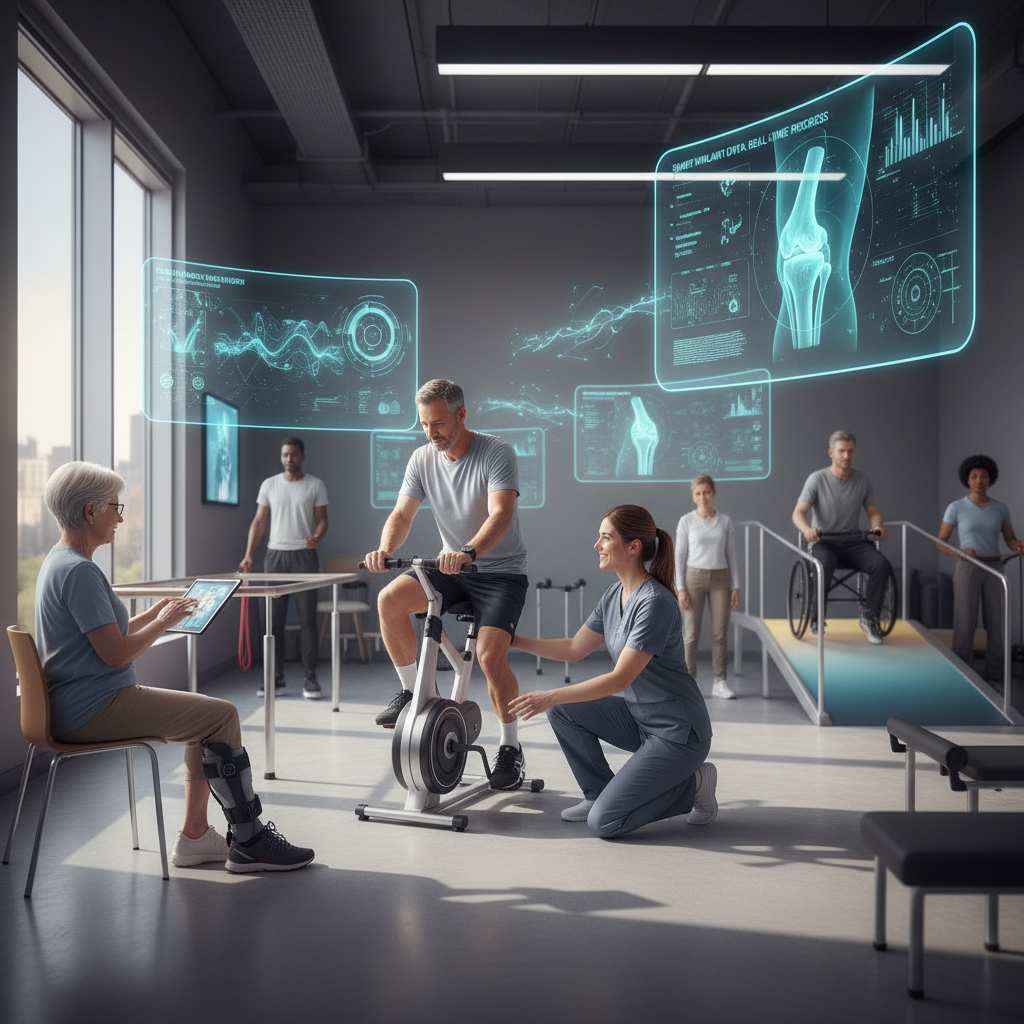
Significant advancements in technology are transforming knee replacement recovery practices. Robotic-assisted surgery is now common, enhancing precision and reducing risks associated with misalignment during procedures. Smart implants with embedded sensors are being developed to offer real-time monitoring of joint function.
The adoption of telerehabilitation further supports recovery through remote guidance and exercise monitoring, increasing accessibility for many patients. Additionally, using artificial intelligence for preoperative planning and outcome predictions personalizes recovery protocols and enhances long-term results.
Common Challenges and Complications During Recovery
Patients often encounter various challenges during knee replacement recovery, including pain, swelling, and limited mobility at the onset. Managing these symptoms with effective pain control and therapeutic interventions is crucial. One significant risk is venous thromboembolism, making thromboprophylaxis and circulation exercises essential during recovery.
Although infections are rare, they pose serious complications, emphasizing the need for adherence to therapy and monitoring. Awareness of potential complications, including rare occurrences like heart attacks, is important for maintaining health during recovery.
Long-Term Outcomes and Prognosis
TKR surgery generally results in significant long-term benefits for patients, with improved knee function lasting 10 to 15 years. The goal remains to alleviate pain and restore optimal joint functionality for an active lifestyle. However, individual factors and adherence to rehabilitation can affect the outcome significantly.
Innovative advancements in implants and rehabilitation methods are expected to enhance durability and patient satisfaction. The combination of personalized care, technological integration, and effective education significantly influences the success of long-term recovery.
Patient Tips and Recommendations
Engagement in recovery processes is crucial for successful TKR outcomes, with early therapy recommended to optimize mobility. Preoperative education enhances readiness and satisfaction, particularly for those with psychological challenges. Patients should follow prescribed rehabilitation carefully and incorporate home exercises to achieve goals like walking distances and returning to daily tasks.
Telerehabilitation has proven effective for many, but technology access can present challenges. Customized treatment plans that adapt to individual capabilities and resources are essential for achieving optimal postoperative results.
The content is provided by Blake Sterling, Direct Bulletins