Highlights
- Germany's solar market is booming, creating abundant job opportunities for skilled installers.
- Foreign workers can secure jobs through the Skilled Immigration Act and language proficiency requirements.
Summary
Working as a Solar Panel Installer in Germany
Germany’s solar energy sector is continuously expanding, driven by a commitment to renewable energy and government policies aiming for 100% renewable electricity by 2035. The demand for skilled solar panel installers is on the rise, particularly as the country approaches its goal of exceeding 100 gigawatts (GW) of installed solar capacity by 2025. Foreign workers looking to enter the industry can leverage the Skilled Immigration Act, which provides clear pathways for acceptance into this flourishing job market, contingent upon recognized qualifications and language proficiency requirements.
Industry Overview
Germany’s solar photovoltaic (PV) market has experienced significant growth, now exceeding 100 GW in capacity and employing about 84,000 individuals. The rapid expansion is fueled by government investment and a commitment to renewable energy targets, leading to a critical shortage of qualified workers. With major companies actively hiring, new entrants into the industry will find a dynamic environment rich in opportunities.
Legal and Regulatory Framework
The pathway for foreign solar panel installers is shaped by the Skilled Immigration Act, which facilitates qualification recognition and work permit access for skilled workers, especially from non-EU countries. The recent reforms streamline the immigration process, making it simpler for qualified professionals to transition into legal employment in Germany.
Visa and Work Permit Requirements
To legally work as a solar panel installer in Germany, foreign nationals typically need a type D work visa, which is easier to obtain with a job offer. Processing times can vary, but having job confirmation expedites the procedure. EU and EEA citizens enjoy straightforward freedom of movement and do not require visas.
Recognition of Qualifications and Language Requirements
For non-EU workers, the recognition of vocational qualifications is crucial. Recent amendments allow individuals to enter Germany while awaiting qualifications recognition, provided they are proficient in at least A2 level German. Though no formal language requirement exists, practical jobs may necessitate stronger language skills due to safety regulations.
Special Provisions and Employment Conditions
New quotas, such as those established by the Western Balkans Regulation, support the recruitment of skilled workers under simplified conditions. Conditions include job guarantees from employers and a minimum work requirement of 30 hours per week. Compliance with labor standards, including contractual agreements and safety regulations, is essential for successful employment.
Qualifications and Certification Requirements
To work in solar panel installation, obtaining the Gesellenbrief (journeyman’s certificate) is key for performing tasks like wiring and installing PV systems. For foreign professionals, the Handwerkskammer assesses equivalency to this qualification, sometimes requiring additional training or exams. A basic proficiency in German (at least A2) is often necessary for the formal recognition and residence permits.
Language and Administrative Requirements
Meeting language and administrative prerequisites is crucial for prospective solar panel installers. Basic German language skills significantly ease communication and compliance with safety standards. In addition, relevant documentation must be translated and certified before visa applications, ensuring a smoother entry into the workforce.
Job Search and Employment Process
To secure a position in the solar panel installation sector, job seekers often utilize social networks, forums, and recruiting agencies. Preparing a comprehensive documentation package is essential for obtaining a work visa and ensuring recognition of qualifications. Companies such as Enpal offer training programs designed to help workers from diverse backgrounds enter the industry effectively.
Typical Work Activities and Responsibilities
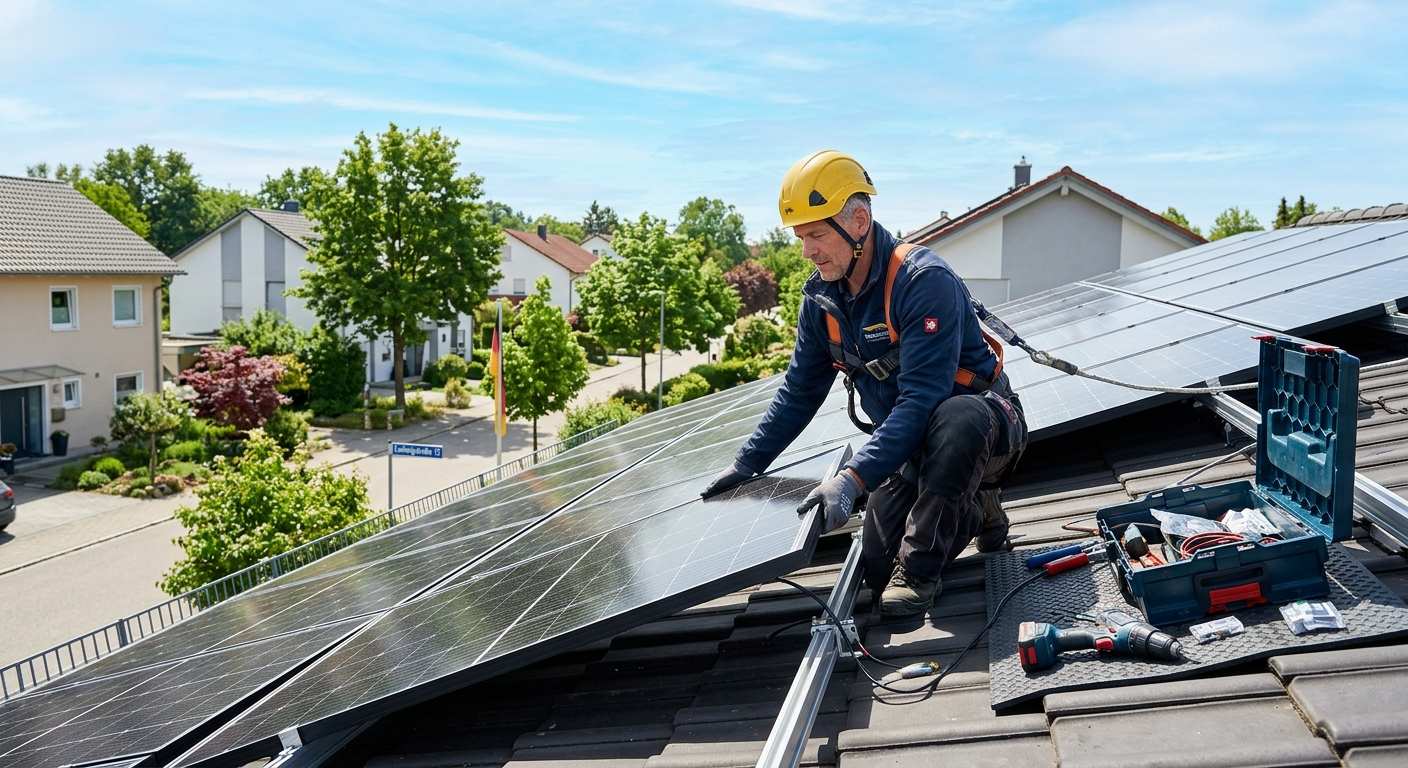
Solar panel installers engage in both planning and outdoor installation tasks, typically working in teams. They need to be adept at using safety equipment and following strict safety protocols, given the physically demanding nature of the job. Strong communication skills are vital, especially when collaborating with German-speaking team members to ensure effective project execution.
Working Conditions
The role of a solar panel installer combines indoor planning with extensive outdoor work, often in teams. Installers face physical demands, such as lifting heavy equipment, all while adhering to rigorous safety protocols. Clear communication is essential to coordinate tasks, especially in multicultural teams where both German and English may be spoken.
Salary, Benefits, and Employment Stability
Annual salaries for solar panel installers vary, with entry-level positions typically earning around €39,940, while experienced installers can command salaries up to €67,368. These figures align closely with wages in similar skilled trades, illustrating the competitive landscape for professional installers in Germany.
Career Advancement and Professional Development
Career progression for installers is linked to acquiring additional skills and qualifications. Expanding expertise in areas like battery storage and EV charging can lead to salary increases, with opportunities to move into higher roles such as design engineers or project managers becoming available through continued learning and qualification recognition.
Challenges and Considerations for Foreign Workers
Foreign workers face challenges including language barriers and the intricate visa application process. While some positions may not require fluent German, basic proficiency is crucial for long-term success and employment stability. Effective navigation of the regulatory landscape, including the Skilled Immigration Act’s provisions, can help mitigate bureaucratic hurdles and promote successful integration.
Resources and Support
Support systems for foreign solar panel installers include training programs, recognition services for foreign qualifications, and access to government resources aimed at addressing workforce shortages in the sector. Collaboration with organizations focused on vocational education can enhance navigational support in integrating into the German labor market.
The content is provided by Sierra Knightley, Direct Bulletins