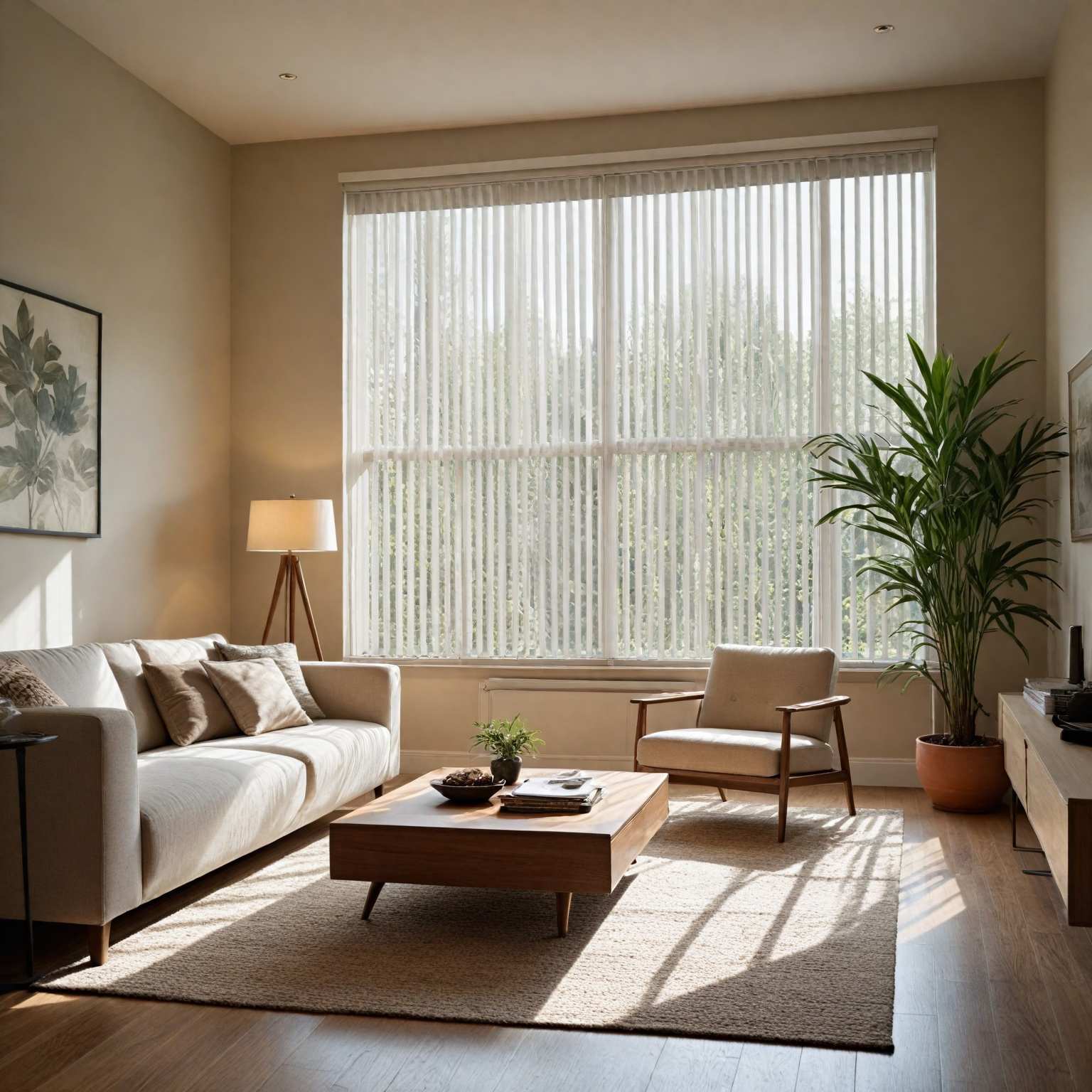
Highlights
- Vertical blinds offer versatile light control and energy efficiency for various interior styles.
- Innovations in design and technology make vertical blinds a contemporary solution for any space.
Summary and Materials
Vertical blinds are a popular window treatment for large windows and sliding doors, offering adjustable light control, privacy, and energy efficiency. Made from materials like fabric, vinyl, faux wood, aluminum, and PVC, they fit various interior styles and conditions. Trends in 2024 favor natural colors such as creams, beiges, and Peach Fuzz, with modern textures like linen and woven wood. Advances include motorized and app-controlled options, improving convenience and smart home integration.
Materials vary in durability and maintenance: fabric offers style and insulation; vinyl and PVC resist moisture and are easy to clean; faux wood provides wood-like warmth with better durability; aluminum is lightweight and sleek but less common. Functional components like headrails ensure smooth operation and durability.
Types and Selection Factors
Vertical blinds come in fabric, vinyl, faux wood, aluminum, and natural wood varieties, each suited to different environments and aesthetics. Fabric blinds offer softness and customization; vinyl blinds excel in moisture resistance; faux wood mimics real wood with added durability; aluminum and wood provide modern or classic looks.
When choosing vertical blinds, consider material quality, durability, light control, privacy, style compatibility, size, maintenance, and climate factors. High-quality materials withstand wear better; adjustable slats offer nuanced light and privacy control. Proper sizing and made-to-measure options enhance function and appearance. Maintenance varies by material, with vinyl and PVC requiring less upkeep, while fabric may fade or wear faster in sunlight.
Installation and Energy Efficiency
Installation affects performance: inside mounts fit within window frames for better energy efficiency and neatness but may interfere with window hardware; outside mounts cover a larger area for increased light blockage and privacy. Professional installation ensures proper fit, eliminating air gaps and maximizing insulation.
Vertical blinds improve energy efficiency by reducing heat gain and loss. Materials like faux wood and honeycomb shades trap air for insulation, while solar-reflective and blackout fabrics enhance comfort. Sustainable options, such as bamboo, offer eco-friendly benefits and reduce energy bills. Proper fit and light-colored blinds further reduce heat absorption and cooling costs.
2024 Trends and Functionality
In 2024, vertical blinds emphasize natural, neutral colors and textures, with Peach Fuzz as a popular accent. Wider slats suit large windows, while thinner options fit smaller areas. Technological integration with motorized and app-controlled systems is growing. Additional features include noise reduction, stain repellency, and UV protection.
Functionally, vertical blinds cover large windows effectively, offer adjustable light filtration, block UV rays, and improve energy savings. However, inside-mounted blinds may have limited light control.
Maintenance
Regular cleaning and maintenance preserve vertical blinds’ function and appearance. The headrail should be dusted and checked for loose parts to ensure smooth operation. Cleaning methods depend on material: vinyl and faux wood are easy to wipe down; fabrics require more care and may fade over time. Some thermal coatings complicate recycling and require specialized disposal.
Frequently Asked Questions
Are vertical blinds still popular? Yes, they remain practical for large windows and sliding doors despite some aesthetic criticism.
What fabrics are popular? Bouclé fabric is currently favored for its texture and modern appeal.
How to choose blinds? Consider personal taste, light control, privacy, maintenance, and design trends.
Can blinds transform a room? Yes, they affect light, texture, and color, enhancing décor and function.
Are vertical blinds suitable for all windows? They work best for large windows and sliding doors.
Is installation difficult? Many are easy to install, but professional help is recommended for complex setups.
The content is provided by Harper Eastwood, Direct Bulletins