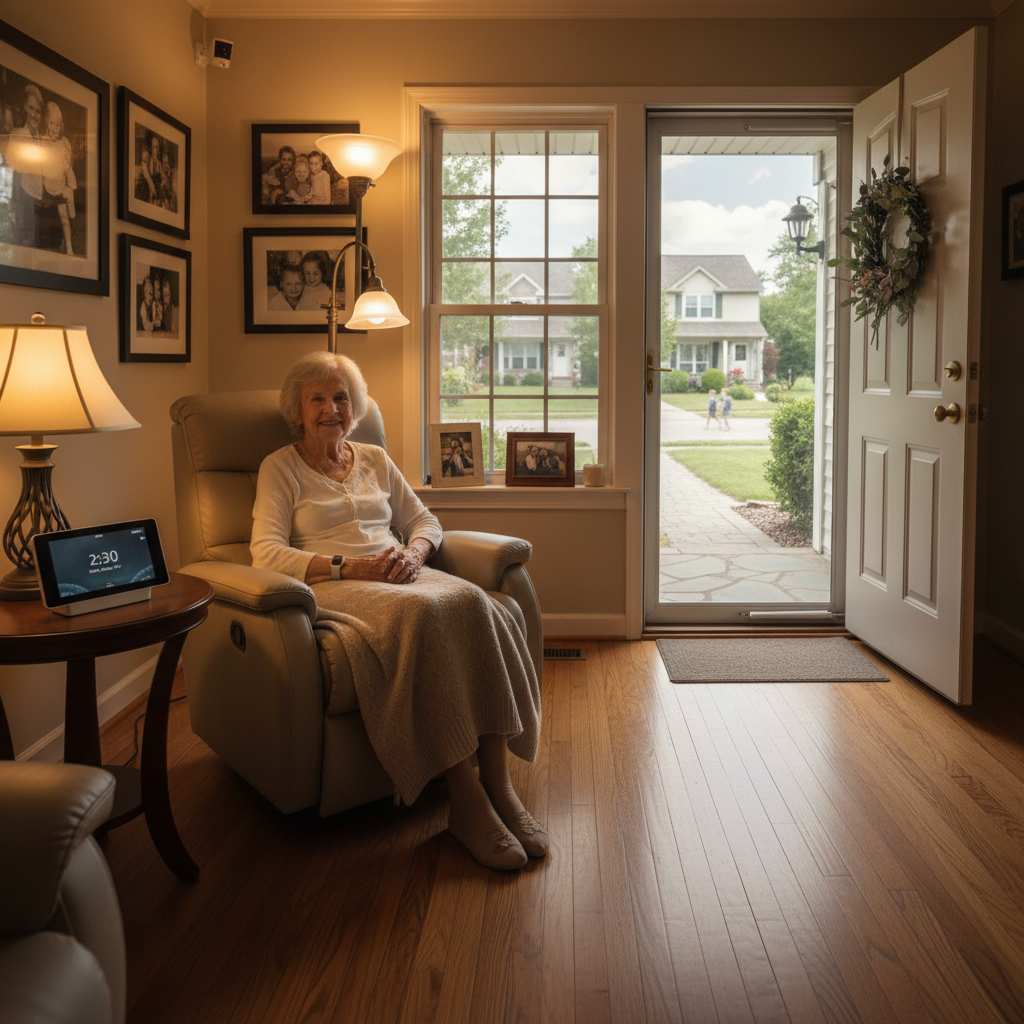
Highlights
- Tailored safety strategies empower seniors to enhance their independence and peace of mind.
- Modern technologies provide vital protection and rapid assistance, ensuring seniors feel secure at home.
Summary
This guide addresses home security and safety for seniors in 2025, highlighting practical measures, modern technologies, and community resources tailored to their unique needs. Seniors face risks such as falls, fires, and cybersecurity threats. Advances include 24/7 monitoring, medical alert systems, biometric authentication, and AI-powered responses. Environmental modifications like improved lighting and handrails remain vital. Challenges include privacy, affordability, and technology adoption. Combining technology, home changes, education, and community support helps seniors maintain secure, independent living.
Home Security and Common Risks for Seniors
Home security impacts seniors’ safety and comfort, with many preferring simple solutions. Community programs offer free or discounted upgrades, while modern systems provide 24/7 monitoring and emergency alerts. Seniors face risks including falls, fires, and security vulnerabilities. Falls cause serious injuries and reduced independence; prevention involves assistive devices and environmental modifications. Fire risks are higher due to mobility and sensory issues; sprinklers, smoke detectors, and education reduce hazards. Cybersecurity threats arise from connected devices and scams, requiring safeguards and education. Additional hazards include unsecured rugs, poor lighting, and household chemicals.
Assessing and Enhancing Home Safety
Conducting thorough home safety evaluations identifies hazards like slippery surfaces and poor lighting. Professional assessments reveal risks in daily activities and guide necessary modifications and equipment. Cybersecurity education helps seniors recognize digital threats. Physical security upgrades include deadbolts, reinforced locks, improved lighting, handrails, ramps, and motion sensors. Smart home integrations automate lighting and locks with biometric authentication. Emergency alert wearables enable prompt help. Expert installation ensures reliability and integration with monitoring services.
Technological Solutions and Home Modifications
Technological advances enhance senior safety with emergency devices featuring fall detection, GPS tracking, and health monitoring. Smart homes detect hazards like smoke and carbon monoxide, using biometric smart locks and AI for emergency responses. Usability focuses on automation, voice control, and intuitive interfaces to encourage adoption. Professional monitoring provides rapid assistance and family notifications. Home modifications prevent falls by removing hazards, adding grab bars, nonslip strips, and improving lighting with motion sensors. Assistive devices and robots offer physical support and safety features. Practical tips include accessible storage and kitchen safety adjustments. These measures improve independence and quality of life.
Fire Safety and Emergency Preparedness
Seniors face higher fire injury risks, making prevention crucial. Installing home fire sprinklers, smoke detectors, and conducting regular safety checks significantly reduce fatalities. Emergency preparedness plans tailored to individual needs enhance response effectiveness.
Community Support and Financial Considerations
Community involvement and professional caregivers provide safety assessments, education, and emotional support, fostering senior independence. Cybersecurity programs utilize existing platforms to educate seniors on online threats. Financially, seniors benefit from contract-free security options, insurance discounts, and tax-advantaged accounts for medical alert devices. Local programs offer free or discounted upgrades. Balancing advanced technology with budgets and potential ongoing fees is essential. Investments in safety reduce costly accidents and support retirement security.
Legal and Ethical Considerations
Respecting seniors’ privacy and autonomy is vital when implementing security measures. Consent is required for surveillance devices, and privacy features help balance security with comfort. Contract flexibility prevents financial strain. Addressing cyberattack fears through clear communication and professional support fosters trust in technology.
Future Trends
Integration of medical alert and home security systems simplifies safety management. Smart homes use automated sensors and voice-activated devices to enhance security and convenience. Personalized fall prevention wearables provide tailored monitoring. Physical home modifications remain important. Expanding community programs aim to offer affordable security improvements, ensuring safety without financial burden.
Case Studies and Effectiveness
Research demonstrates the effectiveness of diagnostic tools, virtual reality, and home modifications in fall prevention and improved independence. Studies show benefits including reduced fear of falling, better accessibility, and decreased caregiver burden. Portable safety solutions extend protection beyond home environments. Comprehensive, up-to-date information and emergency systems are critical to enhancing senior safety and quality of life.
The content is provided by Sierra Knightley, Direct Bulletins