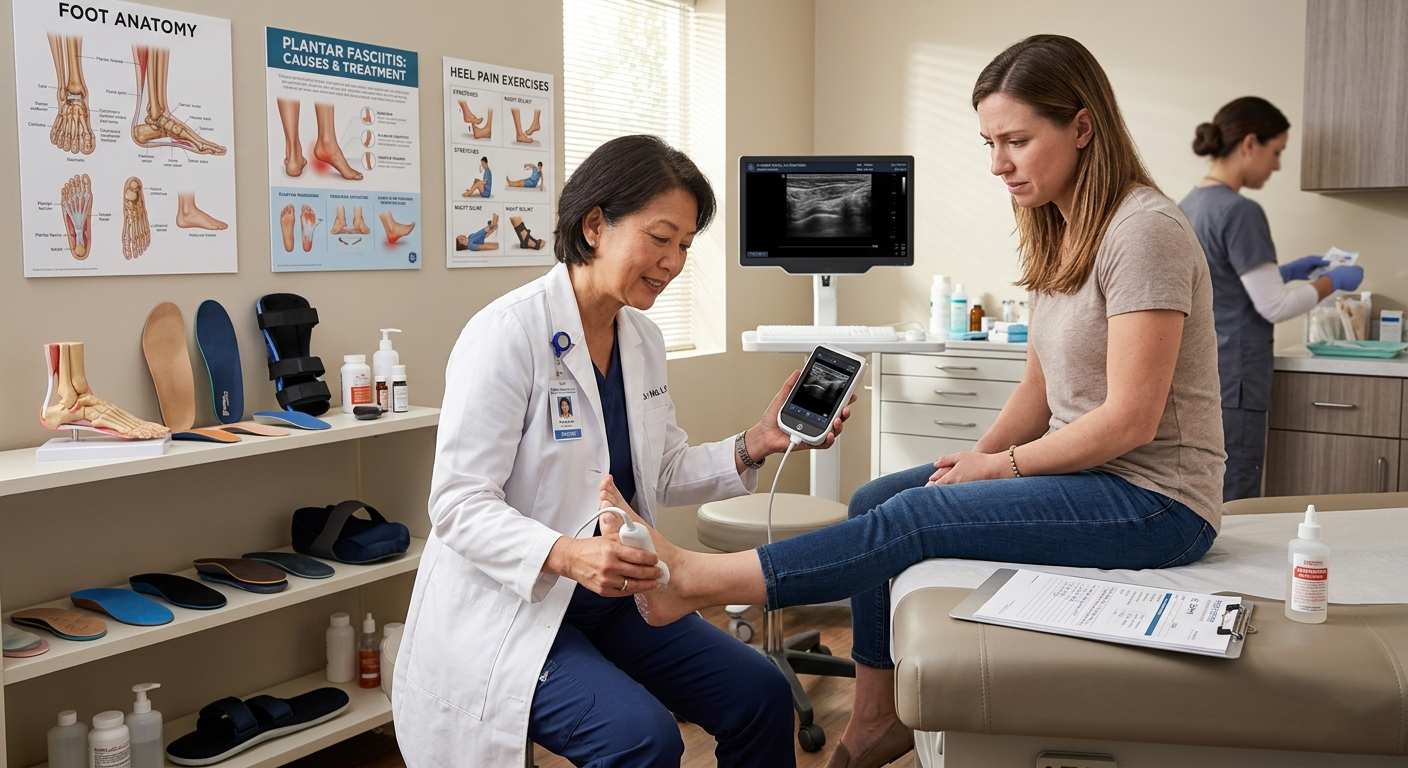
Highlights
- Accurate diagnosis and individualized care are essential for effective heel pain management.
- Explore innovative treatment options like ESWT and personalized therapies to enhance recovery.
Summary
Heel pain is a multifaceted condition often caused by plantar fasciitis, Achilles tendinitis, or other musculoskeletal disorders. It can significantly impact mobility and quality of life, emphasizing the need for precise diagnosis and effective treatment. Accurate diagnosis involves a thorough patient history, physical examination, and selective imaging, which are crucial for distinguishing between various underlying causes. Treatment typically starts with conservative measures like stretching exercises and orthotic devices, though other emerging therapies also show promise. Given the variability in treatment responses, individualized care is essential for improving outcomes.
Causes
Heel pain originates from various issues, primarily overuse or injury, with plantar fasciitis being the leading cause. This condition manifests as pain beneath the heel, often associated with swelling and the possibility of heel spurs. Other significant contributors include Achilles tendinitis, stress fractures, and nerve entrapments, with each presenting unique symptoms that must be evaluated accurately. Accurate differential diagnosis is critical, as similar symptoms can arise from conditions like tarsal tunnel syndrome, inflammatory arthritis, and even tumors.
Symptoms
Common symptoms of plantar fasciitis include pain in the arch and swelling around the heel, often accompanied by a tight Achilles tendon. However, these symptoms can mimic other conditions, necessitating careful assessment. Recognizing these overlaps is vital for accurate diagnosis and effective treatment, permitting a focused approach to management strategies.
Diagnosis
Diagnosing heel pain involves a detailed patient history and a comprehensive physical exam, followed by imaging studies when necessary. Special attention is required to differentiate plantar fasciitis from conditions with overlapping symptoms through various clinical tests. Imaging techniques such as X-rays and MRIs can reveal underlying structures and assist in ruling out other pathologies. If neurological causes are suspected, specialized tests may be needed, leading to more tailored management strategies.
Treatment Options
Management of heel pain focuses on conservative, non-invasive therapies. Initial strategies prioritize low-risk interventions like targeted stretching and the use of orthotic devices. Stretching exercises effectively alleviate pain by enhancing flexibility, while orthotics provide support and diminish impact stress. Pharmacologic options, particularly NSAIDs, are included for pain control, but expectations regarding their efficacy should be set clearly with patients.
Conservative Therapies
Stretching exercises for the plantar fascia and calf muscles are highly regarded for their effectiveness. These exercises help in reducing tension and improving mobility. Additional methods like manual therapy can enhance blood flow and alleviate stiffness, contributing positively to recovery.
Orthotic Devices and Supportive Measures
Foot orthotics play a vital role in alleviating biomechanical issues associated with heel pain. By offering necessary support and cushioning, they can alleviate pressure and enhance overall function when combined with other therapeutic measures. Additional support through heel cushions or taping techniques can further benefit patients during recovery.
Pharmacologic and Adjunct Therapies
NSAIDs are frequently utilized to reduce inflammation and control pain when combined with physical therapies. Though emerging treatments like PRP injections offer promise, they remain experimental and should be considered cautiously. Patients benefit from understanding the timeline of relief and managing their expectations realistically.
Advanced and Alternative Treatments
Extracorporeal shock wave therapy is FDA-approved for chronic heel pain, showing positive results in improving pain and function over time. Other novel approaches, like neuromodulation, hold potential but require further investigation to establish efficacy. These advanced options should be discussed based on individual patient needs and circumstances.
Lifestyle Modifications and Patient Education
Adjusting activity levels and ensuring adequate rest can enhance recovery. Low-impact exercises may also support healing while minimizing strain. Educating patients about their condition and incorporating strategies like CBT can provide a holistic approach to managing pain and associated psychosocial factors.
Alternative and Complementary Therapies
Complementary therapies such as acupuncture and manual therapy can support conventional treatment methods, helping to alleviate pain and enhance function. While acupuncture shows potential for short-term pain relief with minimal side effects, further research is needed to validate its effectiveness specifically for heel pain. Integrative strategies like CBT also address psychological factors that may affect pain perception and recovery.
Psychological and Behavioral Interventions
Cognitive behavioral therapy is effective for managing psychological distress stemming from chronic heel pain. It aids in modifying negative thought patterns and behaviors, fostering better coping mechanisms for stress and anxiety related to pain. Implementing these approaches can help patients maintain mobility and actively engage in recovery processes.
Prevention
Preventing heel pain focuses on footwear selection, activity management, and specific exercises. Supportive shoes can minimize strain during daily activities while appropriate orthotic devices provide added stability. Modifying activities that aggravate pain and incorporating stretching or strengthening routines plays a critical role in prevention, particularly for athletes and active individuals.
Prognosis
The prognosis of heel pain often depends on symptom duration, underlying causes, and treatment strategies. With potent management approaches, including lifestyle changes and rehabilitation, patients frequently experience improved outcomes. A multimodal treatment plan tailored to individual needs can effectively enhance both pain relief and functional capacity over time.
The content is provided by Blake Sterling, Direct Bulletins