Highlights
- DTF printing offers vibrant, durable designs with minimal pre-treatment and cost efficiencies.
- Sustainable innovations in DTF technology are crucial for businesses aiming to expand responsibly.
Summary and Overview of DTF Printing Technology
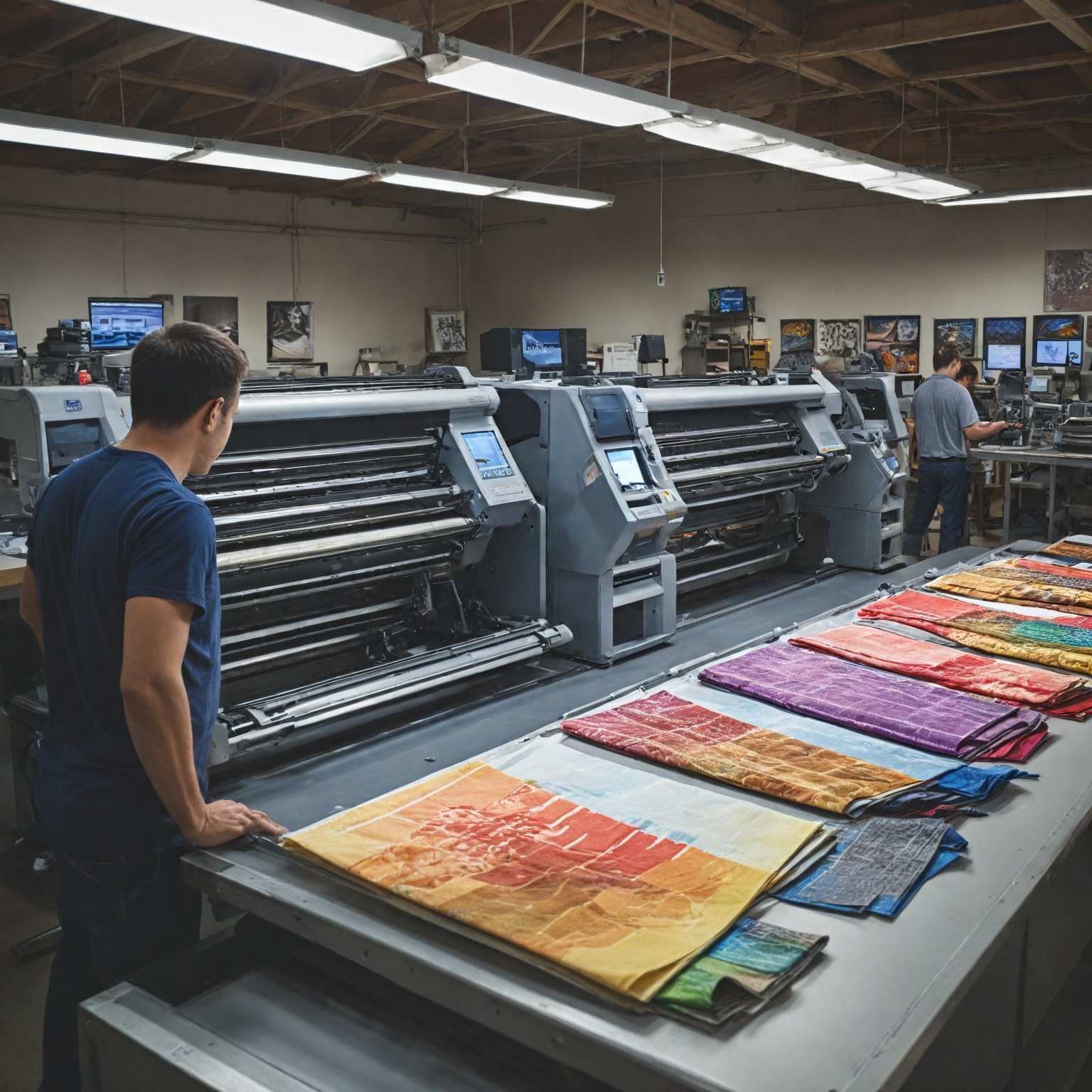
Direct-to-Film (DTF) printing is a textile printing method where designs are digitally printed on PET films, coated with adhesive powder, and heat-transferred to fabrics like cotton, polyester, leather, and blends. It produces vibrant, durable prints resistant to cracking, peeling, and fading, requiring minimal garment pre-treatment. DTF is cost-efficient, uses less ink, and supports faster production cycles, ideal for custom orders and small to medium businesses. Recent advancements include automation features that streamline workflows and reduce labor, enhancing scalability and sustainability.
Choosing the Right DTF Printer: Key Factors
Selecting the proper DTF printer is essential for high-quality, durable prints. Important considerations include print resolution (at least 1440 DPI, up to 2800 × 1400 DPI), ink quality, printing speed (ranging from 8–15 to 30–50 square feet per hour), ease of use, maintenance, reliability, and compatibility with various fabrics and file formats. Cost and availability of consumables like inks, films, and powders also influence the choice. Integration with RIP software and automation features can improve efficiency and scalability, making the right printer a critical investment for creative projects and business growth.
Popular DTF Printer Models and Market Leaders in 2025
The 2025 market offers diverse DTF printers suited to different needs. The InkSonic XP600 U13 is notable for combining speed, quality, and automation, making it ideal for expanding businesses. The Prestige A3+ appeals to beginners, especially when paired with bundled consumables and accessories. Leading suppliers like Shagun Enterprise provide comprehensive product lines, including inks, powders, and films, supporting smooth adoption. Larger industrial printers cater to high-volume demands, with attention to factors like white ink opacity, color gamut, and total cost of ownership.
Technical Innovations in 2025 DTF Printers
Modern DTF printers use high-precision inkjet technology and advanced printheads such as the XP600 6-color system, achieving high speeds and resolutions up to 2800 × 1400 dpi. Innovations include improved white ink underbase systems, semi-automatic cleaning to prevent clogs, and integrated powder application and curing units that boost productivity and print consistency. Eco-friendly features like reduced ink waste, biodegradable films, energy-efficient components, and cloud connectivity for real-time monitoring enhance sustainability and operational efficiency.
Comparison with Other Printing Technologies
DTF printing offers superior fabric compatibility, working on various materials without extensive pretreatment, unlike direct-to-garment (DTG) and sublimation. It delivers high-resolution, vibrant, and durable prints suitable for light and dark fabrics. Compared to screen printing, DTF provides faster turnaround, greater flexibility, and less labor-intensive setup, though environmental concerns remain due to petroleum-based consumables, prompting efforts toward greener alternatives.
Operational Considerations and Troubleshooting
Regular maintenance, including automated cleaning systems, is vital to prevent downtime and maintain print quality. Common issues include ink smudging, white ink flow problems, printhead clogs, poor adhesion, and film wrinkling. Addressing these requires proper ink selection, optimized curing, use of adhesive powders, and routine calibration. Advanced printers with semi-automatic cleaning and white ink management help minimize mechanical failures and ensure consistent results.
Market Trends and Future Outlook
The DTF printing industry is experiencing strong growth, with global prints reaching 7.2 billion units in 2024 and market value projected to rise to $3.92 billion by 2030. Demand for personalized products and technological advances drive this expansion. Sustainability is a key focus, with the adoption of eco-friendly inks, films, powders, and cloud-connected monitoring to reduce environmental impact and improve regulatory compliance. The industry is shifting toward green innovation, positioning DTF printing for responsible growth and technological advancement in 2025 and beyond.
The content is provided by Jordan Fields, Direct Bulletins