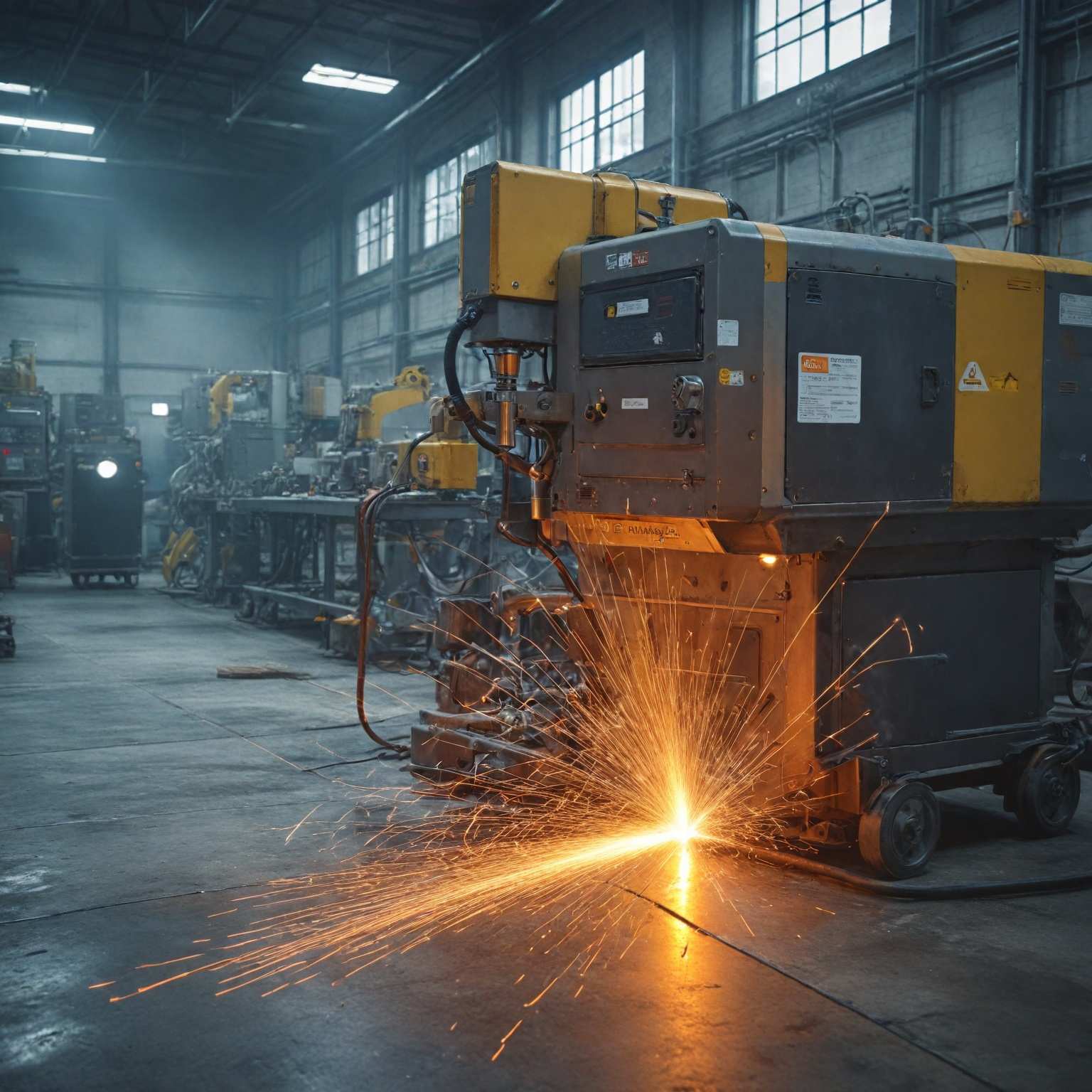
Highlights
- Experience the future of cleaning with advanced, eco-friendly laser technology.
- Enhance operational safety and surface quality while adhering to strict international standards.
Summary
Laser cleaning machines are advanced surface treatment devices that use focused laser energy to remove contaminants such as rust, paint, adhesives, and other unwanted materials from various substrates without physical contact. This technology relies on precise laser ablation mechanisms, including thermal ablation, thermal stress, and plasma shock waves, which effectively clean surfaces while preserving the integrity of the underlying material. Its non-invasive, environmentally friendly nature has made laser cleaning a notable alternative to traditional chemical and mechanical cleaning methods across numerous industries.
Widely applied in sectors such as automotive, aerospace, semiconductor manufacturing, and cultural heritage conservation, laser cleaning machines enhance surface quality, operational safety, and environmental sustainability. Their ability to remove contaminants precisely without damaging sensitive components supports compliance with stringent quality standards and extends the lifespan of treated items. Moreover, laser cleaning is increasingly integrated into automated production lines, reflecting ongoing advancements in laser technology and robotics that improve efficiency and reduce labor risks.
Despite its benefits, laser cleaning faces challenges including the need for meticulous parameter control, operator training, and safety precautions due to the high-powered laser sources involved. Equipment calibration and maintenance are critical to ensure consistent performance and to avoid hazards such as uneven cleaning, laser exposure, or electrical risks. Compliance with international safety and quality regulations remains essential for safe and effective operation in industrial settings.
As laser cleaning technology continues to evolve, future developments focus on enhancing automation, precision, and environmental performance to meet growing industrial demands. The shift toward eco-friendly, non-contact cleaning methods positions laser cleaning as a key technology in modern manufacturing and surface treatment, promising increased adoption and innovation in the coming years.
Overview and Definition
Laser cleaning is a surface treatment technology that utilizes laser energy to remove contaminants such as rust, paint residues, adhesives, and other unwanted substances from various materials without physical contact. This process is characterized by precise targeting, non-contact operation, and environmental friendliness, making it an advanced alternative to traditional cleaning methods. The underlying mechanisms of laser cleaning include laser thermal ablation, thermal stress, and plasma shock waves, which contribute to the effective removal of surface attachments while preserving the integrity of the underlying material.
The technology is particularly valued for its ability to improve surface quality, which is crucial in maintaining the performance and longevity of components across multiple industries. By eliminating surface contaminants, laser cleaning enhances the functional and aesthetic properties of treated surfaces, thereby ensuring compliance with strict performance standards. Its non-invasive nature also reduces the risk of damage, offering a safer and more sustainable option compared to chemical or mechanical cleaning techniques.
In industrial applications, such as the automotive sector, laser cleaning is extensively employed to prepare car bodies, engine parts, and other components by effectively removing coatings and residues that could impair performance or hinder subsequent processing steps. Furthermore, enterprises utilizing laser cleaning technology must adhere to international and national quality and safety standards, ensuring consistent product performance and operator safety. Strict quality control and regulatory compliance are essential not only for meeting customer expectations but also for fostering sustainable development and competitiveness within the market.
Primary Purpose and Benefits
Laser cleaning machines are primarily designed to remove contaminants, rust, paint, and other unwanted materials from surfaces with precision and efficiency. Their core purpose is to provide a non-abrasive, environmentally friendly method of cleaning that minimizes damage to the underlying substrate while enhancing overall cleaning effectiveness. This technology offers significant advantages over traditional cleaning methods such as chemical solvents or abrasive blasting, which can be harmful to both operators and the environment.
One of the key benefits of laser cleaning is the enhancement of operational safety and environmental protection. By utilizing focused laser beams, these machines reduce the need for hazardous chemicals, thereby lowering the risk of chemical exposure and contamination. This focus on safety not only optimizes cleaning operations but also safeguards personnel and minimizes environmental impact.
History
The development and application of laser cleaning machines are closely tied to the invention of the laser itself. The laser was first invented in 1960 by Theodore Maiman, marking the beginning of a technology that would find use in numerous industries including scientific research, manufacturing, education, and medicine. While lasers have been widely recognized for their capabilities in cutting, marking, drilling, and medical procedures, their adaptation for cleaning purposes is relatively recent and still evolving.
In industrial contexts, the use of lasers for cleaning represents an innovative approach to surface preparation and maintenance. Laser cleaning technology enables non-destructive micromachining, improving surface properties without damaging the underlying material. This has positioned laser cleaning as a future-oriented manufacturing trend, particularly useful in industries requiring precise surface control such as automotive, aerospace, shipbuilding, and large equipment maintenance.
In art restoration and historical conservation, laser cleaning machines have played a critical role in gently removing dirt, grime, and previous restoration layers from delicate artifacts and artworks. This application highlights the ability of laser cleaning to preserve the integrity of valuable and fragile surfaces while restoring them to their original condition.
Principles of Operation
Laser cleaning machines operate primarily through the process of laser ablation, wherein a focused laser beam removes contaminants, rust, paint, or other unwanted materials from a surface without damaging the underlying substrate. This non-contact cleaning method utilizes photonic energy delivered in pulses or continuous waves to break molecular bonds in the surface attachments, effectively ejecting them and leaving a clean finish.
The core mechanisms behind laser cleaning include laser thermal ablation, laser thermal stress, and plasma shock wave effects. These mechanisms arise from complex physical and chemical interactions between the laser beam and the material, such as decomposition, ionization, vibration, expansion, stripping, vaporization, and explosion. The dominance of each mechanism depends on factors such as the substrate material—metallic, nonmetallic, or semiconductor—and the laser parameters used.
Pulsed fiber lasers are commonly employed due to their ability to deliver high-energy surges that efficiently remove contaminants with minimal heat-affected zones, preserving the integrity of the base material. Laser power, measured in watts, represents the average energy output of the laser beam, and proper control of beam focus, distance, and cleaning sequence ensures consistent cleaning performance across varying materials and contamination types.
A critical aspect of laser cleaning is operating below the ablation threshold of the substrate material. Each material has a specific threshold energy level required to vaporize it; cleaning is achieved by applying energy above the contamination’s ablation threshold but below that of the bulk material, preventing damage to the surface itself. This precision enables applications in sensitive industries such as aerospace and electronics, where maintaining surface integrity is vital.
Laser cleaning methods can involve a combination of mechanisms such as dry or steam cleaning, selective vaporization, ablation, spallation, and evaporative pressure, tailored to the material properties and contamination type. The versatility of these methods makes laser cleaning suitable for a wide range of industrial applications, from rust removal on machinery to delicate cleaning of historical artifacts.
Cleaning Processes and Techniques
Laser cleaning machines utilize focused laser beams to remove contaminants such as oil, rust, paint, and other unwanted materials from surfaces. This cleaning method is based on the principle of ablation, where photonic energy interacts with the surface to peel off, vaporize, sublimate, or burn away waste material without damaging the underlying substrate. Unlike traditional cleaning methods, which often rely on abrasive particles or harmful chemicals, laser cleaning is a non-contact and environmentally friendly alternative that preserves the integrity of high-value products like aircraft and military vehicles.
A key technique used in laser cleaning is laser scanning, which rapidly directs the laser beam along a predetermined path or across a wider area to achieve thorough surface coverage. The focused beam typically forms a small spot on the target material, and scanning allows efficient cleaning over larger surfaces. The process can be precisely controlled by adjusting parameters such as pulse width, frequency, and energy per pulse. Pulse laser cleaning, for example, employs short bursts of high-intensity light to effectively remove thick contaminants while minimizing thermal damage to the substrate.
Laser beams used in cleaning generally fall into two categories: Gaussian and flat-top (uniform). Flat-top beam profiles distribute energy evenly over the surface, enabling safe, non-destructive cleaning. Continuous Wave (CW) lasers, which emit energy continuously, tend to have lower intensity and may cause substrate damage through incineration, making pulsed lasers more suitable for most cleaning applications. The balance of pulse width and frequency is critical for optimizing cleaning efficiency and achieving the desired results.
Applications
Laser cleaning machines have found extensive applications across various industries due to their precision, efficiency, and non-invasive nature. They are particularly valued for their ability to remove contaminants such as rust, coatings, oil stains, and micro-/nano-impurities without damaging the underlying material, making them ideal for delicate and complex cleaning tasks.
In heavy industries like shipbuilding, rail transportation, and large equipment maintenance, laser cleaning machines—available in power models ranging from 1000W to 3000W—are widely used to rapidly remove thick rust or coatings over large surfaces, significantly reducing cleaning times and maintenance costs. Automotive and aerospace industries benefit notably from laser cleaning technology, as it ensures the removal of rust and contaminants without harming the base materials. This non-contact cleaning process preserves surface integrity, which is crucial for maintaining component performance and safety.
The semiconductor industry also relies on laser cleaning to address challenges posed by micro- and nano-sized impurity particles during manufacturing. Compared with traditional chemical and physical cleaning methods, laser cleaning offers higher precision, pollution-free operation, and avoids physical contact, thereby protecting sensitive semiconductor surfaces. The liquid-film-assisted laser cleaning technique pioneered by IBM in the 1990s has since propelled the industrial application of laser cleaning in semiconductor components.
Laser cleaning extends its utility to the treatment of non-metallic materials such as glass, ceramics, and resins, which are commonly used in electrical insulation and other applications. This method effectively removes contamination from these materials without causing damage, supporting industries that demand high-quality surface standards. In aerospace maintenance, laser cleaning is frequently employed to remove coatings from aircraft surfaces during inspection and upgrade cycles, leveraging its non-destructive capabilities to keep critical components intact.
Beyond industrial manufacturing, laser cleaning also plays an important role in mold maintenance by cleaning molds quickly and effectively without abrasive tools or chemicals, thus improving finished product quality and extending mold lifespan. The technology’s versatility further encompasses cleaning in nuclear power plants, pipeline refurbishment, and cultural relic preservation, demonstrating its wide-reaching impact.
Advantages
Laser cleaning machines offer numerous advantages over traditional cleaning methods, making them increasingly popular across various industries such as automotive, aerospace, shipbuilding, and manufacturing. One of the most significant benefits is their precision: laser systems can be programmed to deliver exact amounts of energy to the surface, effectively removing contaminants, rust, paint, and coatings without damaging the underlying material. This high level of control ensures that only unwanted layers are ablated, preserving the integrity and performance of the components being cleaned.
Another key advantage is environmental friendliness. Unlike mechanical or chemical cleaning processes, laser cleaning does not generate hazardous waste or require the use of harmful chemicals, reducing environmental impact and promoting a safer workplace. Additionally, laser cleaning is a non-contact process, which minimizes surface damage and eliminates the risks associated with abrasive techniques or chemical exposure. The absence of chemical residues also simplifies disposal and reduces regulatory concerns.
Efficiency is also enhanced with laser cleaning technology. It can rapidly clean surfaces with minimal downtime, improving production workflows and reducing costs associated with rework and maintenance. While best suited for flat or easily accessible surfaces, advances in laser techniques have extended its application to complex and three-dimensional shapes, although the removal of layers thicker than 0.5 mm may not be cost-effective. The ability to precisely target contaminants also helps prevent corrosion and surface defects, thereby extending the service life of components.
Safety considerations are integral to laser cleaning systems. Modern machines are designed to comply with international laser safety standards, ensuring operator protection and minimizing workplace hazards such as laser exposure and electrical risks. Proper calibration and maintenance of galvanometer systems and scanners are crucial to maintaining consistent beam quality and cleaning effectiveness, preventing uneven ablation or damage caused by malfunctioning equipment.
Limitations and Challenges
Despite the numerous advantages of laser cleaning machines, several limitations and challenges affect their performance and broader adoption. One significant issue is the reliance on precise beam focus, distance control, and cleaning sequence planning to achieve consistent results across various materials and contamination types. Improper handling of these parameters can lead to uneven cleaning, distorted patterns, and suboptimal ablation outcomes. Furthermore, inaccurate galvanometer systems, often stemming from cheap or uncalibrated mirror assemblies, contribute to inconsistent beam positioning, which compromises cleaning quality and uniformity.
Operator training and safety pose another critical challenge. Without adequate knowledge of proper protective equipment, safe laser zones, and reflective hazard management, operators risk serious injuries and potential equipment damage. Well-trained operators are essential not only for ensuring optimal cleaning results but also for prolonging machine longevity by minimizing operational stress and wear. Safety measures must include procedural controls such as activating the laser only when aimed at the target surface and implementing warning systems to restrict unauthorized access during operation.
From a technical standpoint, laser cleaning machines are generally best suited for flat or easily accessible surfaces. Complex, three-dimensional surfaces or those with limited line of sight present difficulties and may require specialized techniques, which often increase costs and reduce efficiency. Additionally, removing thicker contaminant layers (greater than 0.5 mm) is typically not cost-effective, limiting the applicability of laser cleaning in heavy-duty cleaning scenarios.
Maintenance challenges are minimal compared to traditional cleaning methods, as laser cleaning is a non-contact process with no consumable replacements required. However, neglecting proper maintenance, especially regarding the galvanometer system and beam calibration, can shorten the machine’s lifespan and introduce hazards such as electrical fires or unintended laser exposure.
Finally, compliance with international and national quality standards, along with strict quality control, is essential for ensuring consistent performance, product reliability, and environmental protection. Enterprises must navigate these regulatory environments carefully to maintain market competitiveness and support long-term sustainable operations.
Safety Considerations
Laser cleaning machines pose various hazards that must be carefully managed to ensure operator safety and environmental protection. The primary dangers include exposure to laser radiation, inhalation of toxic fumes from ablated materials, electrical risks, and potential damage caused by improper handling of the equipment. Understanding these risks and adhering to stringent safety protocols is essential to prevent accidents and health issues in the workplace.
Laser Classification and Regulatory Standards
Laser products are classified based on their potential hazards, with international standards such as IEC 60825-1 providing a framework widely recognized across industries. This classification ranges from Class 1, the safest, to Class 4, the most hazardous, which includes powerful lasers capable of causing severe eye and skin injuries as well as fire hazards. Laser cleaning machines commonly employ Class 4 lasers due to their high power, necessitating rigorous safety measures, including warning labels and controlled operation environments.
In the United States, laser devices are regulated by the Food and Drug Administration (FDA) under Title 21 of the Code of Federal Regulations (21 CFR 1040). Compliance with IEC 60825-1 is often required to meet regulatory approval and ensure operator safety.
Safety Measures and Best Practices
To mitigate risks associated with laser cleaning, companies must implement comprehensive safety strategies. These include the provision of personal protective equipment (PPE) such as laser safety goggles, gloves, and respirators fitted with HEPA and carbon filters to protect against laser radiation and hazardous fumes. Operators should receive thorough training covering correct laser use, recognition of reflective hazards, and safe operational zones to minimize accidents and equipment damage.
Engineering controls are equally important. Effective use of enclosures and inter
Maintenance and Calibration
Proper maintenance and calibration of laser cleaning machines are essential to ensure their safe and efficient operation. Companies must establish systematic maintenance and inspection procedures to preserve the integrity of the equipment and prevent potential damage or operational failures. Neglecting these aspects can lead to serious safety hazards, including electrical fires and harmful laser exposure, as well as reduce the machine’s lifespan due to operational stress and unnecessary wear.
Calibration primarily involves maintaining the accuracy of the galvanometer systems, which control the beam positioning. Inaccurate or cheap scanners and uncalibrated mirror assemblies can cause distorted cleaning patterns and uneven ablation, compromising both the quality of cleaning and safety. Regular calibration ensures consistent beam focus, precise distance control, and adherence to cleaning sequence plans tailored for different materials and contamination types, thereby optimizing performance and reliability.
Moreover, balancing key laser parameters such as pulse width, frequency, and energy density is crucial during maintenance routines. These parameters influence the amount of energy per laser pulse and the effectiveness of contaminant removal. For instance, higher single pulse energy, commonly ranging from 1.8 mJ to 100 mJ, allows for more efficient cleaning of thicker deposits. Maintenance protocols often include verifying these parameters to sustain optimal cleaning results while preventing equipment strain.
Incorporating thorough maintenance and calibration not only improves production quality but also enhances operator safety by minimizing risks associated with equipment malfunction. Regular training on operational protocols, alongside proper use of personal protective equipment, complements these efforts to maintain high safety standards.
Market and Industry Trends
Laser cleaning technology has experienced significant growth and adoption across various manufacturing industries, driven by advancements in laser technologies and the increasing demand for efficient, non-destructive surface treatment methods. This technology is particularly gaining traction in sectors such as automotive and aerospace, where there is a continuous push to improve operational efficiency, reduce production costs, and enhance product quality.
The trend towards laser fine surface manufacturing is expected to shape the future of industrial processes, as it allows precise micromachining and surface property enhancements without damaging the material. As a result, laser cleaning is poised to become a mainstream process within manufacturing workflows, replacing or supplementing traditional cleaning and surface preparation techniques due to its precision, adaptability, and environmental benefits.
Industry players are increasingly focusing on ensuring that laser cleaning equipment complies with international and national quality standards to maintain product consistency, reliability, and safety. Strict quality control and adherence to regulatory requirements not only safeguard operator health and environmental quality but also improve brand competitiveness and customer satisfaction.
Leading companies like HGTECH, the core brand of Huagong Technology, exemplify the drive toward innovation in laser cleaning machines. Their products offer high precision and adaptability, catering to complex workpieces and demanding industrial applications. Furthermore, the versatility of laser cleaning systems allows integration into automated production lines or manual operation workstations, providing manufacturers with flexible solutions tailored to their operational needs.
Future Developments
Laser cleaning technology is poised to become a mainstream process within manufacturing industries due to ongoing advancements in laser systems and surface treatment techniques. As laser fine surface manufacturing continues to evolve, it enables non-destructive micromachining and enhances surface properties, positioning laser cleaning as a key direction in the future of manufacturing development.
The integration of advanced autofocusing systems and robotic automation further drives the precision and efficiency of laser cleaning machines. Robots equipped with high degrees of freedom and ultra-high-power lasers can automatically adjust to complex shapes and large surfaces, enabling faster and more consistent cleaning processes. This level of automation is expected to reduce labor costs and improve safety by minimizing human exposure to laser emissions.
Moreover, the demand for environmentally friendly and non-contact cleaning methods is increasing rapidly, as traditional abrasive and chemical techniques often damage surfaces and pose ecological risks. Laser cleaning machines offer an eco-friendly alternative that removes contaminants, rust, and paint without harmful byproducts, aligning with global sustainability goals.
Safety remains a critical focus in future developments. Manufacturers are enhancing operator protection by implementing certified compliance standards and comprehensive training programs on laser safety, equipment operation, and maintenance. This is especially important when dealing with combustible or delicate materials, which require precise control to avoid damage or fire hazards during laser ablation.
The content is provided by Blake Sterling, Direct Bulletins