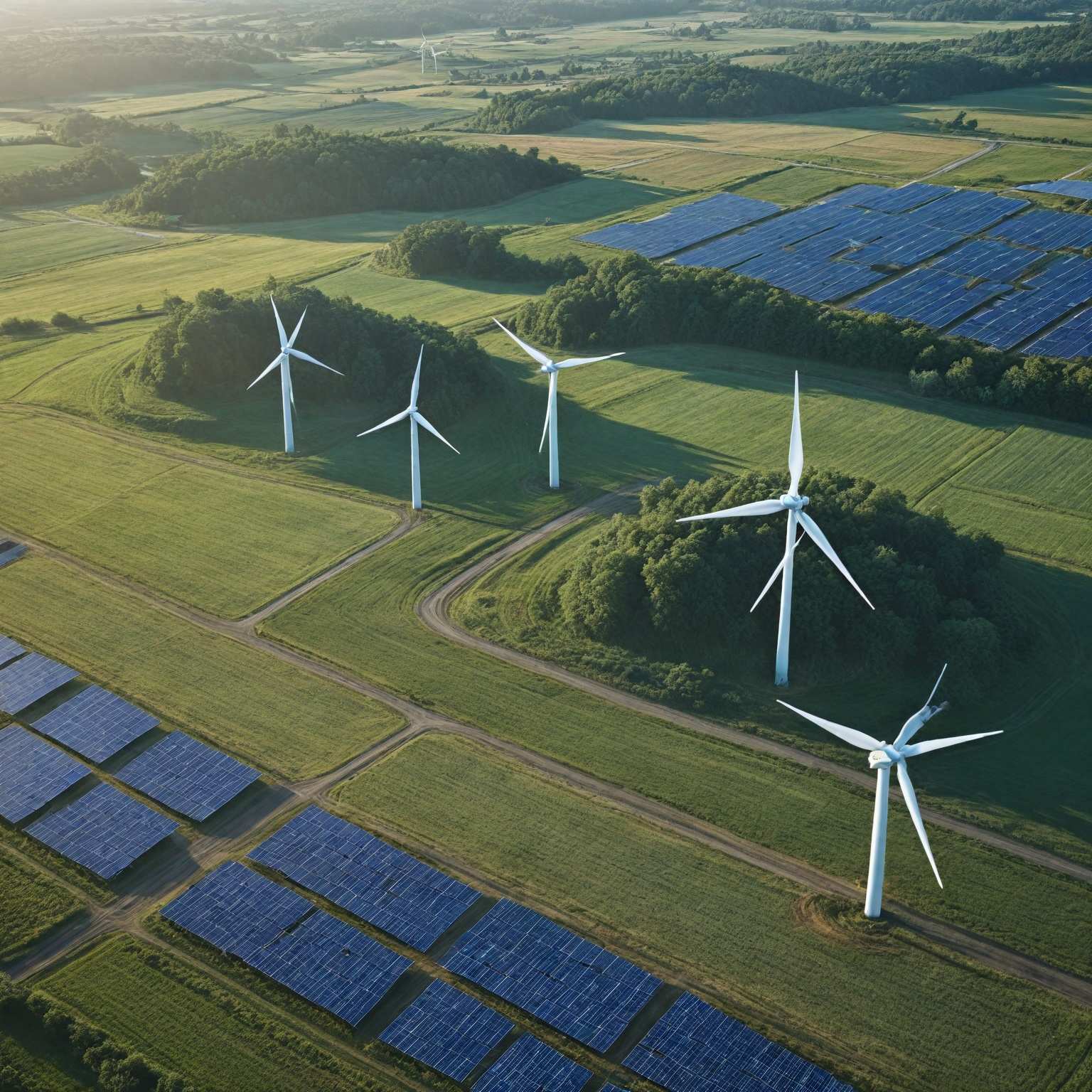
Highlights
- Renewable electricity is set to surpass coal by 2025, revolutionizing global energy dynamics.
- Increased investments in renewables will reach $2.2 trillion, driving innovation and climate action.
Summary
Explore Expert Insights on Innovations in Renewable Energy for 2025 provides a comprehensive overview of the transformative advancements and trends shaping the renewable energy sector as it approaches a critical milestone. By 2025, renewable electricity is projected to surpass coal as the world’s leading energy source, marking a significant turning point in global efforts to combat climate change. This transition is fueled by rapid technological innovations across multiple domains—including solar, wind, green hydrogen, and bioenergy—that enhance efficiency, scalability, and integration of clean energy systems worldwide.
The increasing investment momentum, with global spending on renewables and related technologies expected to reach $2.2 trillion in 2025, reflects both the urgency of decarbonization and geopolitical competition among nations to secure leadership in emerging energy markets. Policy frameworks and regulatory reforms are crucial drivers that streamline project deployment and incentivize innovation, although evolving rules sometimes introduce uncertainties for developers and investors. International cooperation initiatives such as Mission Innovation further accelerate technology development through knowledge sharing and coordinated funding efforts.
Despite robust growth—evidenced by renewable capacity additions exceeding targets and averaging 29% annual growth from 2023 to 2025—challenges remain. Projected shortfalls in renewable capacity and electricity generation by 2030, along with material stability issues in emerging technologies like perovskite solar cells and complex regulatory landscapes, highlight ongoing barriers to scaling innovations effectively. Moreover, regional disparities in energy resources and emissions, alongside geopolitical and economic factors, necessitate strategic policy planning to ensure equitable and sustainable energy transitions.
Overall, this synthesis of expert insights underscores how technological breakthroughs, supportive policies, and substantial investment are converging to reshape the global energy landscape by 2025. While the path forward entails navigating significant challenges, the accelerating adoption of renewable energy technologies is central to achieving climate targets, enhancing energy security, and fostering economic growth worldwide.
Overview of Renewable Energy Innovations
By 2025, renewable electricity is projected to surpass coal as the world’s leading energy source, marking a pivotal moment in the global effort to combat climate change. This shift extends beyond electricity generation to include the expanding roles of green hydrogen in heavy industry and transport, as well as bioenergy and advanced technologies transforming residential and commercial sectors. The integration of these innovations is driven by supportive policies and rapid technological advancements, which are accelerating the global transition toward sustainable energy systems.
Investment trends reflect this momentum, with global spending on renewables, nuclear power, electricity grids, energy storage, low-emission fuels, efficiency improvements, and electrification expected to reach $2.2 trillion in 2025. This surge not only demonstrates the urgency of the energy transition but also underscores the competitive drive among nations to secure leadership in emerging energy technologies. Among these technologies, hydropower continues to evolve through advancements such as small-scale power plants, pumped storage, and modernization of existing infrastructure, opening new avenues for growth in the renewable energy sector.
Renewable capacity additions are currently outperforming targets, growing at an average rate of 29% annually from 2023 to 2025, exceeding the 21% annual increase required to triple renewable capacity by 2030. This strong growth means that from 2026 to 2030, capacity additions only need to rise by 12% annually to meet global goals. However, despite these gains, a 15% shortfall in renewable capacity and a larger 28% shortfall in electricity generation are projected by 2030, largely due to lower-than-anticipated contributions from wind and hydropower, which typically generate more electricity per unit of capacity compared to solar. Additionally, national renewable energy targets for 2030 have seen a modest 8% increase since 2022, driven primarily by China’s updated goals and offset by reduced ambitions in the United States.
These developments emphasize the critical role of strategic policy frameworks, institutional support, and access to capital in fostering innovation and sustaining growth in renewable energy. Effective governance and regulatory measures are essential to create conducive environments that stimulate investments and facilitate the transition toward reliable and sustainable energy access globally. Furthermore, understanding regional variations in energy resources and emissions can help policymakers prioritize renewable projects and efficiency measures, enhancing the overall impact of the energy transition.
Significant Innovations in Renewable Energy Technologies by 2025
By 2025, renewable energy technologies are poised to undergo transformative advancements that will accelerate the global transition toward a sustainable energy future. These innovations span multiple sectors, including solar power, green hydrogen, and wind energy, each contributing to enhanced efficiency, broader applications, and improved integration with energy systems.
Wind Energy Innovations
Wind energy technology continues to evolve through engineering advancements that enhance turbine performance and scalability. Notable developments include increased turbine heights—now often exceeding 100 meters—allowing access to stronger, more consistent winds. Modular additive manufacturing techniques, such as those developed by Oak Ridge National Laboratory’s Big Area Additive Manufacturing (BAAM) project, enable the on-site production of large turbine components, overcoming previous size limitations and reducing logistical challenges.
Furthermore, collaborations between industry and research institutions have produced innovative blade designs like the Sweep Twist Adaptive Rotor (STAR), which features longer, lighter blades optimized through fluid dynamics modeling. This design can harness energy effectively even at low wind speeds and improves energy output by approximately 12% compared to earlier models.
Solar Energy Advancements
Solar technology is experiencing rapid progress through the development of novel materials and system designs that significantly boost performance and versatility. A key breakthrough is the rise of perovskite solar cells, which offer several advantages over traditional crystalline silicon panels. Unlike silicon, perovskites can be fabricated using low-cost, solution-based methods and abundant materials such as lead and tin, enabling potentially large-scale, economical production. Moreover, tandem solar cells combining perovskite and silicon layers have achieved higher efficiency levels than silicon alone, heralding what some experts consider a new solar revolution.
Despite their promise, perovskite solar cells face challenges related to long-term stability—owing to susceptibility to moisture, UV light, and heat—and the complexity of scaling manufacturing processes. Nevertheless, advances in encapsulation techniques and material engineering are progressively mitigating these issues. Japan’s substantial national investment of ¥227 billion (~$1.5 billion USD) in 2025 highlights the commercial interest in ultra-thin, flexible perovskite cells.
Another notable solar innovation is the emergence of transparent solar panels, which integrate advanced materials like transparent luminescent solar concentrators and semi-transparent perovskite cells. These panels can be incorporated into windows, facades, and skylights, transforming building surfaces into energy-harvesting elements without compromising aesthetics or natural lighting. Additionally, bifacial solar panels, capable of capturing sunlight from both sides, along with smart inverters enhanced by artificial intelligence and blockchain technologies, are improving overall energy yield and grid integration.
Thin-film solar cells, including those based on cadmium telluride (CdTe) and copper indium gallium selenide (CIGS), continue gaining traction due to their lightweight, flexible form factors and lower production costs, facilitating integration into unconventional surfaces like vehicle roofs and building facades.
Green Hydrogen and Bioenergy
Green hydrogen is emerging as a critical renewable energy vector, particularly for decarbonizing heavy industry and transport sectors where direct electrification is challenging. Its role is expanding alongside bioenergy and advanced sustainable technologies, which are also reshaping energy use in residential and commercial settings. The combined effect of policy support and technological innovation is driving green hydrogen’s niche growth within the broader renewable energy landscape.
Integration and Policy Support
The progress in renewable energy technologies is complemented by increasing support for integrated systems, such as solar-plus-storage solutions, which are essential for managing variability and enhancing grid stability. Governments and utilities worldwide are introducing favorable incentives and programs to accelerate deployment of these technologies, facilitating widespread adoption across residential, commercial, and utility-scale applications.
Global cooperation initiatives, such as Mission Innovation, play a pivotal role by fostering investment and collaboration in low-carbon technologies, including clean hydrogen and green power systems. These partnerships aim to expedite the delivery of innovative solutions critical for meeting the goals of the Paris Agreement and achieving net-zero emissions.
Contribution to Carbon Emission Reduction and Sustainability
Renewable energy is playing a pivotal role in reducing carbon emissions and advancing sustainability goals globally. By 2050, it is projected that nearly 90% of electricity generation will come from renewable sources, with wind and solar photovoltaic (PV) technologies accounting for almost 70% of this total. Nuclear energy will comprise most of the remainder. Achieving a 95% reduction in industry emissions by 2050 requires significant infrastructure development and the deployment of new clean technologies, following rapid innovation and demonstration phases through 2030.
The transition to renewables is not limited to electricity generation but extends across sectors such as aviation, shipping, and buildings. For instance, aviation is increasingly relying on biofuels and synthetic fuels, while ammonia is becoming essential for decarbonizing shipping. In the building sector, global bans on new fossil fuel boilers are set to commence by 2025, driving the adoption of electric heat pumps and the implementation of zero-carbon-ready energy codes for all new and most existing buildings. This comprehensive shift supports a cost-effective, resilient, and dynamic energy economy predominantly powered by renewables, thereby minimizing dependence on fossil fuels and reducing greenhouse gas emissions.
Accurate measurement of emissions reductions associated with renewable energy deployment is critical. Current methods often rely on yearly average emissions, which can misrepresent the actual impact due to temporal variations in grid carbon intensity. For example, in California by 2025, using annual averages could overstate solar power’s carbon reductions by more than 50% compared to hourly accounting. Hourly data reveal that emissions reductions from wind and solar differ primarily due to their respective carbon footprints related to manufacturing and installation, as well as the timing and manner of energy use.
Moreover, energy security, affordability, and industrial policy have become key drivers of renewable energy investments, particularly in energy-importing countries. For example, Europe and the United States are investing heavily in renewables and efficiency measures to reduce dependence on fossil fuel imports, while China is expanding investments in renewables, energy storage, electric vehicles, and nuclear energy to enhance its technological leadership and energy independence. Despite geopolitical and economic challenges, clean energy investments continue to grow rapidly, underscoring the global commitment to decarbonization and sustainable development.
Policy Frameworks and Regulatory Environment Influencing Innovation
Innovation in renewable energy for 2025 is significantly shaped by evolving policy frameworks and regulatory environments at both international and national levels. These frameworks are designed to accelerate technology development, streamline project approval processes, and increase investment flows, thereby supporting the transition to a sustainable energy future.
Mission Innovation exemplifies global cooperative efforts by uniting members responsible for over 90% of public clean energy innovation investments. Through collaboration with international partners—including large developed economies and emerging countries—Mission Innovation focuses on accelerating progress toward the Paris Agreement goals and net-zero pathways. Key areas of action include clean hydrogen, green power systems, and shipping, alongside establishing global platforms for collaboration and technology incubation to maximize national investments. Strengthened public-private cooperation is viewed as critical to maintaining momentum toward global climate targets, particularly in the lead-up to major conferences such as COP26.
On the regulatory front, the United States has undergone substantial policy shifts beginning in early 2025, reshaping how renewable energy projects are planned, permitted, and financed. These changes include expedited reviews under the Clean Water Act and Endangered Species Act, with mechanisms such as the ESA “God Squad” to provide exemptions where necessary. Such reforms aim to reduce administrative barriers and streamline decision-making frameworks to facilitate faster project deployment. However, these updates may also impact site selection by altering floodplain and hazard rules, affecting where renewable projects can be developed. Additionally, agencies like the Bureau of Ocean Energy Management (BOEM) and the Bureau of Safety and Environmental Enforcement (BSEE) have issued guidance and regulatory roadmaps for offshore wind and marine hydrokinetic energy projects on the Outer Continental Shelf, clarifying approval processes to encourage clean energy development in marine environments.
Internationally, energy policy and regulation remain foundational to ensuring reliable and sustainable energy access. Institutions prioritize supportive frameworks to govern natural resources and advance domestic energy objectives, including renewable energy deployment and grid modernization. The Office of Energy Efficiency and Renewable Energy (EERE) in the U.S. exemplifies this approach by combining research, development, demonstration, and deployment efforts with workforce training and cost reduction strategies. Its Renewable Energy Siting through Technical Engagement Planning (R-STEP) program provides technical expertise to local governments and communities for evaluating large-scale renewable projects, demonstrating a commitment to integrating innovation with stakeholder engagement and regulatory compliance.
Investment trends are also heavily influenced by policy certainty and regulatory clarity. Worldwide spending on renewable energy and associated technologies is projected to reach $2.2 trillion in 2025, driven by both urgency in the energy transition and competitive national strategies to lead in emerging technologies. Countries like Indonesia, South Africa, and Senegal are actively deploying and planning significant investments in renewable infrastructure, facilitated by enabling policies and financing frameworks.
Furthermore, international agreements on renewable energy foster cooperation among nations through knowledge sharing, technology transfer, and joint research initiatives. These agreements create a global policy environment conducive to innovation by setting adoption targets and encouraging collaborative solutions to climate change challenges.
Tax policies have also adapted to support innovation timelines. For example, U.S. Internal Revenue Service notices allow renewable energy developers to establish project commencement dates flexibly, helping secure credit eligibility while accommodating project delays. This regulatory flexibility supports sustained investment by reducing financial risk.
Government Incentives and Funding Programs Accelerating Deployment
Federal government incentives play a critical role in accelerating the deployment and commercialization of renewable energy and energy efficiency technologies. In 2025, a variety of grant programs, loan guarantees, tax credits, and other financial incentives have been established to support research, development, demonstration, and deployment (RDD&D) efforts across the renewable energy sector. These programs are designed to reduce the financial risks associated with renewable energy projects and to promote widespread adoption of clean energy solutions.
One prominent example is the Renewable Energy for America Program (REAP), which provides combined grant and guaranteed loan financing to agricultural producers and rural small businesses for renewable energy systems and energy efficiency improvements. For Fiscal Year 2025, REAP loans are backed by an 80 percent federal guarantee, covering up to 75 percent of eligible project costs, thereby significantly lowering financing barriers for project developers. However, it is important to note that the agency will not accept REAP grant or combined grant and loan applications during the application window from July 1 to September 30, 2025.
In addition to financing programs, tax credits such as those claimed via IRS Form 5695 incentivize residential renewable energy installations by offering direct federal residential energy credits. These incentives, combined with local and state rebates, make clean power transitions more affordable and attractive for homeowners and businesses alike. The accelerated timeline for some credits, especially those related to clean transportation infrastructure and fleet electrification, encourages businesses to expedite project planning and procurement to qualify before expiration.
Beyond direct financial incentives, federal programs also focus on workforce development and equitable access to capital. Initiatives aim to provide competitive grants for worker training in high-growth and emerging industry sectors, ensuring that labor market transitions toward clean energy are inclusive and just. Strategic use of favorable capital terms supports these reforms, particularly in agriculture and small-to-medium enterprise development, offering alternatives to fossil fuel-based employment.
International Collaboration and Global Partnerships
International collaboration and global partnerships are critical drivers in accelerating the development and deployment of renewable energy technologies. Such cooperative efforts facilitate knowledge sharing, technology transfer, joint research and development, and the establishment of transnational renewable energy projects, which together contribute to the global transition toward sustainable energy systems and climate change mitigation.
A notable example of international cooperation is Mission Innovation, a global initiative involving countries collectively responsible for over 90% of public investment in clean energy innovation. Mission Innovation fosters collaboration among governments and private sectors to boost investments, accelerate innovation, and bring new low-carbon technologies to market. These efforts are designed to align with the goals of the
Case Studies and Real-World Implementations
Innovations in renewable energy technologies have been increasingly demonstrated through various case studies and real-world implementations, showcasing their potential to enhance energy affordability, reliability, and sustainability. One prominent example is GE Vernova’s development of larger wind turbines, which exemplifies how scaling turbine size can reduce the cost per kilowatt-hour and increase the market value of wind power plants. Building upon its widely installed 2.8 MW model, GE Vernova’s 3.6 MW land-based turbine features a 505-foot rotor blade diameter and improved efficiency, informed by over 200 million operating hours of its predecessor. Additionally, GE’s Haliade-X platform serves offshore projects in the 12 to 14.7 MW capacity range, further pushing the boundaries of wind energy production.
Another significant case is highlighted by the National Renewable Energy Laboratory (NREL), whose studies project that technological advancements such as taller towers, longer blades, wake steering, and on-site manufacturing could unlock up to 80% more economically viable wind energy capacity within the contiguous United States by 2025. These innovations not only lower energy costs across nearly all locations but also enable wind power deployment in new geographical areas previously deemed unsuitable. This expansion demonstrates the transformative impact of emerging technologies on renewable energy accessibility and grid integration.
On the policy and planning front, the U.S. Department of Energy’s Renewable Energy Siting through Technical Engagement Planning (R-STEP) program provides expertise and training to local governments and communities, assisting them in evaluating and implementing large-scale renewable energy and energy storage projects. This initiative exemplifies how technical support at the community level can facilitate the adoption of innovative energy solutions, ensuring that industrial processes and infrastructure developments align with sustainability goals.
Collectively, these real-world implementations illustrate the practical application of advanced renewable energy technologies and policy frameworks that foster deployment, address local challenges, and promote the global energy transition. Such cases underscore the importance of coordinated efforts among technology developers, governments, and stakeholders to accelerate renewable energy adoption and achieve sustainable development targets.
Challenges and Barriers to Innovation and Deployment
Innovation and deployment in renewable energy face multiple challenges that affect the pace and scale of progress. Among these, technological limitations, scalability issues, regulatory complexities, and geopolitical factors play significant roles.
One of the primary technological barriers involves material stability and manufacturing scalability, especially for emerging technologies such as perovskite-based solar panels. These panels offer promising efficiency and flexibility advantages but suffer from long-term stability problems due to degradation when exposed to moisture, UV light, and heat. Additionally, scaling lab-scale efficiencies to reliable, high-yield manufacturing remains complex. However, recent advances in encapsulation, material composition, and tandem integration have begun to address these hurdles, supported by significant national investments like Japan’s $1.5 billion commitment to commercialization in 2025.
Infrastructure and design challenges also impact renewable energy deployment. For instance, wind turbine technology has evolved to overcome size limitations through modular additive manufacturing, enabling the production of larger turbine components on-site. Innovations such as the Sweep Twist Adaptive Rotor (STAR) blade, developed via public-private partnerships, have improved energy capture even at low wind speeds and increased overall efficiency by 12%. Nonetheless, the physical and engineering constraints of scaling such technologies to global deployment remain nontrivial.
Regulatory and policy shifts represent another layer of complexity. Since early 2025, the renewable energy sector has undergone substantial changes in planning, permitting, and financing frameworks, which can create uncertainty for developers and investors. While new standards may enhance domestic energy policy and regulatory performance, inconsistent or evolving regulations globally can hinder sustained investment and project execution.
Furthermore, geopolitical tensions and economic headwinds contribute to an unpredictable investment environment. Nations face competing domestic pressures and global competition, leading some to advance ambitious renewable energy programs while others delay or roll back initiatives. This uneven landscape affects the global race for technological leadership and manufacturing capacity in low-carbon technologies.
Access to capital remains critical yet unevenly distributed. In some regions, such as Indonesia, South Africa, and Senegal, large-scale financing is being mobilized to support renewable infrastructure, often coupled with efforts to ensure a just transition for affected workforces. International partnerships between donor countries and financial alliances aim to provide favorable investment conditions, but the strategic use of capital is essential to accelerate reforms and widespread adoption.
Lastly, economic trade-offs between energy consumption and environmental impact add complexity to decision-making. Studies modeling renewable energy’s optimal share under various scenarios highlight the need to balance growth with environmental sustainability, suggesting that innovation must align with broader economic and policy goals to be effective.
Together, these challenges underscore the multifaceted barriers that must be addressed to accelerate innovation and deployment in renewable energy, requiring coordinated efforts across technological, regulatory, financial, and geopolitical domains.
Future Outlook and Market Trends
The global energy sector is undergoing rapid transformation, driven by a competitive race among countries to establish leadership in renewable energy technologies and manufacturing capabilities. Investments in renewables, nuclear power, electricity grids, storage systems, low-emissions fuels, energy efficiency, and electrification are projected to reach $2.2 trillion in 2025, reflecting both the urgency of the energy transition and the strategic geopolitical and industrial imperatives shaping the market landscape.
Renewable electricity is anticipated to overtake coal as the world’s dominant energy source by 2025, signaling a pivotal moment in the global effort to combat climate change. This shift extends beyond power generation to encompass green hydrogen’s expanding role in heavy industry and transportation, as well as bioenergy and advanced technologies revolutionizing residential and commercial energy use. These trends are supported by accelerating innovation, such as breakthroughs in solar technology involving next-generation materials like perovskites and ultra-efficient solar cells, which promise to enhance the cost-effectiveness and deployment of solar power.
Policy dynamics also play a crucial role, with significant federal policy shifts since early 2025 reshaping project planning, permitting, and financing processes across the renewable energy sector. These developments facilitate faster capacity additions, which have been outpacing previous targets—renewable capacity grew at an average annual rate of 29% from 2023 to 2025, surpassing the 21% annual increase needed to triple capacity by 2030. This strong momentum allows for a moderated growth rate of 12% annually from 2026 to 2030 while still minimizing the projected shortfall in renewable capacity to just 15% by 2030.
Despite the overall positive trajectory, challenges such as climate-related impacts—droughts affecting hydropower generation—and regional disparities in energy resources and emissions require careful policy and investment prioritization. Analytical models incorporating environmental constraints forecast that renewable energy could account for up to 82.4% of total energy consumption by 2025 under optimal conditions, up from 45% currently. This highlights the dual importance of balancing economic growth with environmental sustainability through strategic energy planning and innovation.
Economically, the renewable energy sector is emerging as a major source of job creation and industrial innovation, fueling new markets and skilled employment opportunities worldwide. The sector’s growth is not only vital for achieving climate goals but also serves as a key driver of economic development in the coming decade. In summary, the market trends for 2025 point to a rapidly evolving energy landscape characterized by robust investment, technological breakthroughs, policy support, and a strong shift toward renewable sources that collectively shape the future of global energy systems.
The content is provided by Sierra Knightley, Direct Bulletins