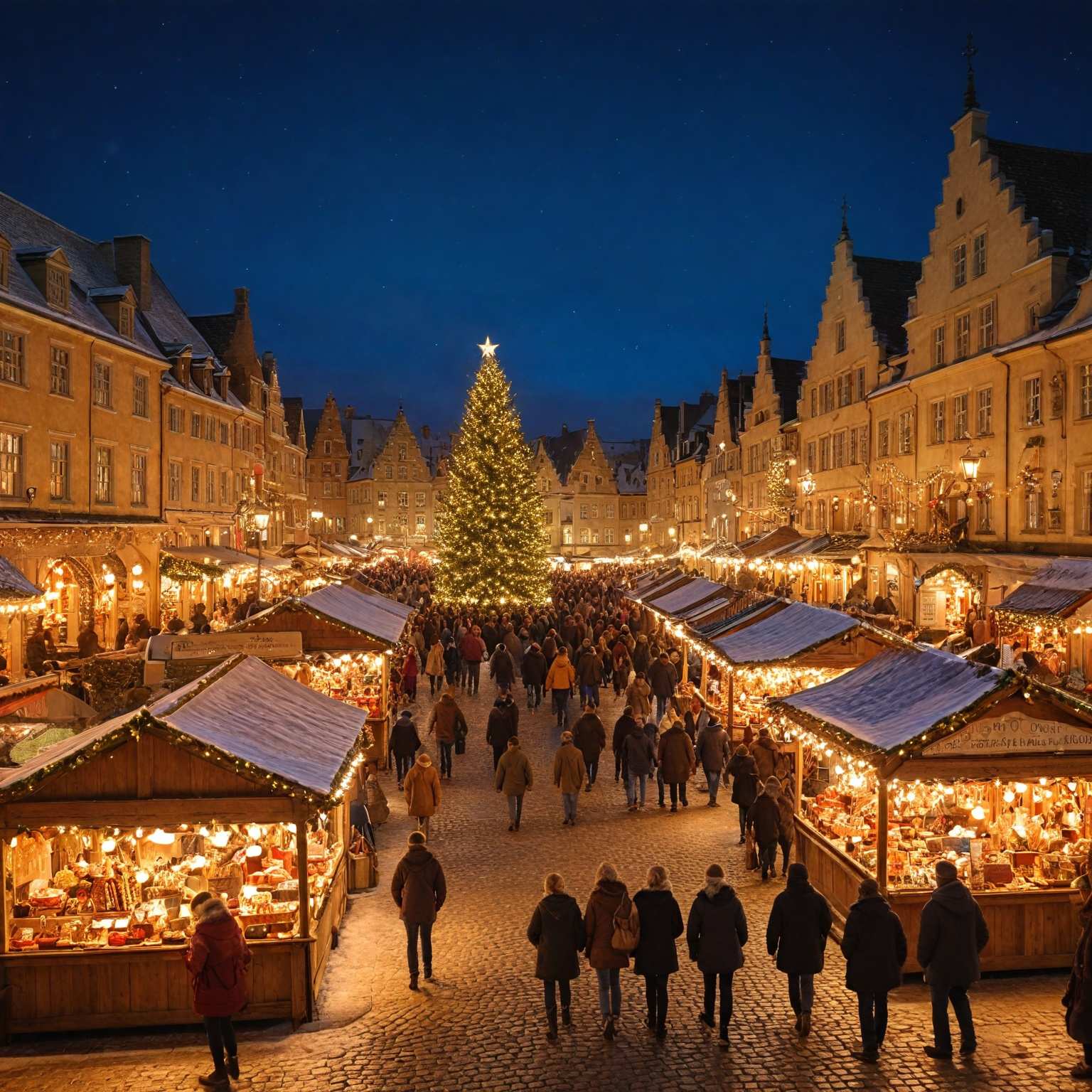
Highlights
- Christmas markets combine cultural traditions with regional festive experiences, attracting millions annually.
- These vibrant markets boost local economies while celebrating diverse holiday customs and community identity.
Summary
Christmas markets are festive seasonal markets held during the Advent period, originating in late medieval Europe and most notably in the German-speaking regions of the Holy Roman Empire. Traditionally serving as winter fairs for locals to purchase food, crafts, and holiday goods before Christmas, these markets have evolved into vibrant cultural events featuring handcrafted gifts, regional foods, and festive entertainment that celebrate both Christian customs and local heritage. Their enduring popularity has made them significant social and economic fixtures in many cities, attracting millions of visitors worldwide annually.
The earliest documented Christmas markets date back to the 13th and 14th centuries, with Vienna’s December Market (1296) and Dresden’s Striezelmarkt (1434) among the oldest known examples. While initially rooted in Germanic traditions, Christmas markets spread throughout Central Europe—including Austria, Switzerland, France’s Alsace region, and parts of Italy, Hungary, and the Czech Republic—adapting local customs and festive practices along the way. In the 20th century, the markets experienced both political appropriation, notably during Nazi Germany as propaganda tools, and later widespread revival beginning in the 1990s that expanded their commercial and cultural appeal across Europe and beyond.
Today, Christmas markets are celebrated globally, with notable expansions in North America, Asia, and Oceania where they often blend European traditions with local cultural elements. Each market typically features unique regional customs, such as Catalonia’s “caga tio” log tradition, Alpine Krampus celebrations, or Poland’s traditional holiday foods, offering visitors immersive experiences that highlight diverse expressions of the holiday season. These markets also play an important role in boosting local economies through tourism and seasonal commerce, while fostering community identity and cultural continuity.
Despite their festive appeal, Christmas markets have occasionally faced challenges, including security concerns following attempted and actual attacks at major European venues. Nevertheless, their ability to evolve—incorporating multicultural influences, entertainment, sustainability initiatives, and extended seasons—continues to enhance their relevance in contemporary holiday celebrations worldwide.
History of Christmas Markets
Christmas markets have a rich history dating back to medieval Europe, particularly within the German-speaking regions and the former Holy Roman Empire. Their origins can be traced to the late Middle Ages when local citizens relied on winter fairs and one-day markets to stock up on meat and other necessities at the start of the cold season. One of the earliest documented examples is Vienna’s December Market, authorized by Duke Albrecht I in 1296 as a 14-day fair held during December, marking the beginning of Advent and fostering community celebration.
The tradition of Christmas markets became increasingly popular during the Reformation era, when the name Christkindlmarkt (“Christ Child market”) emerged to replace references to the cult of saints, reflecting the shifting religious landscape of the time. The first known document reporting a Christmas market dates from 1434, referencing the Striezelmarkt in Dresden, which took place on the Monday before Christmas. These markets evolved from simple winter fairs into vibrant events featuring wooden stalls, local crafts, and seasonal foods, deeply intertwined with regional cultures and economies.
Although primarily rooted in German culture, Christmas markets eventually spread to German-speaking areas of Italy, Switzerland, and France, as well as to other parts of Central Europe such as Hungary and Czechia. This diffusion reflects the broader transmission of Christmas customs, many of which have German origins, including the Christmas tree and Advent calendar traditions. The tradition also adapted over time; for instance, during the 1930s, the Nazi regime in Germany reappropriated Christmas markets as propaganda symbols of national pride, despite their mercantile and communal origins.
In regions with complex histories such as Alsace and Südtirol, the markets reflect a blend of cultural influences owing to shifting borders and historical ties to German-speaking territories. Today, Christmas markets continue to be celebrated worldwide, cherished for their historical significance, festive atmosphere, and unique local traditions.
Regional Variations
Europe
Christmas markets have deep roots in European traditions, particularly in German-speaking regions where they originated during the Late Middle Ages as markets for stocking up on winter necessities. Germany remains central to the tradition, hosting some of the most famous and historic markets such as those in Nürnberg, Munich, Cologne, Heidelberg, Frankfurt, and Dresden’s Striezelmarkt, which dates back to 1434. Austria also holds a significant place in Christmas market culture, with Vienna alone hosting 20 different markets, including the prominent Vienna Christmas World at Rathausplatz.
France, particularly the Alsace region, blends Germanic influences with its own history. Strasbourg, known as the Capital of Christmas, boasts the country’s oldest Christmas market, dating back to 1570 with origins possibly as early as the 12th century. The market is extensive, featuring over 300 stalls across multiple venues along with cultural events such as ice skating and live music. Nearby Montbéliard, with its Germanic past, hosts a Christkindlmarkt and unique traditions like the “Les Enfants de la Lumière” choir, featuring children wearing battery-operated candle crowns inspired by Swedish customs.
Other European countries with strong Christmas market traditions include Switzerland, where Zurich hosts the largest market and Basel and Bern offer smaller, colorful alternatives. The markets have also spread to regions with historical ties to German culture such as South Tyrol in Italy, Hungary, and the Czech Republic. Notably, Zagreb’s Advent festival is a city-wide event praised for its festive atmosphere and diverse activities, breaking from the traditional single-block market layout.
Throughout the 20th century, Christmas markets underwent periods of decline and revival. During the Nazi regime in the 1930s, Christmas markets in Germany were appropriated as propaganda tools, with the Berlin market attracting record visitors in 1934. Since the mid-1990s, there has been a widespread revival across Europe, with many cities establishing markets featuring chalets, ephemeral ice rinks, and Ferris wheels, thus increasing their commercial appeal. This resurgence has also seen markets emerge in countries like Romania and Latvia, with Sibiu and Riga hosting well-regarded events starting in the early 21st century.
North America
In contrast to Europe’s centuries-old traditions, Christmas markets in North America are less widespread and often inspired by European models rather than deeply rooted local customs. While some northern cities such as Vancouver host markets with European-style stalls and festive events, many parts of North America, including much of the United States, do not have extensive Christmas market traditions.
For example, in Winston-Salem, North Carolina, Christmas celebrations incorporate unique Moravian traditions, including historic town festivities and handmade crafts markets, though these differ from typical European Christmas markets. Larger cities like Manchester in the UK have influenced markets in North America, where German-themed or European-inspired markets known as Christkindlmarkets have been established, reflecting a blend of cultural influences adapted to local tastes.
Other Regions
Beyond Europe and North America, Christmas markets exist in various forms, often reflecting the cultural diversity of their locations. Some Asian cities host Christmas markets combining local customs with festive elements imported from Europe, creating unique cultural blends that attract visitors interested in both holiday celebrations and multicultural experiences.
Unique Traditions and Customs
Christmas markets around the world are celebrated not only for their festive atmosphere but also for their distinctive traditions and customs that reflect local heritage and culture. Many markets feature handmade crafts and traditional holiday items, offering visitors a glimpse into the community’s unique customs and history. Performers and vendors often take pride in showcasing their cultural heritage, creating a rich tapestry of experiences that reinforce both Christian traditions and local identities.
In some regions, Christmas markets are steeped in historical and legendary figures. For example, in the southwest of Germany and neighboring parts of France and Switzerland, gifts may be brought by ‘Tante Arie’, a figure based on the 12th- and 13th-century Countess Henriette de Montbéliard, whose generosity inspired local legends. This character now resembles other European gift-bringers like Italy’s Befana. Meanwhile, German markets often blend nostalgia for a romanticized past with commercial vibrancy, reflecting 19th-century cultures of commerce and consumption alongside traditional imagery.
The markets also adapt to contemporary culture while honoring longstanding customs. Classic figures such as the red barretina-wearing peasant coexist with caganers styled as modern celebrities or pop culture icons like Hello Kitty. This fusion highlights the evolving nature of holiday celebrations, where regional and global influences merge. Diverse artistic traditions can be found worldwide, from radish carving in Oaxaca to the Alpine Krampus celebrations, showcasing a wide array of creative seasonal expressions.
Food and drink play a central role in many Christmas markets, offering a taste of regional specialties that deepen the cultural experience. European markets commonly serve dishes such as bratwurst, raclette, lebkuchen (soft gingerbread), spaetzle, and gulasch served in bread bowls, along with sweet treats like crepes filled with jam, Nutella, or banana. Sauerkraut prepared with bacon fat and aromatic herbs exemplifies traditional preservation techniques enhanced for festive flavor, especially in places like Riga’s Old Town market. The quintessential drink, mulled wine, known as Glühwein in Germany and gløgg or glögg in Scandinavia, is spiced with cinnamon, cloves, and citrus, providing a warm seasonal staple.
Distinctive customs add further uniqueness to certain markets. In Barcelona’s Fira de Santa Llúcia, the “caga tio” is a large piñata-style Christmas log that releases candy and gifts when struck with a stick, a popular activity deeply rooted in Catalan tradition. In Italy’s southern region of Puglia, the historic trulli houses of Alberobello transform into a living nativity scene, creating a real-life Christmas village, while Bolzano, the “gateway to the Dolomites,” hosts Italy’s largest Christmas market with a blend of local and Alpine traditions. Poland’s Christmas markets offer traditional dishes such as golonka (roasted pork knuckle), oscyoek (grilled smoked sheep’s milk cheese with cranberry sauce), and barszcz czerwony (beet soup served on Christmas Eve), accompanied by mulled beer, mead, and vodka to warm visitors in the snowy square.
Across Europe, some markets embrace a multicultural approach, featuring a mix of German, French, and Swiss influences. For instance, Strasbourg’s market sits just across the German border, offering a blend of two cultures, while Vienna combines festive stalls with a large ice skating rink as part of its Christmas celebrations. These unique traditions and customs contribute to the enduring appeal and rich diversity of Christmas markets worldwide, making each visit a special opportunity to explore local heritage during the holiday season.
Popular Christmas Markets Around the World
Christmas markets have become a global phenomenon, celebrated across continents with distinctive local flavors and festive traditions. Originating primarily in Germanic countries, these markets offer visitors a charming blend of holiday cheer, handcrafted goods, traditional foods, and cultural experiences.
Europe
Europe remains the heartland of Christmas markets, with historic and iconic locations drawing millions each year. Germany is home to some of the oldest and best-known markets, such as Nürnberg’s Christkindlesmarkt, Munich, Cologne, Heidelberg, Frankfurt, and Dresden’s Striezelmarkt, which dates back to 1434. Switzerland hosts notable markets in Zürich, Basel, and Bern, with Zürich boasting the largest in the country. In Belgium, Brussels’s Winter Wonders event features over 200 chalets selling a wide array of festive items including trappist beers, waffles, and glühwein, making it the largest and most impressive in the nation. Other notable European markets include those in Copenhagen’s Tivoli Gardens, Prague’s beautifully decorated main square with an enormous Christmas tree, and the expanding scene in Amsterdam.
Despite their popularity, some European Christmas markets have faced security challenges in recent years, with incidents and thwarted terror attacks reported in cities like Dijon, Nantes, Berlin, Potsdam, Vienna, Strasbourg, and Magdeburg.
North America
Inspired by their European counterparts, Christmas markets in the United States have grown rapidly in popularity, becoming significant drivers of tourism and local economies. Cities such as New York host prominent markets like the Bank of America Winter Village at Bryant Park, which features an open-air European-style market combined with a free ice skating rink. Other major cities including Minnesota, Dallas, Philadelphia, Atlanta, Portland, Chicago, Cincinnati, Seattle, and Denver have embraced the tradition, contributing to the festive atmosphere and boosting tourism revenue during the holiday season. Unique American adaptations of Christmas markets can be found in historic towns like Winston-Salem, North Carolina, where Moravian traditions influence seasonal celebrations.
Asia and Oceania
In Asia, Christmas markets are gaining momentum as vibrant and colorful events that blend local culture with global holiday traditions. Singapore transforms its iconic Orchard Road into a dazzling festive wonderland, featuring light displays, markets, and world-class shopping. Yangon, Myanmar’s cultural capital, offers a blend of tradition and modern festivities during Christmas, with glittering pagodas and bustling markets welcoming visitors. Hanoi, Vietnam, lights up its Old Quarter with festive decorations and markets that mix French colonial architecture with Vietnamese holiday customs, providing an immersive cultural experience.
Impact on Local Culture and Economy
Christmas markets have a profound impact on both local culture and the economy of their host cities. Beyond their economic benefits, these markets serve as important cultural hubs that reinforce traditions and foster a strong sense of community identity. Performers and vendors often take pride in showcasing their heritage, making each market visit an immersive experience that highlights Christian customs and local culture.
Economically, Christmas markets significantly boost local businesses by increasing foot traffic and creating seasonal employment opportunities. They attract millions of visitors annually, which drives tourism and stimulates spending in hotels, restaurants, transportation services, and other nearby establishments. This influx of tourists often leads to higher revenues for the entire business district. Unique market attractions, such as traditional German glühwein or hand-painted ornaments, encourage visitors to spend more, further benefiting the local economy.
In the United Kingdom, major Christmas markets like those in Edinburgh, Bath, and York contribute substantially to the winter economy. Studies by the Local Government Association (LGA) reveal that these markets attract a significant number of out-of-town visitors whose spending supports both temporary market vendors and permanent local businesses. The report indicates that rather than displacing local traders, the markets generate a net economic gain through increased overall expenditure and job creation.
Internationally, cities such as New York and Los Angeles have capitalized on the growing popularity of Christmas markets by appealing to diverse multicultural audiences. These markets often extend their seasons by opening earlier in November to maximize visitor numbers and revenue. With international tourism spending reaching $239 billion in 2023, the continued expansion of Christmas markets is expected to deepen their positive influence on the global tourism industry.
Historically rooted in European traditions, with Vienna’s first recorded December market dating back to 1298, the Christmas market tradition has spread worldwide. Cities like Vienna host multiple markets simultaneously, such as the Vienna Christmas World on Rathausplatz, which alone attracts around 3 million visitors annually and features 150 stalls offering traditional foods, decorations, handicrafts, and drinks. These markets have evolved from local festive gatherings into major tourist attractions, combining heritage with innovative trends to remain inclusive and appealing to modern audiences.
Modern Innovations and Trends
Christmas markets have evolved significantly beyond their traditional roots, incorporating modern innovations to enhance visitor experience and economic impact. One notable trend is the integration of diverse cultural elements to appeal to increasingly multicultural audiences. Markets now often feature a variety of holiday traditions and international themes, reflecting the cultural diversity of their locations and attracting a broader demographic.
Another innovation is the extension of market seasons, with many opening as early as November to maximize visitor numbers and revenue. This strategic extension allows markets to capitalize on longer holiday shopping periods and greater tourism influxes, thereby boosting local economies through increased hotel bookings, restaurant sales
The content is provided by Jordan Fields, Direct Bulletins