Highlights
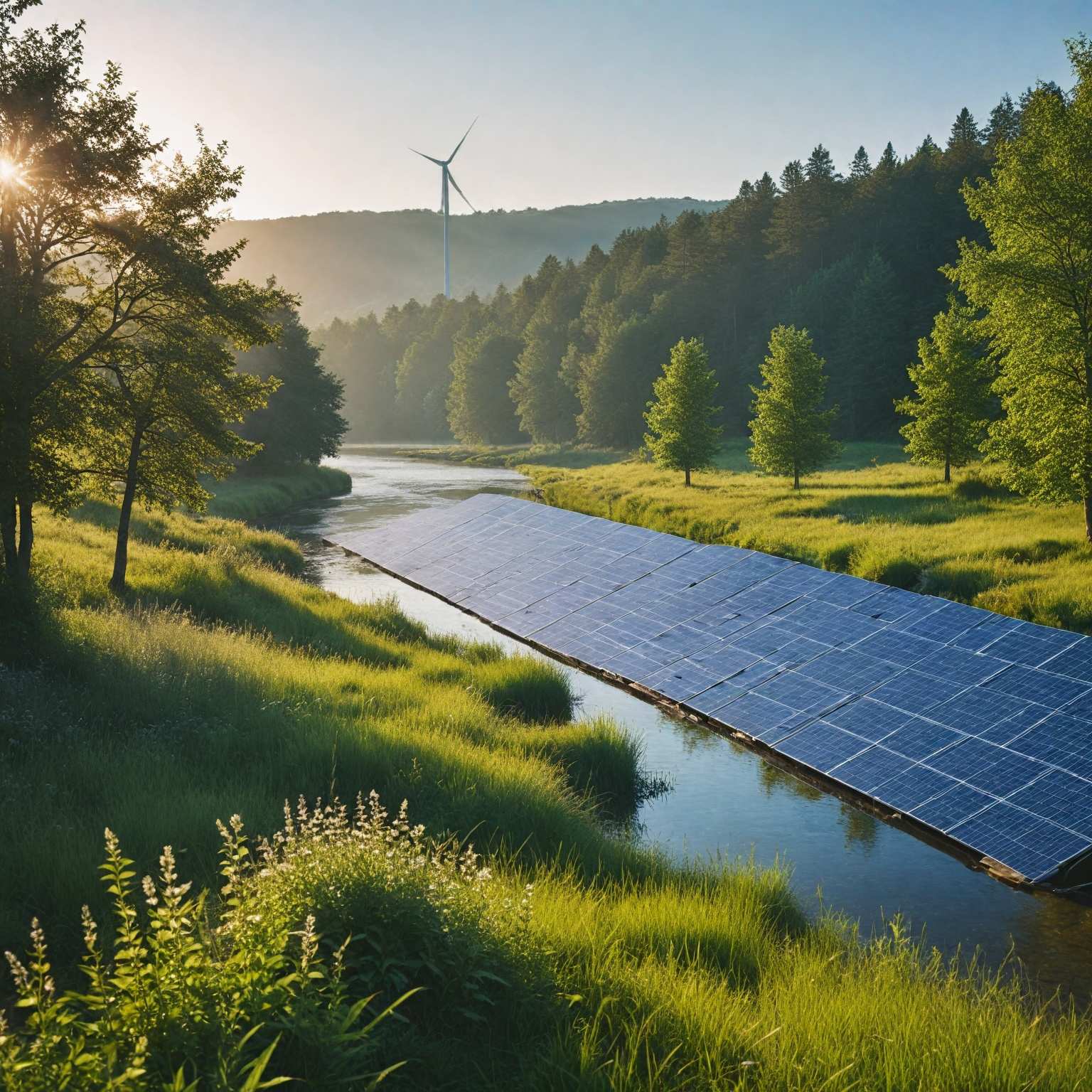
- Renewable energy capacity is projected to triple by 2030, leading the clean energy revolution.
- Embrace innovative solutions and policies to ensure a sustainable and resilient energy future.
Summary
Renewable energy solutions in 2025 are at the forefront of the global transition toward sustainable, low-carbon energy systems. Encompassing technologies such as solar, wind, hydropower, geothermal, and biomass, renewables have experienced rapid growth fueled by technological innovation, declining costs, and supportive policies worldwide. This expansion is critical for mitigating climate change, with renewable electricity capacity having increased by approximately 140% between 2015 and 2024, enabling cleaner energy generation across power, heat, and transport sectors.
Key trends shaping the renewable energy landscape in 2025 include widespread adoption of competitive procurement mechanisms, advances in solar photovoltaic technology—such as bifacial and tandem cells—and integration of digital tools like AI for grid management. Major global players, including China, the European Union, India, and the United States, continue to drive investments and policy reforms, although regional disparities and market challenges persist. The expansion of energy storage, green hydrogen, and flexible hydropower also underscores the diversification and sophistication of renewable energy systems.
Despite significant progress, the sector faces notable challenges. Environmental concerns such as biodiversity loss, ecosystem disruption, and pollution linked to biomass combustion highlight the importance of sustainable project planning and mitigation strategies. Market dynamics are influenced by policy uncertainties, evolving regulatory frameworks, and renewable power curtailment, which can affect investment and operational viability. Moreover, achieving international climate targets requires closing the existing ambition gap through accelerated deployment and coordinated global action.
Looking forward, renewable energy is expected to nearly triple in capacity by 2030, with solar and wind leading the expansion to surpass coal as the largest source of electricity generation within this decade. Continued innovation, coupled with comprehensive policy support and international commitments, will be vital to sustain this momentum and realize a resilient, decarbonized energy future.
Overview of Renewable Energy
Renewable energy refers to energy derived from natural resources that are replenished on a human timescale, such as sunlight, wind, water, biomass, and geothermal heat. Unlike fossil fuels, these sources do not deplete over time, making them essential for sustainable energy systems and climate change mitigation. Historically, humanity has utilized various forms of renewable energy, with hydropower being one of the earliest sources used to generate electricity.
The deployment of renewable energy has accelerated rapidly in recent years, driven by sharp cost reductions, technological advances, and supportive policies. Between 2015 and 2024, renewable electricity capacity grew by approximately 2,600 gigawatts (GW), representing a 140% increase globally. This growth is crucial for limiting the rise in average global temperatures to below 1.5°C by enabling cleaner energy generation across power, heat, and transport sectors.
Key renewable energy sources include solar, wind, hydropower, geothermal, and biomass energy. Solar and wind technologies have seen remarkable improvements in efficiency and cost-effectiveness, fostering widespread adoption. For instance, advancements in solar panel materials and designs continue to enhance performance, positioning solar energy as a central component of the future energy mix. Wind power deployment remains robust, with major countries like the United States operating tens of thousands of turbines and adding gigawatts of capacity annually.
Hydropower continues to dominate renewable capacity, relying on the natural water cycle to generate electricity. Its installed capacity is expected to surpass 1,200 GW in 2022, with investments rising to $36.3 billion. Innovations such as digitalization, flexible operation, and fish-friendly turbine technologies are driving the next generation of hydropower development.
Geothermal energy leverages the Earth’s internal heat to produce electricity via steam-driven power plants. Indonesia has recently led growth in geothermal capacity by adding 143 megawatts (MW) with two new plants, ranking second worldwide behind the United States, which leads with 3,772 MW. The geothermal market is projected to reach $8.46 billion by 2026, boosted by operational improvements following COVID-19 disruptions.
Biomass energy, while renewable, presents challenges including air pollution from smoke and concerns over deforestation, which can reduce biodiversity and exacerbate climate change. Careful management is necessary to balance its benefits against environmental and health impacts.
Global Energy Landscape in 2025
The global energy landscape in 2025 is characterized by significant advancements and investments in renewable energy, driven by geopolitical events, policy shifts, and technological progress. The European Union (EU) has notably increased its commitment to clean energy, with investments reaching nearly USD 390 billion in 2025. This surge is largely attributed to the energy crisis following Russia’s full-scale invasion of Ukraine in 2022, combined with favorable policy incentives and decreasing costs of renewable technologies. As a result, the EU generated 71% of its electricity from clean sources in 2024, well above the global average of 41%, with nuclear and wind energy as the dominant low-carbon sources.
China remains the dominant global player in next-generation energy technologies, investing hundreds of billions of dollars in renewables, energy storage, and nuclear power. The country controls key supply chains for wind turbines, solar panels, batteries, and electrolysers, positioning itself as a major force in the global clean energy transition and geopolitical landscape. China’s rapid expansion of renewable capacity over the past two decades has outpaced other nations, though reforms to its national electricity system are necessary to further reduce fossil fuel dependence.
India has demonstrated remarkable progress toward its ambitious energy transition goals. It surpassed its 2030 target of achieving 40% renewable installed capacity nine years early and is now aiming to triple its renewables capacity by 2030, targeting 500 GW of clean power. By October 2024, India had already reached 200 GW of renewable energy capacity, propelled by large solar parks, wind farms, and supportive domestic policies for solar modules, batteries, and electrolysers.
The United States, despite experiencing policy shifts that have slowed some renewable capacity growth, remains a key player in energy innovation. However, projections indicate a 30% reduction in installed renewable capacity by 2035 compared to previous forecasts, alongside 60% fewer electric vehicles on the road due to recent policy changes.
Other regions, particularly those with abundant solar resources, are contributing substantially to energy demand growth. The Philippines, Turkey, and New Zealand rank among the top geothermal energy producers.
Globally, renewable energy technologies encompass solar, geothermal, wind, biomass, and hydropower. While large-scale renewable energy expansion is essential for meeting increasing energy demands and combating climate change, it also presents environmental challenges that require careful management to protect biodiversity and ecosystem services.
Latest Trends in Renewable Energy Solutions for 2025
Renewable energy in 2025 is characterized by rapid technological advancements, evolving market mechanisms, and increasing integration of digital innovations, all aimed at enhancing efficiency, reducing costs, and expanding deployment globally.
Market and Policy Developments
A major shift in renewable energy procurement is the widespread adoption of competitive auctions, which replace traditional feed-in tariffs and premiums. Unlike administratively set tariffs, auctions enable developers to bid for remuneration, driving down costs and increasing market efficiency. China’s 2025 policy reforms exemplify this trend, phasing out fixed tariffs for solar PV and wind and transitioning to competitive pricing benchmarked against provincial coal prices. This approach is expected to become the dominant procurement method across China, India, and Europe, accounting for more than half of renewable capacity growth during 2025–2030.
In parallel, government incentives are evolving with programs such as the U.S. Inflation Reduction Act replacing traditional tax credits with new Clean Energy Production and Investment Tax Credits, enhancing support for clean energy deployment. However, some subsidies, like comprehensive electric vehicle incentives, face phase-outs by late 2025 and mid-2026.
Technological Innovations in Solar Energy
Solar energy technology remains at the forefront of renewable innovation.
– Bifacial Solar Panels: These panels capture sunlight on both the front and rear sides, increasing energy yields by up to 30% compared to traditional monofacial panels. Technologies such as MonoPERC cells push efficiencies up to 25%, perform better in low-light conditions, and promise faster long-term cost recovery despite higher upfront costs.
– Tandem and Perovskite Cells: These next-generation cells enhance energy output and efficiency by layering materials that absorb different light spectra, representing a breakthrough in solar cell design.
– Smart Inverters and Digital Integration: The integration of smart inverters improves energy management and grid compatibility, while AI and blockchain technologies optimize performance monitoring and predictive maintenance. AI-driven systems also contribute to grid stability by forecasting energy supply and demand in real time.
– Transparent Solar Panels: A novel development merging architectural design with energy generation, these panels enable solar integration into windows and other surfaces without obstructing views.
Expansion and Diversification of Renewable Energy Sources
Hydropower continues to hold a prominent role in the renewable energy mix. It leverages the natural water cycle and is projected to exceed 1,200 GW of capacity by 2022, with investments reaching $36.3 billion. Despite concerns about deforestation and ecological impacts, hydropower remains one of the most mature and widely deployed renewable sources.
Wind energy also advances through the deployment of larger turbines that lower the cost per kilowatt-hour and increase grid market value. Innovations such as recyclable turbine blades aim to address sustainability challenges associated with decommissioning and waste.
Emerging Technologies and Energy Storage
Emerging clean energy technologies, including batteries, electrolyzers, and carbon management solutions, are undergoing rapid development driven by increasing R&D investments. Energy storage, in particular, has seen substantial progress, with growing public and private funding supporting technological maturation and cost reductions.
The integration of solar-plus-storage systems is projected to expand rapidly in 2025, supported by favorable incentives and innovations in storage technologies like Tesla Powerwall. IoT-enabled energy management systems facilitate efficient power flow and predictive maintenance, promoting decentralized and resilient energy grids.
Global Trends and Drivers
Energy security, affordability, and industrial policy significantly influence renewable energy adoption, especially in energy-importing countries. China’s investments in renewables, storage, electric vehicles, and nuclear power primarily target reducing fossil fuel import dependency while asserting technological leadership.
Additionally, large-scale deployment is benefiting from economies of scale and cumulative knowledge gains, which have contributed to rapid cost declines, especially in solar PV systems. Innovations originate not only from the solar industry but also from broader research and policy ecosystems involving governments, professional associations, and diverse industries.
Collectively, these trends reflect a dynamic renewable energy landscape in 2025, where technology, policy, and market forces converge to accelerate the transition to a sustainable and decentralized energy future.
Environmental Impacts and Mitigation Strategies
The large-scale expansion of renewable energy is crucial for meeting increasing global energy demands and combating climate change. However, renewable energy developments, including solar, wind, and biomass, can have significant environmental impacts, particularly on biodiversity and ecosystems. While renewable energy sources do not deplete natural resources in the human timescale, some technologies pose challenges that must be managed to ensure sustainability and minimize negative consequences.
One key environmental concern is the impact on biodiversity. The loss and degradation of ecosystems not only exacerbate climate change but also threaten the natural services that ecosystems provide, such as flood protection and climate regulation. Renewable energy projects can contribute to habitat disruption, especially when poorly sited or managed. For example, solar projects in forested regions have been identified as potential threats to local ecosystems due to land conversion, similarly to industrial logging. Wind energy developments may also interfere with wildlife habitats and migratory patterns, especially when installed on federal lands with restricted permitting processes.
To address these issues, integrating biodiversity considerations into electricity planning is essential. Applying the mitigation hierarchy—which prioritizes avoiding, minimizing, restoring, and offsetting impacts—can reduce biodiversity risks and improve outcomes for project developers, investors, and regulators alike. Effective mitigation strategies often require a combination of regulatory instruments (e.g., environmental impact assessments, monitoring, and data-sharing), economic incentives (e.g., grants, biodiversity offsets), and voluntary measures such as ecolabelling and biodiversity criteria in project tenders. These approaches help reduce project delays and costs associated with environmental compliance while promoting positive biodiversity outcomes.
Renewable energy curtailment also has economic and environmental implications. Curtailment, or the reduction of power output despite available renewable resources, can diminish revenues for developers and discourage future investments, potentially slowing the transition to cleaner energy systems. Furthermore, compensation for curtailed electricity may impose additional costs on governments, highlighting the need for coordinated policy and market frameworks that balance environmental goals with financial viability.
The environmental impacts of biomass energy warrant particular attention. Although considered renewable, biomass combustion can produce smoke that poses health risks and contribute to deforestation, thereby reducing flora and fauna diversity and negatively affecting climate regulation. Similarly, hydropower relies on the natural water cycle but can alter aquatic ecosystems if not carefully managed.
Innovations in technology and policy are critical to mitigating these environmental impacts. For instance, hybrid renewable energy systems combining multiple renewable sources and storage technologies enhance technical reliability and economic efficiency in off-grid locations, supporting sustainable energy growth with reduced ecological footprints. Moreover, emerging green hydrogen technologies offer promising avenues to link renewable electricity generation with hard-to-electrify sectors, potentially reducing reliance on fossil fuels while maintaining ecosystem integrity.
Policy and Regulatory Developments
In 2025, policy and regulatory landscapes have played a critical role in shaping the trajectory of renewable energy adoption worldwide. At the global level, nearly 200 countries committed at COP28 in Dubai to honoring the Paris Agreement goal of limiting warming to 1.5°C by setting concrete targets for 2030, including tripling renewable energy capacity and doubling energy efficiency gains. Despite these ambitious pledges, implementation challenges and an ambition gap persist, leading to a forecasted renewable capacity of 9,530 GW by 2030—below the targeted 11,500 GW—reflecting ongoing policy, regulatory, and market barriers.
In the United States, the regulatory environment has been influenced by recent adjustments such as the earlier-than-anticipated phase-out of investment and production tax credits, new restrictions on foreign entities of concern, and an executive order suspending offshore wind leasing alongside constraints on onshore wind and solar PV projects on federal lands. The Inflation Reduction Act continues to support renewables through an extended Investment Tax Credit (ITC) of 30% and Production Tax Credit (PTC) for eligible projects meeting wage and apprenticeship requirements, promoting investment in clean energy infrastructure. Additionally, Federal Energy Regulatory Commission initiatives, like Order No. 2222, are facilitating greater participation of distributed energy resources in electricity markets, while pilot programs such as ERCOT’s Aggregate Distributed Energy Resource (ADER) project aim to integrate distributed resources more effectively.
The European Union has strengthened its climate policies, committing to a 2040 climate target and continuing progress toward decarbonization as part of its post-2030 Nationally Determined Contribution (NDC), to be submitted ahead of COP30 in Brazil. The EU’s investment in low-emission electricity reached nearly USD 390 billion in 2025, driven by the energy crisis triggered by geopolitical tensions and supported by favorable policies and declining renewable technology costs. The region has successfully integrated high shares of variable renewables, with clean sources accounting for 71% of electricity generation in 2024—well above the global average.
In Asia-Pacific, comprehensive policy frameworks across 17 countries, including China, India, and ASEAN nations, have been pivotal for renewable energy market development. China’s Energy Law 2025, effective January 1, 2025, exemplifies this trend by promoting renewable energy, enhancing energy security, and enabling retali
Market Dynamics and Economic Factors
The renewable energy sector in 2025 is characterized by significant shifts in market dynamics driven by evolving regulatory frameworks, competitive procurement mechanisms, and economic considerations. One of the most notable changes is the widespread adoption of competitive auctions for renewable energy projects. Unlike feed-in tariffs and premiums, where governments set fixed offtake prices, competitive auctions allow developers to bid for remuneration levels, fostering cost reductions. This approach has been exemplified by China’s 2025 policy reform, which phased out fixed tariffs for solar photovoltaic (PV) and wind power—previously benchmarked to provincial coal prices—and replaced them with auction-based pricing. As a result, for the first time, the majority of new capacity additions in China have prices set competitively rather than administratively by governments. Competitive auctions have become the primary procurement method in regions including China, India, and Europe, accounting for over half of renewable capacity growth between 2025 and 2030.
Economic impacts of renewable power curtailment also play a critical role in shaping market conditions. Curtailment, the reduction of output despite available renewable energy resources, negatively affects project revenues and may deter future investments. Additionally, countries may incur extra costs compensating developers for curtailed electricity, which further influences investment decisions and market stability. Amidst these challenges, the financial health of renewable energy companies is evolving, reflecting regional developments affecting manufacturers, developers, and utilities.
Energy markets themselves remain complex and are influenced by multifaceted factors such as production-consumption dynamics, regulations, and stakeholder behaviors. Energy models used to forecast market trends and investment outcomes rely heavily on underlying data, methodologies, and assumptions. Therefore, projections like those from the Annual Energy Outlook 2025 (AEO2025) should be understood as scenarios contingent on specific conditions rather than deterministic predictions.
In North America, rapid changes in regulatory environments—spurred by surging load forecasts, notably from data centers—are driving reforms in energy markets, ancillary services, and interconnection processes. These reforms are reshaping risk and opportunity landscapes for investors and developers, underscoring the importance of understanding policy-market intersections for strategic planning.
Globally, energy investments are poised to reach approximately $2.2 trillion in 2025, encompassing renewables, nuclear, grid infrastructure, storage technologies, low-emissions fuels, efficiency measures, and electrification initiatives. This investment surge reflects a competitive global race to establish technological and manufacturing leadership amidst geopolitical tensions and economic headwinds. Governments are recalibrating strategies to balance domestic imperatives with global competition, with some advancing ambitious programmes while others retrench.
Beyond market structures and investments, technological innovation and efficiency gains contribute to cost reductions. For example, in the solar power sector, improvements have arisen not only from innovation but also through economies of scale, bulk purchasing, and knowledge accumulation. Innovations in balance of system (BOS) components have been driven by diverse actors, including city governments, states, and professional associations, highlighting the broad ecosystem supporting renewable energy advancement.
Challenges and Barriers
The renewable energy sector in 2025 faces a complex array of challenges and barriers that affect investment, development, and deployment. One significant issue is the fragility of policy frameworks, which can rapidly change and disrupt momentum in the industry. For example, the dismantling of key policies like the US Inflation Reduction Act has illustrated how swiftly national incentives can unravel, creating uncertainty for investors, developers, and policymakers. Such shifts emphasize the vulnerability of progress to political and economic dynamics, leading professionals to seek ways to future-proof their skills amid these uncertainties.
Another critical barrier is the environmental and biodiversity impacts associated with renewable energy infrastructure. While mainstreaming biodiversity considerations in electricity planning can mitigate negative effects and provide regulatory certainty, challenges remain in managing the trade-offs involved. Expanding transmission infrastructure, especially across national borders, requires careful assessment and mitigation to avoid adverse ecological consequences. Enhancing cross-border collaboration through joint spatial planning and knowledge exchange is an opportunity yet to be fully realized. Additionally, certain renewable sources like biomass present environmental and health risks due to smoke emissions and deforestation, which can harm local flora, fauna, and contribute to climate change. Hydropower’s reliance on natural water cycles also poses sustainability questions.
Market and regulatory challenges are evolving as well. Competitive auctions are increasingly replacing fixed tariffs and premiums, as seen in China’s 2025 policy reforms that phased out administratively set offtake prices in favor of market-driven bidding. While this mechanism tends to lower costs and drive efficiency, it also demands that developers adapt to more competitive and dynamic procurement environments, potentially increasing project risks. Furthermore, rapidly changing load forecasts—driven in part by data center growth—and sweeping reforms in ancillary services and interconnection processes are reshaping North American power markets. Navigating this rapidly evolving regulatory landscape is critical but challenging for investors and developers looking to align strategies with shifting market dynamics.
Technological innovation also faces timing and maturity challenges. Although advanced nuclear technologies such as small modular reactors and fusion have attracted increased investment, they are not expected to contribute meaningfully to the energy mix until the 2030s. Consequently, the industry in 2025 remains dependent on currently available solutions like storage, clean hydrogen, and established renewables such as wind and solar. This urgency to deploy mature technologies while continuing to invest in innovation places pressure on research and development efforts to drive cost reductions and efficiency improvements at an accelerated pace.
Future Outlook and Prospects
The future outlook for renewable energy in 2025 and beyond presents a dynamic and transformative landscape, shaped by technological innovation, policy commitments, and shifting market demands. According to the International Energy Agency’s World Energy Outlook, the global energy future depends heavily on diverse scenarios, with renewables poised to play a pivotal role in displacing fossil fuels and meeting climate goals.
Renewable energy capacity is expected to grow significantly, with projections indicating a near tripling of global renewable capacity by 2030 compared to 2022 levels. This expansion is driven primarily by solar photovoltaic (PV) and wind energy, which together are set to account for the majority of new capacity additions. Renewables are anticipated to surpass coal as the largest source of electricity generation globally by the end of 2025 or mid-2026 at the latest, depending on hydropower availability. This milestone underscores a critical turning point in the global energy transition.
The share of renewables in global electricity generation is projected to increase from 32% in 2024 to 43% by 2030, with variable renewable energy sources nearly doubling their contribution to 27%. Over the 2025-2030 period, renewables are expected to meet more than 90% of the growth in global electricity demand, reflecting their central role in achieving sustainable energy futures. However, despite these optimistic trends, an ambition gap remains, with implementation challenges still impeding the rapid expansion necessary to fully meet international climate targets.
In parallel to the scale-up of established technologies such as solar PV and wind turbines, innovation in emerging technologies is accelerating. Areas such as battery storage, electrolyzers for green hydrogen production, carbon management solutions, and advanced hydropower flexibility are receiving increasing research and development attention. These advancements aim to improve technical efficiencies, reduce costs, and enable the integration of higher shares of renewables into energy systems worldwide.
Beyond electricity generation, renewable energy is making inroads into heavy industry, transport, and heating sectors. Green hydrogen, in particular, is carving out a niche as a clean fuel alternative, while bioenergy and other advanced technologies are reshaping energy consumption patterns in homes and businesses. This diversification highlights the broadening scope of renewables as integral components of a low-carbon economy.
Despite the rapid growth of renewables, fossil fuels still accounted for nearly 60% of electricity generation as of 2024, indicating that the energy transition is ongoing and requires sustained policy support and investment. Several countries, including China, face challenges in balancing continued economic growth with emissions reductions, necessitating stringent controls on coal capacity and further renewable deployment to meet carbon intensity targets.
International commitments such as those made at COP28, including pledges to triple renewable energy use by 2030 and double efficiency gains, signal a global consensus on accelerating the energy transition. Achieving these goals will require rapid, sustained, and far-reaching transformations across energy infrastructure, land use, and industrial systems to build a climate-resilient future.
The content is provided by Blake Sterling, Direct Bulletins