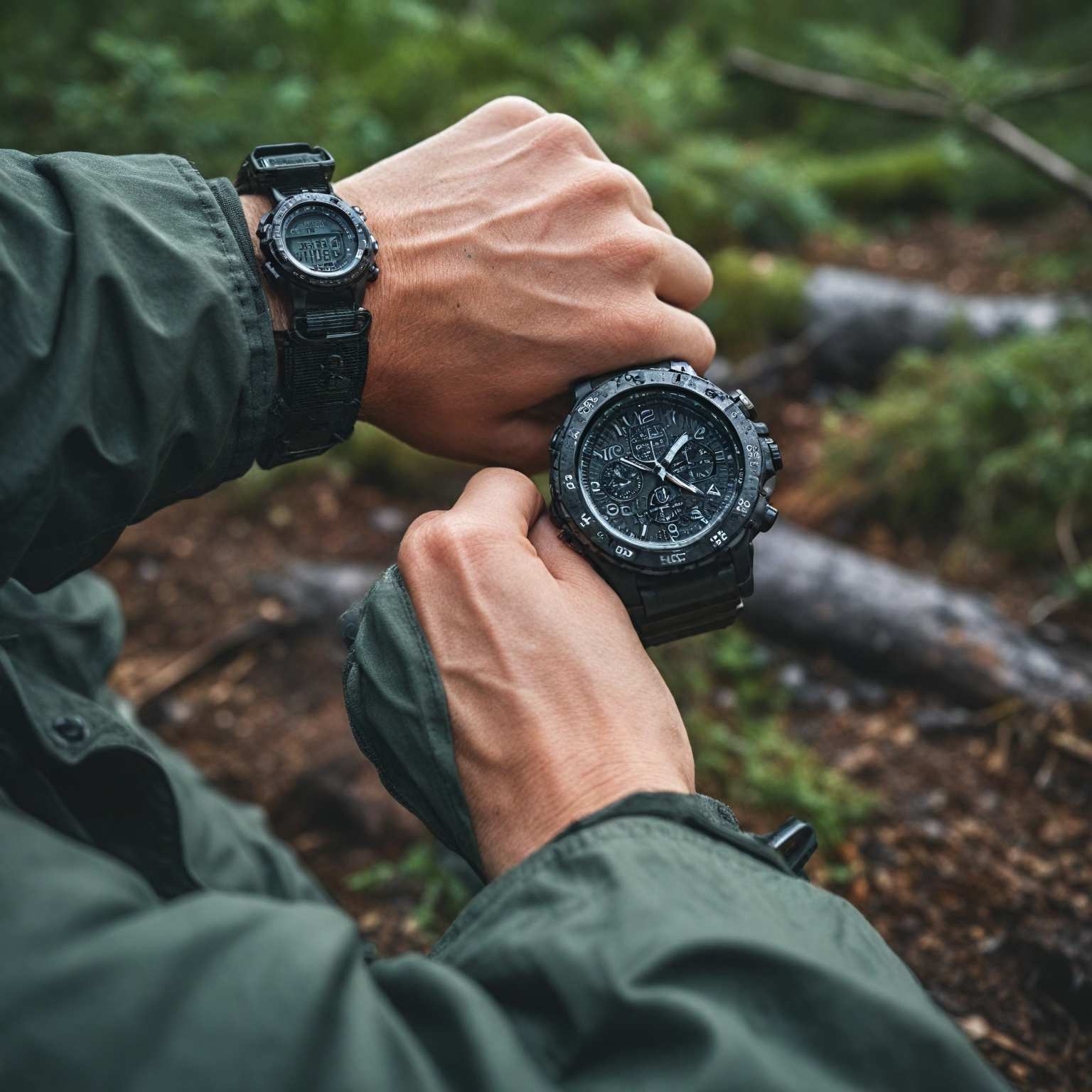
Highlights
- Survival watches combine durability with essential features for effective outdoor survival and navigation.
- Popular brands offer diverse models, ensuring there's a perfect watch for every adventure enthusiast.
Summary
Survival watches are specialized timepieces designed to support outdoor enthusiasts, adventurers, and survivalists by combining rugged durability with multifunctional features tailored for challenging environments. Engineered to withstand extreme conditions such as shocks, temperature fluctuations, and water exposure, these watches provide essential tools like GPS navigation, digital compasses, altimeters, barometers, and health monitoring sensors, enabling users to navigate, monitor environmental conditions, and manage survival tasks effectively. Their robust construction using materials like stainless steel, reinforced nylon, and scratch-resistant crystals ensures reliability during prolonged use in remote or harsh settings.
Notable for integrating multiple survival instruments into a single wearable device, survival watches enhance safety and situational awareness in outdoor adventures ranging from hiking and camping to tactical operations and marine exploration. Advanced models often feature solar charging, satellite communication for emergency messaging, and biometric tracking, broadening their utility beyond navigation to include health management and emergency preparedness. Popular brands such as Casio, Garmin, Suunto, and Timex have contributed significantly to the market by offering diverse models that cater to varying levels of ruggedness and technological sophistication.
Despite their advantages, survival watches face criticisms related to technological limitations. Battery life can be adversely affected by cold temperatures, and GPS accuracy may degrade in dense forests or mountainous terrain, which can compromise reliability when it is most needed. Additionally, the dependency on digital connectivity and the relatively bulky design of some models may hinder comfort and functionality in certain scenarios. Experts emphasize that while survival watches are valuable tools, they should complement rather than replace fundamental survival skills and thorough preparation.
Overall, survival watches represent a convergence of durable craftsmanship and advanced technology, making them indispensable companions for individuals navigating the uncertainties of the outdoors. Their evolving features and increasing accessibility continue to influence how adventurers approach safety, navigation, and health monitoring in wilderness and emergency contexts.
Features of Survival Watches
Survival watches are specifically designed to support outdoor enthusiasts and adventurers in challenging and emergency situations by combining durability with a broad range of practical features. These timepieces are built to withstand extreme conditions, including shocks, scratches, temperature fluctuations, and exposure to water and other elements, ensuring reliability in demanding environments.
A key characteristic of survival watches is their rugged construction. Manufacturers often use high-quality materials such as stainless steel, aluminum, heavy-duty rubber, ballistic-grade nylon, and reinforced stitching to enhance durability and longevity. The straps or bands, integral to overall toughness, commonly utilize robust materials like nylon (including NATO varieties) or solid steel segments that resist wear, moisture, and physical strain while maintaining wearer comfort.
Functionality extends well beyond basic timekeeping. Modern survival watches frequently incorporate multiple onboard sensors, such as altimeters, barometers, digital compasses, thermometers (both air and water), and gyroscopes, providing critical environmental data to assist in navigation and weather awareness. Advanced models may include GPS with support for global navigation satellite systems like GLONASS and Galileo, enhancing location tracking capabilities in remote areas. Some top-tier watches even offer satellite communication for emergency messaging, a feature that significantly boosts safety during survival scenarios.
Additional practical features include tide trackers for marine adventures, adjustable compass declination, storm alarms, sunrise and sunset times, and pressure resolution graphs, all aimed at supporting effective decision-making outdoors. Multifunctionality also encompasses health and biometric monitoring, calendars, and emergency beacons, which can be vital during prolonged outdoor expeditions or survival situations.
In survival contexts, these watches assist with more than just navigation; they help manage time-sensitive tasks such as signaling for rescue, timing first aid procedures, and rationing resources effectively. The integration of chronographs and scratch-resistant sapphire crystals in some models further enhances precision and durability, making these watches indispensable tools in the wilderness.
Benefits in Outdoor Adventures
Survival watches offer a comprehensive suite of features that significantly enhance safety, navigation, and overall experience during outdoor adventures. One of the most critical advantages is their integration of multiple essential tools into a single wearable device. These typically include GPS functionality for real-time location tracking and route planning, compasses for precise direction finding, altimeters for measuring elevation, barometers to predict weather changes, and thermometers to monitor environmental temperatures. This combination allows outdoor enthusiasts to navigate unfamiliar terrain confidently while maintaining awareness of their surroundings.
Beyond navigation, survival watches provide vital support in survival scenarios by assisting with timekeeping for critical tasks such as signaling distress, administering first aid, and managing resources like food and water. Accurate timing can be crucial in coordinating rescue efforts and ensuring proper rationing and rest, which can be lifesaving in emergencies. Their ability to function reliably without cellular signals further underscores their indispensability in remote or widespread emergency situations.
Durability is another key benefit, as survival watches are constructed from robust materials like stainless steel, aluminum, and reinforced synthetic fabrics, often featuring shock-absorption systems and weather resistance to endure harsh conditions. This ensures they remain functional despite rough handling, exposure to elements, and prolonged use in extreme environments.
Additionally, modern survival watches have evolved to incorporate health and fitness tracking capabilities such as heart rate monitoring, step counting, and sleep tracking, appealing to a broader range of outdoor enthusiasts by promoting a holistic approach to health and wellbeing. Their versatility extends to various outdoor activities—including hiking, camping, fishing, and mountaineering—offering useful data such as sunrise and sunset times, tidal movements, and moon phases to aid in adventure planning.
Types of Survival Watches
Survival watches come in a variety of types, each designed to meet different needs and preferences for outdoor enthusiasts and survivalists. Generally, these timepieces are characterized by their rugged construction and multifunctional capabilities, but they can be categorized based on features and intended use.
One primary type is the basic survival watch, which focuses on durability and essential survival functions. These models often include protection against shocks, scratches, and extreme temperatures, ensuring reliability in harsh environments. They typically provide fundamental features such as compass, barometer, and altimeter sensors (commonly known as ABC sensors) to aid navigation and environmental awareness.
On the other end of the spectrum are full tactical survival watches, which are built and tested to military standards. These watches offer advanced functionalities including built-in GPS, comprehensive ABC sensors, and enhanced ruggedness for extreme conditions. Such models are favored by users who require robust performance coupled with precise navigation tools during critical outdoor or survival scenarios.
Additionally, the evolution of survival watches has led to the integration of health monitoring technologies. Modern survival watches now often feature multisensor capabilities like nine-axis inertial measurement units (IMUs), accelerometers, and photoplethysmography (PPG) sensors. These allow users to track a wide range of movement-related metrics, estimate sleep stages, and monitor vital signs such as heart rate and electrodermal activity, making these devices multifunctional tools for both survival and wellness during extended outdoor expeditions.
Popular Brands and Models
The survival watch market has expanded beyond traditional watchmakers to include prominent brands from the broader outdoor and technology sectors, largely driven by the increasing popularity of outdoor exploration following the easing of COVID-19 travel restrictions. Among the most recognized brands in this space are Casio, Garmin, Suunto, Timex, and others, each offering a range of models tailored to various survival and adventure needs.
Casio’s G-Shock series stands out for its legendary toughness and reliability. The Rangeman GW9400 model is especially favored by survivalists due to its shock, mud, and extreme temperature resistance, coupled with features such as ABC (altimeter, barometer, compass) sensors and a solar-powered battery that alleviates charging concerns. Its one-button data access makes it practical for quick navigation checks during intense outdoor activities. Additionally, the Mudmaster variant of the G-Shock series has further enhanced durability and remains a top choice for those seeking ruggedness.
Garmin offers technologically advanced survival watches like the Instinct Solar Tactical and the Instinct 2 Solar, which feature long battery life supported by solar charging and extensive smartwatch capabilities. These watches serve well as navigation aids with GPS functionality, making them suitable for prolonged outdoor expeditions. The more recent Instinct 3 Solar continues this trend by providing a robust and lightweight option for adventurers, albeit at a higher price point compared to some alternatives.
Suunto’s offerings include the Traverse Alpha and the Core models, which cater to outdoor sports enthusiasts such as hunters and fishers. The Traverse Alpha is handcrafted and designed for rugged outdoor use, while the Core features a large, easy-to-read digital screen displaying time, pressure graphs, altitude, and compass data. The Suunto 9 Peak Pro, although more oriented towards athletes, also provides reliable navigation features useful in survival situations.
Timex brings a combination of classic style and practical features with models like the Expedition North Tide-Temp-Compass Watch. This watch is tailored for coastal and marine adventurers, featuring 100 meters of water resistance, a tide tracker, an analog compass with adjustable declination, and digital thermometers for air and water temperature. Its balance of durability and usability makes it a solid choice for survival scenarios near water.
For those seeking luxury without compromising performance, the Seiko Arnie Prospex is notable. Certified under ISO 6425 as a professional-grade dive watch, it is engineered to endure extreme conditions while maintaining high performance, marking it as a premium option in the survival watch category.
When selecting a survival watch, researching the brand’s reputation and product reliability is essential. Established brands with a track record of producing durable, high-quality watches are preferable, and customer reviews and certifications can offer valuable insights into a model’s suitability for survival use. Ultimately, personal preferences regarding size, analog versus digital displays, and specific features play a significant role in the decision-making process, with new models continually emerging to meet diverse outdoor demands.
Real-World Applications and Case Studies
Survival watches serve as essential tools in a variety of real-world scenarios, especially during outdoor adventures where safety and navigation are critical. They are designed to assist wearers in situations such as being stranded in remote areas, navigating underwater environments, or managing health-related emergencies, thus making them invaluable for survivalists and outdoor enthusiasts alike.
One notable application of survival watches is in navigation and location tracking. Many models include GPS functionality capable of interfacing with multiple satellite systems, enabling users to set waypoints at key locations such as home, camp, or vehicles. This feature not only aids hunters tracking big game but also helps users find their way back in emergency situations or locate parked cars in large lots. Higher-end watches may also store and display maps, providing a comprehensive overview of the user’s current position.
In addition to navigation, survival watches frequently integrate environmental sensors like barometers, thermometers, and altimeters. These tools allow wearers to monitor weather changes, temperature fluctuations, and elevation, which are crucial for those traveling through mountainous or unpredictable terrain. The inclusion of a digital compass enhances directional accuracy and ease of use, consolidating multiple outdoor survival instruments into a single device.
Health monitoring is another important real-world application. Advanced smartwatches can track heart rate, sleep quality, and stress levels, empowering users with vital information to make informed decisions about their well-being during physically demanding activities. For instance, Garmin watches incorporate stress monitoring and guided breathing exercises, which support mental health and enhance overall survival readiness.
Practical user feedback highlights the importance of comfort and usability in survival watches. For example, the Casio Pro Trek series is praised for its intuitive button design and legible display under bright sunlight, although some comfort issues were noted during extended wear. The robust construction and reliability of Casio’s G-Shock line have made it a favorite among military personnel and serious outdoor users due to its ability to endure extreme abuse while maintaining functionality.
How to Choose a Survival Watch
Choosing the best survival watch involves prioritizing functionality, durability, and the specific needs of survivalists and outdoor enthusiasts. The ideal survival watch must be rugged enough to withstand harsh environments, including shocks, bumps, scratches, extreme temperatures, and exposure to water and other elements.
Durability features such as shock resistance and waterproofing are fundamental; most survival watches offer at least 100 feet of water resistance, enabling them to endure severe weather conditions or accidental submersion without failure. For example, models like the G-Shock Rangeman are favored for their resilient construction, featuring resin shock-resistant cases and protective button guards that prevent damage from side impacts—a common cause of watch failure in rugged use.
Beyond toughness, buyers should consider the watch’s onboard sensors and functionality. Many survival watches come equipped with altimeters, digital compasses, barometers, thermometers, and GPS navigation systems, which provide critical environmental data that aid in survival and outdoor activities like hiking, camping, and mountaineering. Additional features such as sunrise/sunset times, tidal information, moon phases, and emergency beacons further enhance their utility in wilderness scenarios.
Power source and battery life are also key considerations. Solar-powered survival watches, such as the Garmin Instinct Solar Tactical, offer a significant advantage by harnessing sunlight to maintain battery life, thereby overcoming the common limitation of short battery endurance in digital watches. Quartz watches with long-lasting batteries remain a reliable option for those prioritizing simplicity and extended use without frequent recharging.
Finally, budget plays an important role. Survival watches range widely in price, from affordable models around $50 to high-end tactical watches exceeding $1000. While higher cost often correlates with additional features and improved durability, spending beyond a certain point may yield diminishing returns. It is recommended to assess personal needs carefully and invest in a watch that balances cost with desired capabilities and quality.
Maintenance and Care
Proper maintenance and care are essential to ensure the longevity and optimal performance of survival watches, especially given their use in demanding outdoor environments. These watches often feature durable and resistant materials designed to withstand harsh conditions, but regular upkeep helps preserve their functionality and durability over time.
One key aspect of maintenance is protecting the watch from environmental stressors such as dirt, grime, and moisture. For watches exposed to outdoor elements, cleaning methods like gentle pressure washing can be effective, provided the pressure is adjusted according to the material’s tolerance to avoid damage. Additionally, ensuring proper storage during periods of non-use or extreme weather conditions protects the watch from unnecessary wear and environmental degradation.
Survival watches often incorporate advanced features like water resistance, shock resistance, and impact absorption, which reduce the risk of premature damage. However, users should still handle the watches carefully to maintain these protective qualities. Ergonomic designs and reinforced high-stress areas contribute to the watches’ overall resilience, but routine inspections and prompt repairs or component replacements help extend their service life.
Furthermore, many survival watches integrate solar charging capabilities to reduce dependence on traditional batteries, thus minimizing battery-related maintenance issues. Keeping the solar cells clean and exposed to sufficient light ensures consistent power generation, which is vital for prolonged outdoor use.
Finally, as survival watches increasingly incorporate sophisticated biometric sensors and health monitoring technologies, safeguarding the device’s software through regular updates and ensuring data security have become additional aspects of maintenance. Manufacturers emphasize encryption and robust data protection measures to keep users’ health information secure. By following these care practices, users can maximize the reliability and effectiveness of their survival watches throughout their outdoor adventures.
Criticisms and Limitations
Despite their numerous advantages, survival watches are not without criticisms and limitations. One notable concern is the reliance on technology, which can be a significant vulnerability in harsh outdoor environments. For instance, smartwatches and other digital survival watches depend heavily on battery life, which tends to diminish rapidly in cold weather conditions or after prolonged use, potentially leaving the wearer without critical functionality during emergencies. Additionally, GPS accuracy can be compromised by environmental factors such as mountains, dense forests, or severe weather, limiting the reliability of location tracking.
Another limitation is the dependence on connectivity and digital interfaces. Many survival watches feature smartphone app integrations and cellular
The content is provided by Sierra Knightley, Direct Bulletins