Highlights
- Spain offers a blend of high-quality education and rich cultural experiences for international students.
- Engaging in local festivals and community projects enhances student life and cultural integration.
Summary
Studying in Spain offers a blend of quality academics, rich cultural traditions, and vibrant social life. The higher education system includes mainly public universities with historic roots, aligned with the European Higher Education Area, offering bachelor’s, master’s, and doctoral degrees that support student mobility and international recognition. Universities contribute about 75% of national research, supported by facilities like the Barcelona Supercomputing Centre. Spain attracts over 220,000 international students, with strong participation in exchange programs and consistent global rankings.
Beyond academics, Spain’s famous festivals such as Semana Santa, Las Fallas, and San Fermín enrich cultural immersion and social integration, though some traditional practices raise ethical debates. Despite challenges like language barriers and climate adaptation, affordable tuition, supportive services, and diverse cities such as Madrid, Barcelona, and Seville make Spain an appealing destination for international students.
Spanish Higher Education System and International Recognition
Spain has 89 mostly public universities and 39 private ones, including Catholic-affiliated institutions. The system, rooted in medieval origins, follows the European Higher Education Area framework, replacing traditional degrees with bachelor’s and master’s to enhance mobility. Admission relies on academic performance, notably the “nota de corte” after Bachillerato. Alongside universities, vocational and artistic institutions provide specialized education and pathways to higher degrees.
University creation is regulated by Organic Law 2/2023, with public universities offering affordable tuition (300–3,500 euros annually). Recognition of foreign qualifications involves homologation for regulated professions and equivalence certificates for academic or employment purposes, managed by ministries and agencies like ANECA. Non-official degrees exist but lack guaranteed recognition outside Spain.
Spain ensures international quality through degree recognition aligned with EHEA standards, fostering student mobility. Universities maintain high academic standards and strong industry collaborations, especially in technical fields. Research accounts for three-quarters of national activity, attracting over 224,000 international students and supporting robust academic and practical education.
Research Facilities and Opportunities
Universities conduct most Spanish research, employing about 45% of researchers. Institutions like Complutense University of Madrid and Polytechnic University of Madrid excel in diverse fields with global partnerships. The Spanish National Research Council (CSIC) oversees key institutes, while Scientific and Technology Parks promote innovation and industry collaboration.
Facilities such as the Barcelona Supercomputing Centre and ALBA Synchrotron Light Facility provide advanced resources for international scientists. Degree recognition rules require Ministry approval for master’s degrees and university handling for postdoctoral equivalence. The European Credit Transfer System supports structured bachelor’s, master’s, and doctoral programs, fostering global academic engagement.
Cultural Experiences, Social Integration, and Festivals
International students benefit from Spain’s vibrant festivals, including Semana Santa, Las Fallas, San Fermín, Fogueres de Sant Joan, and Carnival, which offer language practice and cultural immersion. These events enhance social integration, counteract homesickness, and encourage participation in community projects and student organizations like Erasmus Student Network.
Festivals also boost local economies through tourism but face ethical scrutiny over animal-related traditions, prompting efforts for sustainable cultural preservation. Participation in cultural activities fosters inclusivity, mutual respect, and cross-cultural dialogue, helping students and immigrant communities connect and adapt socially and linguistically.
Popular Student Cities
Barcelona, Madrid, and Seville are top destinations for international students. Barcelona offers a cosmopolitan environment with strong Catalan culture and numerous academic institutions but may challenge Castilian Spanish learners. Madrid, Spain’s largest city, provides a vibrant cultural scene, prestigious universities, and extensive transport links, though living costs are higher. Seville presents a more affordable option rich in traditional Spanish culture, famous landmarks, and flamenco heritage.
Student Life and Adaptation
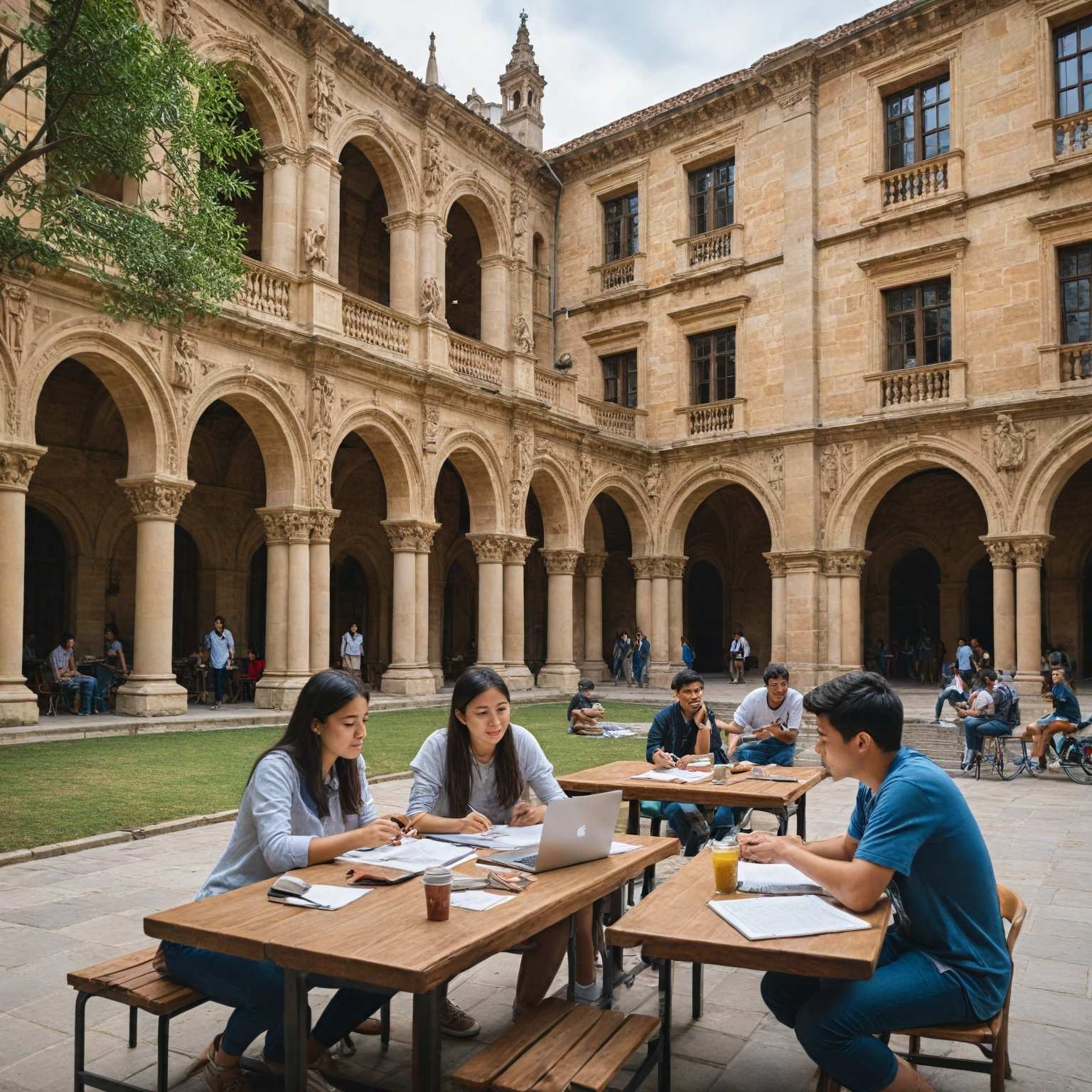
Student life in Spain combines academics with cultural and social activities. Many students live in shared apartments, with costs varying by city (€250–€600/month). Engagement in student groups, language clubs, and volunteering supports language learning and cultural immersion. Urban centers offer lively cultural scenes and travel opportunities but come with higher living expenses.
Challenges for international students include language barriers, adapting to social customs, homesickness, and climate differences. Understanding informal language use and local customs is key to integration. Despite these, Spanish universities provide supportive environments blending traditional and modern teaching methods, enriching students’ academic and personal growth.
Application and Admission Process
Applying to Spanish universities involves competitive admission based on the “nota de corte” after Bachillerato, with electronic tracking of applications. International students outside the EU/EEA must obtain a student visa before arrival, providing admission proof, finances, health insurance, and passport. Fixed accommodation is mandatory for enrollment and obtaining residence documents (NIE, TIE).
Degree recognition procedures enable alignment of foreign qualifications with Spanish degrees, facilitating access to regulated professions. Spain’s participation in the Bologna Process ensures degree recognition across Europe, supporting academic and professional mobility for international students.
The content is provided by Jordan Fields, Direct Bulletins