Highlights
- 5G and IoT integration maximizes efficiency and responsiveness in manufacturing and supply chains.
- The IoT market in manufacturing is projected to exceed USD 1.5 trillion by 2030.
Summary and Overview
5G combined with the Internet of Things (IoT) is transforming manufacturing and supply chain management by enabling automation, efficiency, and real-time responsiveness. Key Industry 4.0 applications such as predictive maintenance, autonomous robots, digital twins, and supply chain tracking benefit from 5G’s low latency, high bandwidth, and network slicing. This synergy supports smart factories and resilient logistics, improving energy efficiency, device battery life, and security. The IoT market in manufacturing is projected to exceed USD 1.5 trillion by 2030, despite challenges like cybersecurity and infrastructure costs.
5G offers ultra-low latency (down to 10 ms), high speed, and massive connectivity, ideal for industrial IoT (IIoT). Features like network slicing enable tailored virtual networks for various IoT applications, supporting enhanced Mobile Broadband (eMBB), ultra-Reliable Low-Latency Communications (URLLC), and massive Machine-Type Communications (mMTC). 5G also facilitates integration with legacy systems and supports diverse deployment scenarios, improving energy efficiency and security in industrial environments.
IoT in Manufacturing and Supply Chain
IoT drives real-time monitoring and optimization in manufacturing and supply chains, with a market projected at USD 1.52 trillion by 2030. Sensors monitor critical parameters and enable digital twins for simulation and decision-making. IoT enhances inventory tracking, logistics, and predictive maintenance, reducing downtime and improving resource use. It supports sustainability by monitoring energy and water usage. Integration with 5G and edge computing amplifies these benefits by ensuring high bandwidth, low latency, and improved connectivity for advanced applications.
Integration of 5G and IoT
5G’s high capacity and low latency support extensive sensor networks and real-time machine coordination essential for smart manufacturing and supply chains. Network slicing allows customized network resources for specific IoT applications. Edge computing complements 5G by bringing processing closer to devices, reducing latency for time-sensitive tasks. Security is enhanced through virtualization and software-defined networking, although challenges remain due to device limitations and inherited risks from cellular networks. Energy efficiencies enable long device battery life, making 5G adaptable for industrial demands.
Impact on Manufacturing and Supply Chain
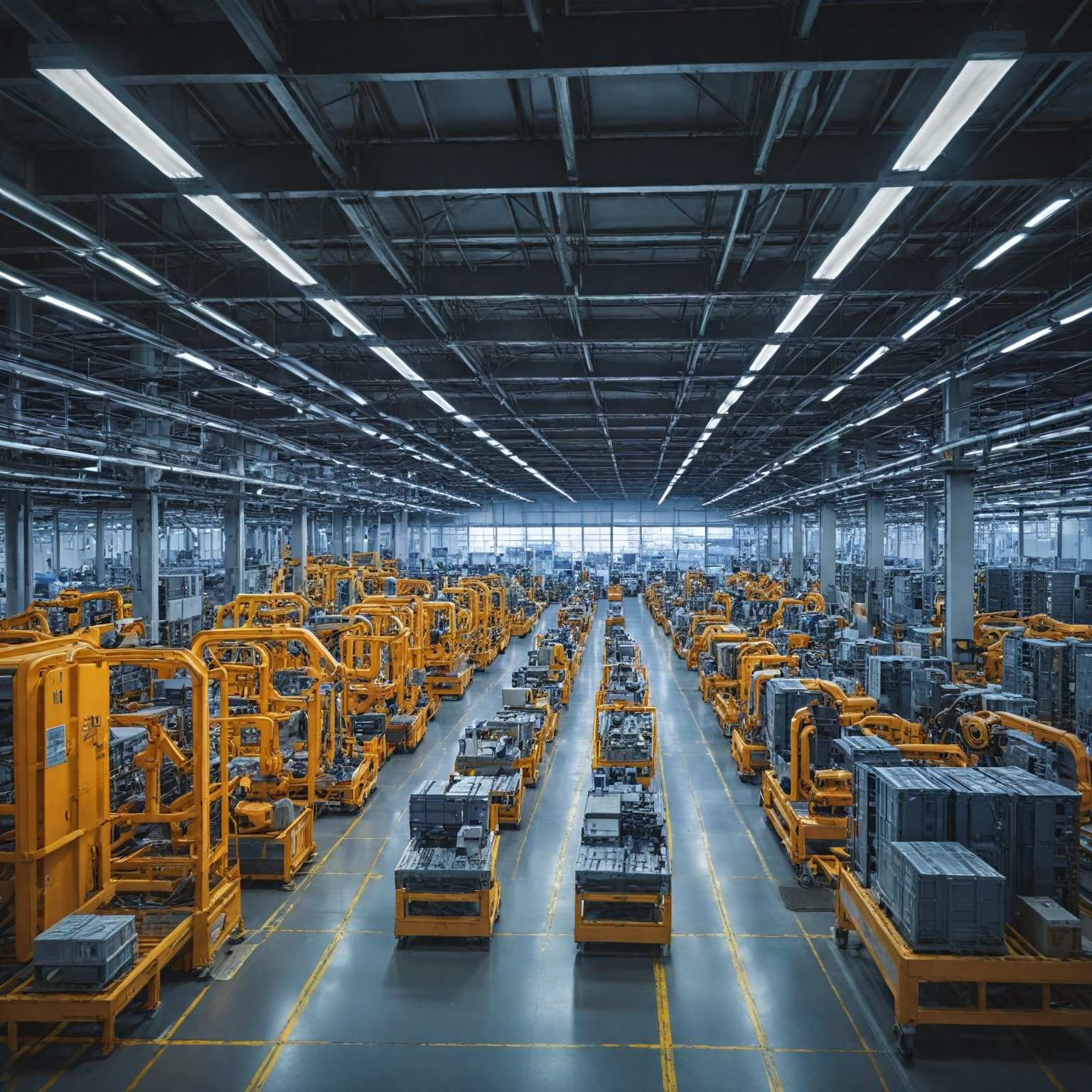
5G-enabled IIoT fosters smart factories with real-time machine monitoring, AI quality control, and autonomous mobile robots, improving efficiency and reducing costs. Predictive maintenance minimizes downtime by detecting failures early. Network slicing supports concurrent IoT applications, optimizing resource use. In supply chains, 5G and IoT improve tracking, coordination, and automation, enabling autonomous vehicles and smart shelves that manage inventory dynamically. Big Data analytics optimize fuel use, maintenance, and safety, enhancing transparency and responsiveness amid increasing complexity.
Infrastructure Requirements and Challenges
IIoT demands high reliability, ultra-low latency, security, and flexibility beyond prior wireless technologies. 5G achieves sub-5 millisecond latency and supports dynamic, scalable operations aligned with industrial architectural models. Challenges include securing resource-constrained IoT devices and addressing inherited cellular network risks. Edge computing integration is vital to reduce latency and optimize operations. Overcoming connectivity issues, especially outside manufacturing, is essential for broader IIoT adoption.
Case Studies and Industry Examples
Industry cases show 5G and IIoT improve predictive maintenance, reducing costs by up to 25% and increasing uptime. Factories use 5G to coordinate IoT sensors and autonomous robots, enhancing automation and logistics. Companies like Intel and IBM provide hardware and AI platforms supporting these deployments. In supply chains, real-time data enables better coordination and customer value, addressing challenges exposed by recent global disruptions. Edge computing further accelerates decision-making and supports innovative Industry 4.0 applications.
Future Prospects and Developments
Future manufacturing and supply chains will leverage 5G-enabled digital twins for synchronized physical and virtual operations, enhancing design, maintenance, and forecasting. 5G’s reliability and bandwidth support AI-driven quality control, autonomous robots, and predictive maintenance, improving efficiency and ROI. Flexible network deployment and integration with AI and edge computing enhance responsiveness and scalability. Challenges remain in security, interoperability, and investment costs, requiring industry collaboration and standardization. Sustainability aligned with global goals is increasingly prioritized in 5G IoT implementations.
The content is provided by Sierra Knightley, Direct Bulletins